


How Content Syndication Technology Powers B2B Demand Generation with Intent Data
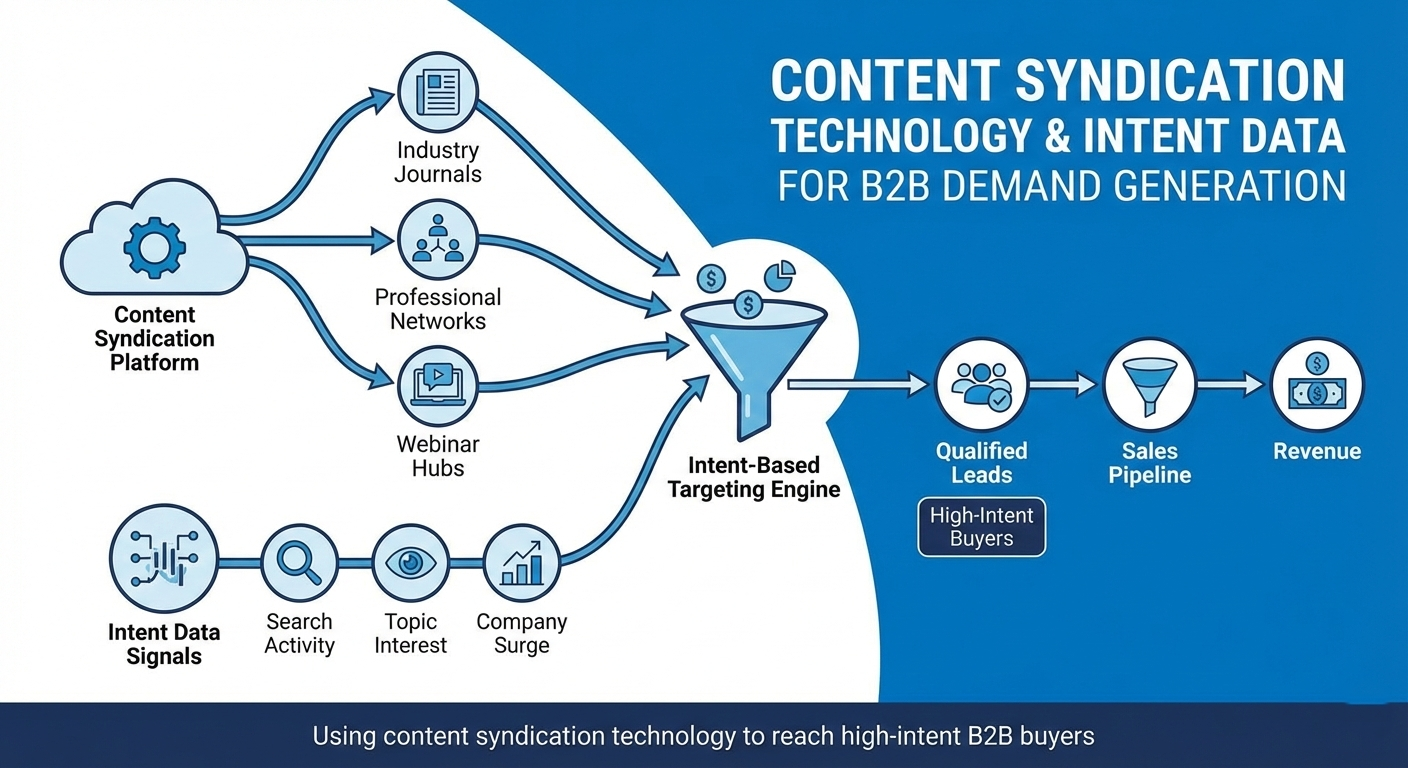
B2B demand generation has evolved beyond form fills and cold outreach. Today, buying decisions are driven by timing, intent, and relevance. This is where content syndication technology, combined with B2B intent data, becomes a powerful engine for predictable pipeline growth.
Instead of chasing leads, modern B2B teams use data-driven content distribution to reach accounts already researching solutions.
Let’s break down how this works and why it’s becoming essential for B2B tech companies.
What Is Content Syndication in B2B Marketing?
Content syndication is the strategic distribution of your high-value content, such as whitepapers, reports, webinars, and case studies, across third-party platforms that already attract your ideal audience.
In B2B content syndication, the goal isn’t just visibility. It’s to:
- Reach decision-makers earlier in the buying journey
- Capture verified, permission-based leads
- Align marketing efforts with sales-ready intent signals
Modern content syndication technology goes beyond basic distribution by layering intelligence, targeting, and performance optimization.
Why Content Syndication Technology Matters Today
Traditional content syndication focused on volume. Today’s platforms focus on precision.
Here’s what advanced content syndication technology enables:
1. Account-Level Targeting
Instead of broad audiences, you can target:
- Specific industries
- Company sizes
- Job roles
- Named accounts
This directly supports B2B demand generation strategies.
2. Intent-Driven Distribution
By integrating B2B intent data, content is shown only to accounts actively researching relevant topics.
This ensures your content reaches buyers at the right moment, not too early, not too late.
3. Data-Verified Lead Capture
Technology-led syndication platforms validate:
- Business emails
- Job titles
- Company details
This improves lead quality and reduces wastage for sales teams.
The Role of B2B Intent Data in Demand Generation
Intent data tracks digital behavior signals that indicate buying interest, such as content consumption, keyword searches, and topic engagement.
When paired with content syndication:
- Your assets reach accounts already showing interest
- Sales outreach becomes timely and relevant
- Conversion rates improve across the funnel
In short, intent data turns content into a revenue signal, not just a marketing asset.
How Content Syndication Fuels B2B Demand Generation
Here’s how these technologies work together:
Awareness Stage
Educational assets are distributed to accounts researching industry challenges.
Consideration Stage
Mid-funnel content reaches prospects comparing solutions.
Decision Stage
High-intent accounts engage with case studies, demos, and solution briefs.
This alignment ensures demand generation technology supports the full buyer journey, not just top-of-funnel activity.
Key Benefits for B2B Tech Companies
- Higher lead-to-opportunity conversion
- Shorter sales cycles
- Better sales-marketing alignment
- Scalable and predictable pipeline growth
Most importantly, your team stops chasing uninterested leads.
What to Avoid
Don’t treat content syndication as a lead dump. Without intent data and targeting, it becomes expensive and ineffective.
Final Thoughts
In a competitive B2B landscape, content syndication technology powered by intent data is no longer optional. It’s a core pillar of modern B2B demand generation.
When executed strategically, it connects the right content with the right buyers, at exactly the right time.

 Arabic
 French
 Spanish
 Portuguese
 Deutsch
 Turkish
 Dutch
Dutch
 Italiano
 Russian
 Romaian
 Portuguese (Brazil)
 Greek
Greek