


Why Architects Are Relying on 3D Modeling and Rendering for Design Accuracy
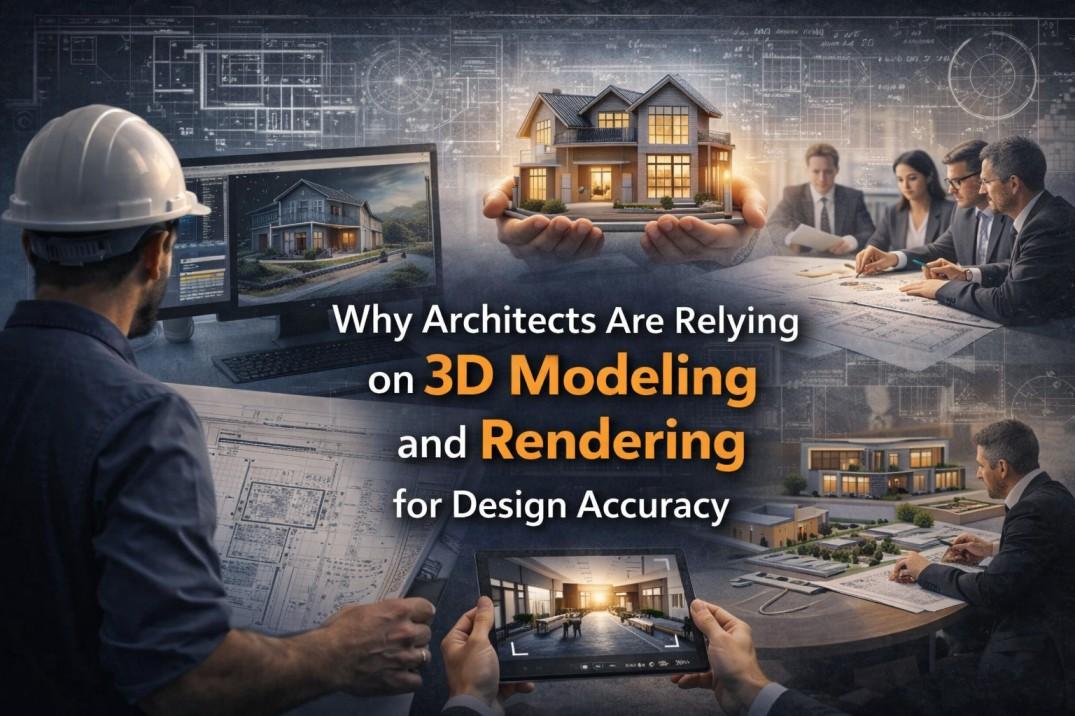
Accuracy is one of the most critical factors in architectural design. Even small inconsistencies in scale, proportion, or spatial planning can lead to costly revisions during later stages of a project. As design expectations rise and timelines tighten, architects are increasingly turning to 3D modeling and rendering company to ensure design precision from the earliest phases.
These technologies do more than visualize concepts—they provide a measurable framework for validating design decisions before construction begins.
The Limitations of 2D Drawings in Modern Architecture
2D drawings remain an essential part of architectural documentation, but they have inherent limitations. Plans, sections, and elevations require interpretation, which can vary depending on the viewer’s technical knowledge.
Common challenges include:
-
Misjudged spatial depth
-
Unclear material transitions
-
Difficulty understanding scale relationships
As projects become more complex, these gaps can impact design accuracy and coordination.
How 3D Modeling Improves Design Precision
3D modeling converts abstract drawings into spatially accurate digital environments. Every element—walls, openings, materials, and structural components—exists in the correct proportion within the model.
This level of precision allows architects to:
-
Verify dimensions and alignments early
-
Identify spatial conflicts before documentation
-
Test design alternatives without disrupting workflows
Accurate digital environments created through 3D modeling services support informed design decisions and reduce uncertainty.
The Role of 3D Rendering in Visual Accuracy
While modeling focuses on structure, 3D rendering adds realism that supports visual accuracy. Renders simulate real-world conditions such as lighting, materials, and environmental context.
This helps architects:
-
Validate material selections
-
Assess lighting behavior throughout the day
-
Ensure visual consistency across spaces
By previewing the final appearance in advance, teams can avoid misaligned expectations and late-stage revisions.
Reducing Design Errors Before Construction
One of the most valuable benefits of combining modeling and rendering is early error detection. Design inaccuracies that go unnoticed in 2D drawings often become obvious when viewed in three dimensions.
Early detection helps:
-
Minimize rework during construction
-
Prevent material waste
-
Maintain project timelines
This proactive approach supports both design quality and cost efficiency.
Supporting Better Client and Stakeholder Understanding
Design accuracy is not limited to technical correctness—it also involves ensuring that all stakeholders share the same understanding of the project. 3D visualization bridges the communication gap between technical teams and non-technical audiences.
Clear visuals:
-
Reduce misinterpretation
-
Encourage focused feedback
-
Speed up approvals
This alignment improves decision-making and project momentum.
Why Professional Visualization Matters
The accuracy of 3D outputs depends heavily on the expertise behind them. Poorly constructed models or unrealistic renders can introduce confusion rather than clarity. This is why architectural firms often collaborate with specialized visualization partners.
👉 Integrated architectural visualization solutions from SMAARCHVIZ help ensure technical precision and visual reliability across projects.
Conclusion
3D modeling and rendering have become essential tools for maintaining design accuracy in modern architecture. By providing spatial precision, visual clarity, and early validation, these technologies reduce errors, improve coordination, and support confident decision-making.
As architectural standards continue to evolve, accurate visualization is no longer optional—it is a foundational component of effective design.

 English
 Arabic
 French
 Spanish
 Portuguese
 Deutsch
 Turkish
 Dutch
Dutch
 Italiano
 Russian
 Portuguese (Brazil)
 Greek
Greek