


Science Behind Marine Pipe Insulation in Engine Rooms
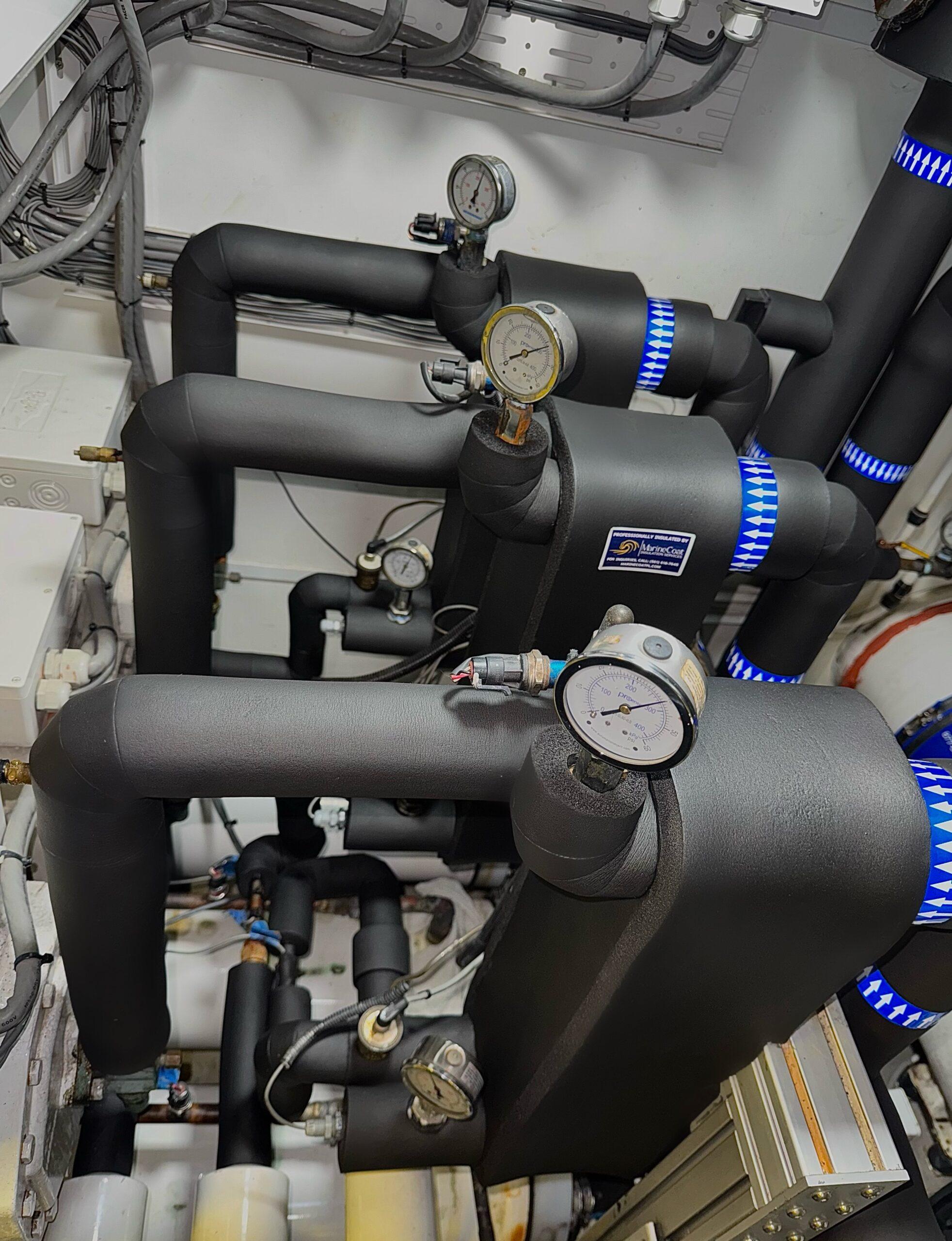
Engine rooms and mechanical compartments operate as the thermal core of any vessel. These areas generate intense heat, pressure variation, and constant vibration that challenge material stability. Marine pipe insulation plays a scientifically grounded role in managing these forces by regulating thermal exchange and surface temperature behavior. When engineered and installed by marine insulation companies, insulation systems transform volatile mechanical zones into controlled environments. Their effectiveness relies on physics-based principles involving heat transfer, material conductivity, and environmental interaction unique to maritime operations.
Thermodynamics Within Marine Mechanical Zones
Marine engine rooms produce concentrated thermal output through combustion engines, turbines, and auxiliary machinery. Heat disperses through conduction along metal piping, convection into surrounding air, and radiation toward adjacent surfaces. Without intervention, these mechanisms elevate ambient temperatures to levels that degrade performance and threaten safety.
Marine pipe insulation interrupts these energy pathways by introducing materials with low thermal conductivity. This barrier reduces heat migration from pipe surfaces, stabilizing ambient conditions. Marine insulation companies calculate insulation thickness based on temperature gradients, ensuring equilibrium within confined mechanical spaces.
Conductivity and Material Science Principles
Every insulation material exhibits a measurable thermal conductivity coefficient. Lower coefficients indicate stronger resistance to heat flow. Marine-grade insulation materials are selected for minimal conductivity combined with structural resilience.
Marine insulation companies evaluate material composition, density, and fiber orientation to optimize performance. Mineral fibers, elastomeric foams, and composite laminates resist compression while maintaining insulating properties under continuous vibration. These characteristics are essential within mechanical spaces where movement remains constant.
Heat Retention and Energy Conservation
Insulated piping preserves fluid temperature during transport between systems. Uninsulated pipes lose heat rapidly, forcing engines and boilers to consume additional energy to maintain operational thresholds.
Marine pipe insulation functions as an energy conservation mechanism. By minimizing thermal loss, insulated systems operate with greater efficiency and reduced fuel demand. This scientific approach directly supports energy optimization strategies aboard commercial and industrial vessels.
Condensation Physics in Engine Compartments
Condensation develops when warm, moisture-rich air contacts cooler pipe surfaces. Engine rooms experience fluctuating temperature cycles that intensify this phenomenon. Moisture accumulation leads to corrosion, insulation saturation, and electrical hazards.
Marine insulation companies address condensation using vapor-resistant layers integrated into insulation assemblies. Marine pipe insulation raises surface temperatures above dew point thresholds, preventing vapor conversion. This application reflects precise understanding of psychrometrics and humidity behavior within enclosed environments.
Acoustic Absorption and Vibration Control
Mechanical spaces generate high-decibel noise through rotating equipment and fluid movement. Sound waves travel efficiently along rigid surfaces, amplifying noise exposure.
Insulation materials absorb vibrational energy and disrupt acoustic transmission. Marine pipe insulation dampens resonance along piping networks, reducing noise propagation throughout the vessel. Marine insulation companies consider acoustic performance alongside thermal requirements when designing insulation systems.
Fire Resistance and Heat Flux Management
Engine rooms present elevated fire risk due to fuel presence and high operating temperatures. Insulation systems must resist ignition and slow heat transfer during emergency conditions.
Marine insulation companies select fire-rated materials that withstand extreme heat flux. These materials delay temperature escalation, providing critical response time. Marine pipe insulation surrounding fuel and exhaust lines serves as a protective barrier that limits fire spread and structural damage.
Installation Precision in Restricted Environments
Scientific design loses effectiveness without accurate installation. Engine rooms contain dense piping layouts, valves, and structural supports that complicate insulation placement.
Marine insulation companies apply customized fabrication techniques to maintain insulation continuity. Marine pipe insulation sections are shaped to fit complex geometries, preventing thermal gaps that undermine system performance. Precision ensures theoretical benefits translate into real-world results.
System Longevity and Mechanical Reliability
Excessive heat accelerates material fatigue within mechanical systems. Seals degrade, lubricants thin, and metal components expand beyond tolerance limits.
Marine pipe insulation stabilizes operating temperatures, reducing mechanical stress. Marine insulation companies design systems that support consistent thermal conditions, extending equipment lifespan and lowering maintenance frequency. This scientific approach aligns thermal management with long-term reliability.
Regulatory Alignment and Engineering Validation
Maritime authorities mandate specific insulation standards for safety and efficiency. Compliance requires adherence to tested thermal performance criteria.
Marine insulation companies validate insulation systems through documented engineering calculations and material certifications. Marine pipe insulation installations meet classification society requirements, ensuring vessels remain compliant while benefiting from scientifically optimized designs.
Conclusion
The effectiveness of insulation in engine rooms and mechanical spaces is rooted in science rather than approximation. Through controlled heat transfer, condensation prevention, acoustic dampening, and fire resistance, marine pipe insulation delivers measurable performance advantages. When applied by knowledgeable marine insulation companies, these systems transform extreme mechanical environments into regulated, efficient, and safer operational zones. In maritime engineering, insulation science stands as a foundational element of vessel performance and durability.

 Arabic
 French
 Spanish
 Portuguese
 Deutsch
 Turkish
 Dutch
Dutch
 Italiano
 Russian
 Romaian
 Portuguese (Brazil)
 Greek
Greek