


Methyl Acrylate Market Challenges Include Safety and Environmental Regulations
Introduction: The Rising Importance of Methyl Acrylate in Modern Industries
Methyl acrylate is a vital organic compound widely used as a building block in the production of polymers and resins. Known for its excellent adhesive properties, flexibility, and durability, methyl acrylate plays a crucial role in industries such as paints and coatings, textiles, plastics, adhesives, and construction materials. As industrialization accelerates and demand for high-performance materials grows, the methyl acrylate market is gaining notable momentum worldwide. With evolving end-user requirements and advancements in polymer technology, this market is becoming increasingly significant in shaping the future of specialty chemicals.
Market Overview: Current Landscape and Growth Trajectory
The global methyl acrylate market is experiencing steady expansion, driven by rising demand from downstream industries. Manufacturers are increasingly focusing on producing lightweight, durable, and weather-resistant materials, which has elevated the consumption of acrylate-based products. In recent years, growth in infrastructure development, automotive production, and packaging industries has further strengthened the demand for methyl acrylate.
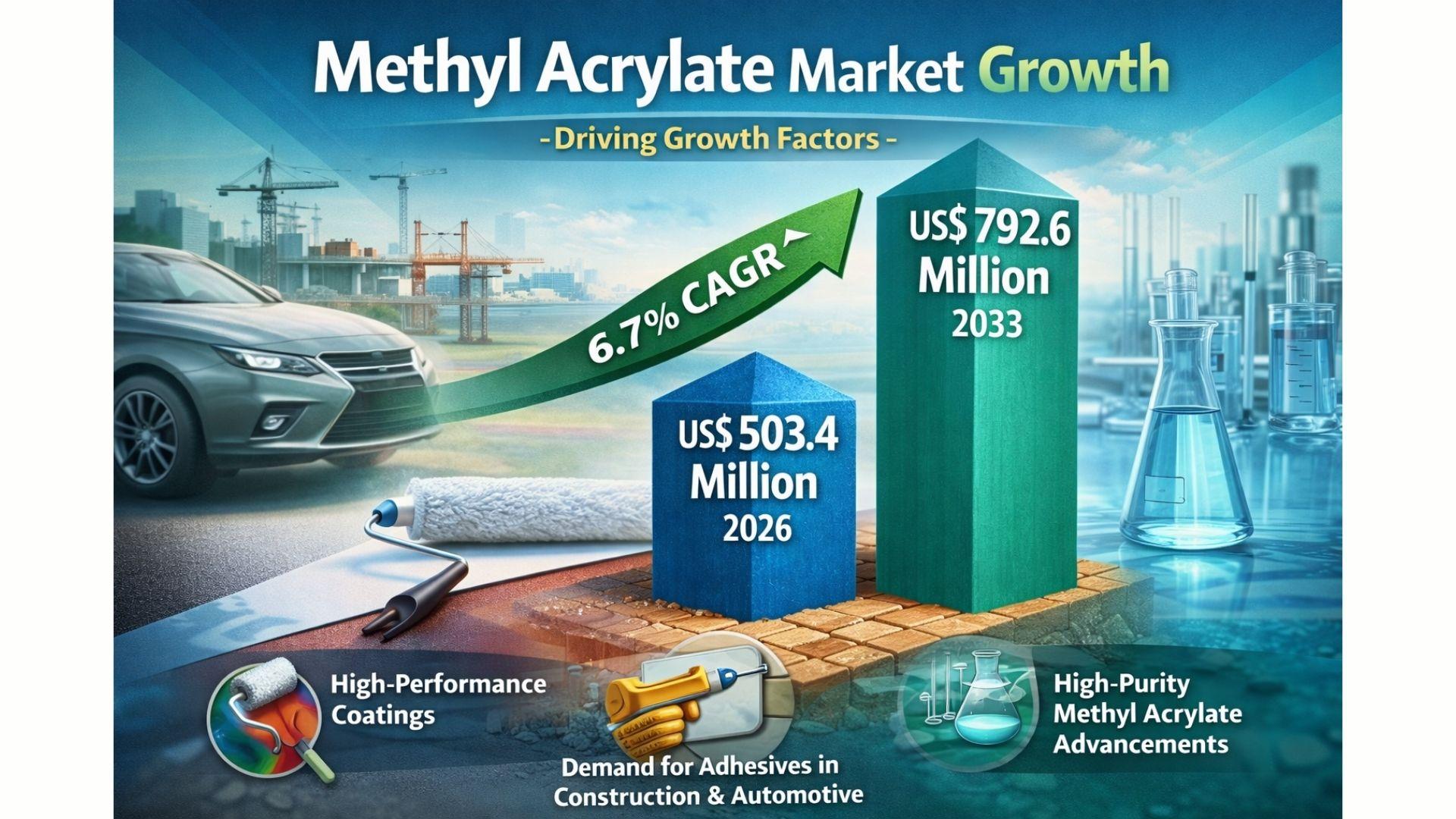
According to the Persistence Market Research report, the global methyl acrylate market size is likely to be valued at US$ 503.4 million in 2026 and is expected to reach US$ 792.6 million by 2033. This growth reflects a compound annual growth rate (CAGR) of 6.7% during the forecast period from 2026 to 2033. The steady rise in market value highlights expanding industrial applications, technological advancements in polymerization processes, and growing investments in specialty chemical production.
What Is Methyl Acrylate Used For?
Methyl acrylate is widely used as a raw material in the production of polymers and copolymers that serve various industrial purposes. Its primary applications include manufacturing paints, coatings, adhesives, sealants, textile finishes, and plastic modifiers. In the construction sector, methyl acrylate-based emulsions are utilized for waterproof coatings and surface binders. The automotive industry uses it in high-performance coatings to enhance durability and resistance to environmental damage. Additionally, it is used in packaging materials to improve flexibility and strength. The increasing demand for lightweight, durable, and weather-resistant materials continues to drive methyl acrylate consumption across multiple industries globally.
Get Your FREE Sample Report Instantly – Click Now
Key Growth Drivers: Factors Fueling Market Expansion
One of the major drivers of the methyl acrylate market is the rising demand for paints and coatings. With rapid urbanization and infrastructure expansion across emerging economies, the construction industry is witnessing significant growth. This has increased the need for advanced coatings that offer long-lasting protection and aesthetic appeal. Methyl acrylate plays a crucial role in producing water-based and solvent-based coatings that provide excellent adhesion and resistance properties.
Another important growth factor is the expanding textile industry. Methyl acrylate-based polymers are used in textile finishing to improve fabric softness, durability, and wrinkle resistance. As global fashion and home furnishing markets grow, the consumption of textile chemicals incorporating methyl acrylate continues to rise.
Additionally, the growing automotive industry is contributing to market development. Automakers increasingly rely on acrylate-based coatings and adhesives for lightweight vehicle components, corrosion protection, and improved surface quality. As electric vehicle production accelerates worldwide, demand for high-performance materials further boosts methyl acrylate usage.
Application Insights: Diverse Industrial Utilization
Methyl acrylate finds applications across a wide range of industries due to its versatile chemical properties. In paints and coatings, it is used to manufacture acrylic emulsions that offer superior gloss, durability, and resistance to weather conditions. These coatings are widely applied in residential, commercial, and industrial buildings.
In adhesives and sealants, methyl acrylate-based polymers provide strong bonding capabilities and flexibility. This makes them ideal for packaging, woodworking, labeling, and construction materials. The packaging industry, in particular, benefits from acrylate-based adhesives that ensure strong sealing and enhanced shelf life.
The plastics industry also uses methyl acrylate to improve impact resistance and flexibility in polymer blends. Additionally, it is used in paper coatings, leather finishing, and specialty elastomers, highlighting its broad industrial relevance.
Regional Market Trends: Emerging and Established Growth Hubs
Asia Pacific dominates the methyl acrylate market due to rapid industrialization, expanding manufacturing sectors, and growing construction activities. Countries such as China, India, and South Korea are witnessing increased investments in specialty chemicals and polymer production facilities. The presence of a strong textile and automotive manufacturing base further strengthens market demand in the region.
North America and Europe represent mature markets with steady growth driven by technological advancements and demand for sustainable coating solutions. Environmental regulations in these regions have encouraged the adoption of water-based acrylic coatings, boosting methyl acrylate consumption.
Meanwhile, Latin America and the Middle East & Africa are emerging markets with rising infrastructure projects and increasing industrial activities. As economic development accelerates in these regions, demand for construction materials and industrial coatings is expected to create new opportunities for methyl acrylate producers.
Technological Advancements: Innovation in Production Processes
Continuous improvements in production technologies are shaping the methyl acrylate market. Manufacturers are investing in efficient catalytic processes and sustainable production methods to enhance yield and reduce environmental impact. The shift toward bio-based acrylates and low-emission manufacturing practices is also gaining attention as industries move toward sustainability goals.
Furthermore, research into high-performance acrylic polymers has opened doors for innovative applications in electronics, medical devices, and renewable energy components. These technological advancements are likely to create new growth avenues for methyl acrylate-based materials in the coming years.
Challenges and Market Constraints
Despite positive growth prospects, the methyl acrylate market faces certain challenges. Fluctuations in raw material prices, particularly propylene and methanol, can impact production costs and profit margins. Additionally, stringent environmental regulations regarding volatile organic compounds (VOCs) require manufacturers to adopt cleaner production techniques, increasing operational investments.
Health and safety concerns associated with handling methyl acrylate also demand strict regulatory compliance and workplace safety measures. However, continuous innovation and improved manufacturing practices are helping companies address these concerns effectively.
Future Outlook: Expanding Opportunities and Sustainable Growth
The future of the methyl acrylate market appears promising, supported by steady industrial expansion and innovation in polymer technologies. Growing demand for eco-friendly coatings, high-performance adhesives, and durable textile finishes will continue to fuel market development. Additionally, the rising popularity of lightweight automotive materials and sustainable packaging solutions is expected to create fresh opportunities.
As industries increasingly adopt green manufacturing practices, bio-based acrylates and recyclable polymer solutions will gain importance. Companies investing in sustainable production and advanced material research are likely to gain a competitive edge in the evolving market landscape.
Conclusion: A Market Positioned for Steady Progress
The methyl acrylate market is on a consistent growth path, driven by rising applications across coatings, adhesives, textiles, and plastics industries. With a projected rise from US$ 503.4 million in 2026 to US$ 792.6 million by 2033 at a CAGR of 6.7%, the market reflects strong industrial demand and continuous innovation. While challenges such as raw material volatility and regulatory compliance exist, ongoing technological advancements and sustainability initiatives are set to redefine the industry’s future. As global industries continue to seek high-performance and environmentally responsible materials, methyl acrylate will remain a key component in modern material solutions.
Explore the Latest Trending Research Reports:

 English
 Arabic
 French
 Portuguese
 Deutsch
 Turkish
 Dutch
Dutch
 Italiano
 Russian
 Romaian
 Portuguese (Brazil)
 Greek
Greek