



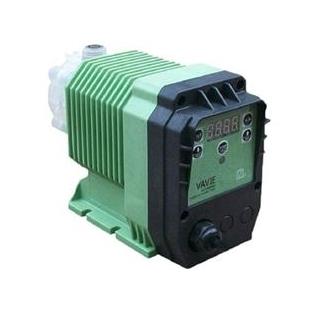
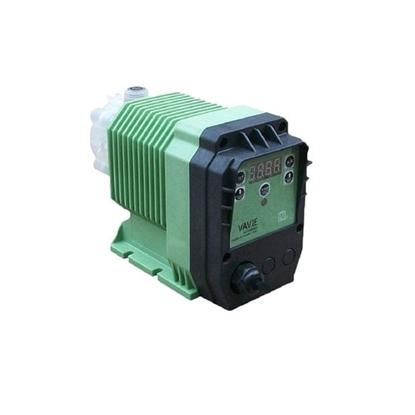
When users search for peristaltic pump manufacturers, they are rarely just comparing flow rates. The real concern is whether a pump can handle the fluid, the duty cycle, and the operating environment without creating ongoing maintenance problems. ATO Automation approaches industrial pumping from this practical angle, offering pump solutions that are selected for stability, media compatibility, and predictable service life rather than short-term performance claims.
A peristaltic pump is often chosen when fluids are abrasive, viscous, or sensitive to shear. In dosing and transfer applications, an industrial peristaltic pump provides accurate flow control while keeping the fluid isolated inside the hose, which significantly reduces contamination and leakage risks. These characteristics make peristaltic pump designs especially suitable for chemical dosing, water treatment, slurry handling, and laboratory processes where precision and cleanliness matter.
Users frequently ask how a peristaltic pump compares with alternatives such as a diaphragm pump or screw pump. In practice, diaphragm pumps can struggle with abrasive media over time, while screw pumps may require tighter tolerances and more complex maintenance. Peristaltic pump systems simplify this equation by concentrating wear on a single, easily replaceable hose, which reduces downtime and lowers long-term operating costs. As a result, many dosing pump and mud pump applications benefit from this straightforward maintenance model.
Beyond peristaltic technology, ATO Automation supports a broad range of industrial fluid handling needs. Sewage pump solutions are selected for solid handling and continuous operation, while a bilge pump or self priming pump is often applied in drainage and intermittent transfer scenarios. For pressure management in building services or process lines, water booster pump systems are configured to maintain consistent flow without overstressing downstream components. This variety allows users to match pump type to application rather than forcing one design to fit all conditions.
Another recurring requirement is system integration. Industrial users often need pumps that work reliably alongside valves, sensors, and automated controls. ATO Automation provides clear technical parameters such as flow range, pressure rating, material compatibility, and motor options, which simplifies selection during system design or retrofitting. This transparency is particularly valuable for engineers responsible for long-term plant reliability.
For buyers evaluating peristaltic pump manufacturers and industrial pump suppliers, the advantage lies in product clarity and application relevance. By focusing on how pumps behave in real operating conditions, ATO Automation supports projects that demand accuracy, durability, and predictable maintenance across diverse industrial environments.
A peristaltic pump is often chosen when fluids are abrasive, viscous, or sensitive to shear. In dosing and transfer applications, an industrial peristaltic pump provides accurate flow control while keeping the fluid isolated inside the hose, which significantly reduces contamination and leakage risks. These characteristics make peristaltic pump designs especially suitable for chemical dosing, water treatment, slurry handling, and laboratory processes where precision and cleanliness matter.
Users frequently ask how a peristaltic pump compares with alternatives such as a diaphragm pump or screw pump. In practice, diaphragm pumps can struggle with abrasive media over time, while screw pumps may require tighter tolerances and more complex maintenance. Peristaltic pump systems simplify this equation by concentrating wear on a single, easily replaceable hose, which reduces downtime and lowers long-term operating costs. As a result, many dosing pump and mud pump applications benefit from this straightforward maintenance model.
Beyond peristaltic technology, ATO Automation supports a broad range of industrial fluid handling needs. Sewage pump solutions are selected for solid handling and continuous operation, while a bilge pump or self priming pump is often applied in drainage and intermittent transfer scenarios. For pressure management in building services or process lines, water booster pump systems are configured to maintain consistent flow without overstressing downstream components. This variety allows users to match pump type to application rather than forcing one design to fit all conditions.
Another recurring requirement is system integration. Industrial users often need pumps that work reliably alongside valves, sensors, and automated controls. ATO Automation provides clear technical parameters such as flow range, pressure rating, material compatibility, and motor options, which simplifies selection during system design or retrofitting. This transparency is particularly valuable for engineers responsible for long-term plant reliability.
For buyers evaluating peristaltic pump manufacturers and industrial pump suppliers, the advantage lies in product clarity and application relevance. By focusing on how pumps behave in real operating conditions, ATO Automation supports projects that demand accuracy, durability, and predictable maintenance across diverse industrial environments.
Pesquisar

 English
 Arabic
 French
 Spanish
 Portuguese
 Deutsch
 Turkish
 Dutch
Dutch
 Italiano
 Russian
 Romaian
 Greek
Greek
Atualizações recentes
-
Industrial pumping is about reliability, not guesswork.
From peristaltic pumps for precise dosing to sewage and booster pump solutions, ATO Automation offers equipment designed for real operating conditions.
Explore industrial pump solutions built for accuracy, durability, and long-term performance.
https://www.ato.com/pumpsIndustrial pumping is about reliability, not guesswork. From peristaltic pumps for precise dosing to sewage and booster pump solutions, ATO Automation offers equipment designed for real operating conditions. Explore industrial pump solutions built for accuracy, durability, and long-term performance. 🔗 https://www.ato.com/pumps0 Comentários 0 Compartilhamentos 38 Visualizações 0 Anterior
Mais stories