


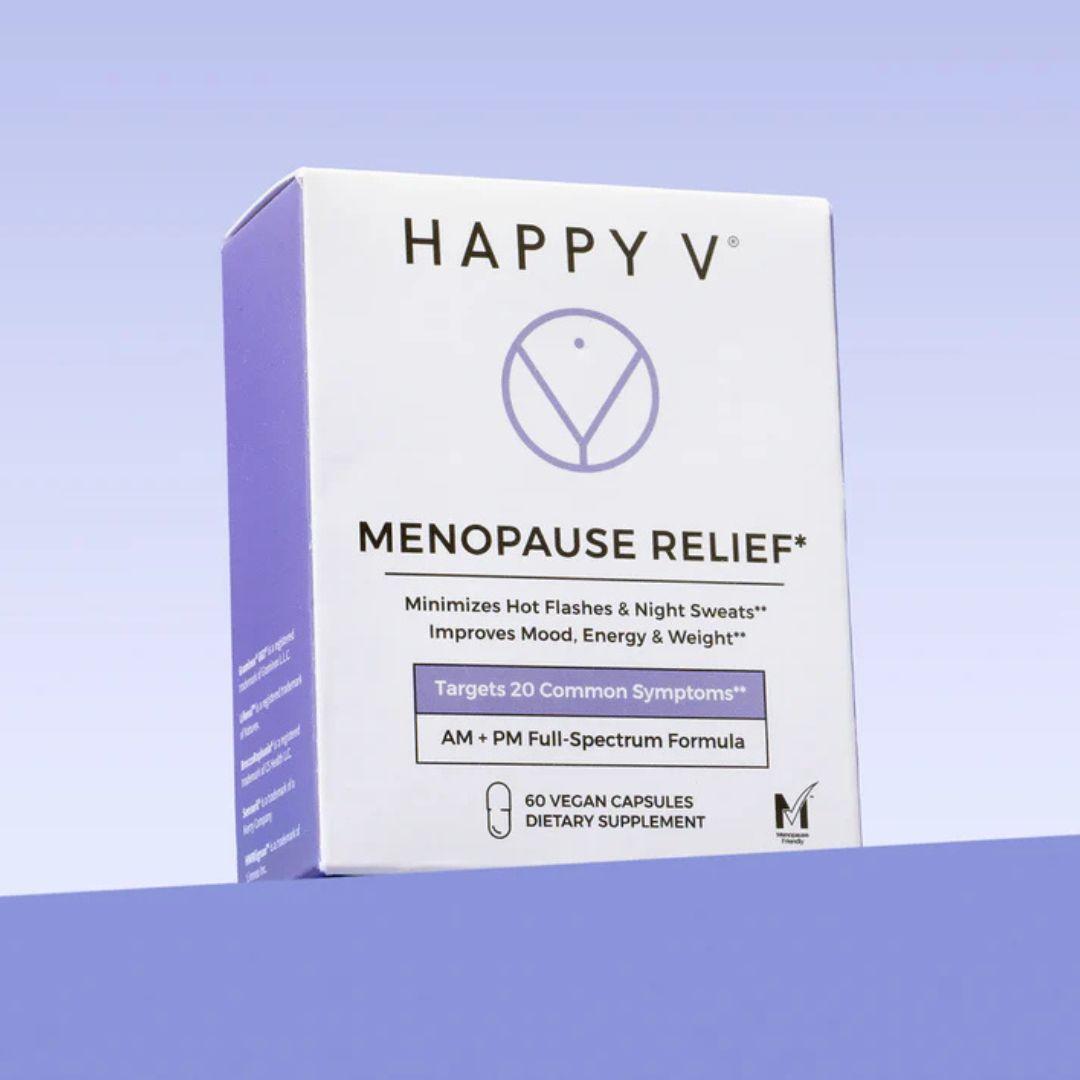
Unlock Day-Night Hormone Harmony with Happy V's Menopause Formula
Learn how menopause probiotics may support gut and vaginal comfort, what strains to look for, how to take them safely, and when to call a doctor.
Menopause can make your body feel “off.” Your belly may bloat more. Bathroom trips may change. Your vagina may feel dry or irritated. This is not “in your head.” Lower estrogen can change your gut and vaginal bacteria, and that can affect comfort.
This guide explains probiotics for menopause in plain words. You’ll learn what they can help with, what they can’t, and how to pick a safe option.
Probiotics for Menopause: What They Do
Probiotics for menopause are “good” microbes (tiny living helpers) you take in food or pills. They aim to support your body’s natural balance.
After menopause, estrogen drops. That can raise vaginal pH and reduce helpful Lactobacillus in the vagina. Lactobacillus helps keep the area more acidic, which can block harmful germs.
So, menopause probiotics may help most with:
-
Gut comfort (like bloating or irregular stools)
-
Vaginal and urinary balance (like odor changes or repeat infections in some women)
But keep expectations real. Research is still growing, and results can be modest for some symptoms.
Menopause Probiotics for Gut Comfort and Bloating
Many women notice more gas, bloating, or constipation in midlife. Menopause probiotics may help by supporting the gut microbiome (your gut’s community of microbes).
Here’s what to watch for (and where probiotics for menopause may fit):
-
Bloating after normal meals: A steady probiotic routine may support digestion comfort.
-
Irregular stools: Some strains are studied for regularity support.
-
More sensitivity to “heavy” foods: Your gut may react faster than before.
Simple, menopause-friendly probiotic foods can help too:
-
Yogurt with live cultures
-
Kefir
-
Sauerkraut or kimchi (small servings if you bloat easily)
If foods bother you, probiotics for menopause in capsule form can feel easier to control (same dose each day).
Probiotics for Menopause: Vaginal and Urinary Comfort
A common menopause story is this: “I feel dry, I feel irritated, and I get infections more often.” Lower estrogen can change vaginal moisture, tissue strength, and the mix of vaginal bacteria.
That’s why probiotics for menopause often focus on Lactobacillus strains, since Lactobacillus is linked with vaginal balance.
Important nuance: Some experts also warn that many “vaginal probiotic” claims are ahead of the science. So think of menopause probiotics as support, not a guaranteed fix.
If your main issues are hot flashes and night sweats, note this: one evidence-focused review says probiotics are not a primary tool for hot flashes.
For those symptoms, many women look at other non-hormone supports too (for example, some day/night menopause formulas use ingredients like genistein, red clover, DIM, magnesium, and ashwagandha).
How to Choose Probiotics for Menopause
Not all menopause probiotics are the same. Strains matter. Quality testing matters. Here’s a simple checklist for probiotics for menopause:
-
Look for named strains (not just “probiotic blend”). Strains like Lactobacillus and Bifidobacterium are commonly used in women’s formulas, and some products list specific strains such as L. acidophilus, L. rhamnosus, L. crispatus, L. reuteri, and B. lactis
-
Choose a trusted maker. Some products have been found to contain microbes not listed on the label.
-
Start simple. If you bloat easily, start with a lower dose and build up slowly.
-
Pick your goal:
-
For belly comfort → gut-focused strains
-
For intimate comfort → Lactobacillus-heavy formulas (often used for vaginal balance)
-
If a label promises “instant menopause cure,” skip it. Probiotics for menopause work slowly, and results vary.
How to Take Probiotics for Menopause Safely
Most healthy people handle probiotics well. Mild gas or stomach changes can happen at first.
Use these safety steps with menopause probiotics:
-
Take them with food if your stomach is sensitive.
-
Give it time. Many people notice changes in 2–4 weeks with steady use, and longer for deeper benefits.
-
Talk to your doctor first if you are immunocompromised or very ill, because rare infections have been reported in higher-risk groups.
Also, see a clinician soon if you have strong burning, pelvic pain, fever, bleeding, or symptoms that keep coming back. Probiotics for menopause should not delay real care.
Frequently Asked Questions (Probiotics for Menopause)
Do probiotics help with menopause symptoms?
They may help some women, especially with gut comfort and vaginal balance, but results can be mixed and not everyone feels a big change.
Can probiotics help with hot flashes?
There isn’t strong evidence that probiotics are a main solution for hot flashes. They may support general health, but hot flashes often need other approaches.
What is the best probiotic for vaginal health after menopause?
Many products focus on Lactobacillus strains because Lactobacillus is linked with vaginal pH and balance, which can shift after menopause.
Can taking probiotics help with weight gain after menopause?
Probiotics may support gut health, but they are not a guaranteed weight tool. Weight changes after menopause usually involve hormones, sleep, stress, and muscle loss too.
How long do probiotics take to work?
Some people notice early changes in 1–2 weeks, but a fair trial is usually 2–4 weeks, and sometimes longer with consistent use.
Are probiotics safe to take every day?
For most healthy adults, probiotics are usually safe, with mild side effects at most. People with weak immune systems should ask a doctor first.

 English
 Arabic
 French
 Spanish
 Portuguese
 Deutsch
 Turkish
 Dutch
Dutch
 Italiano
 Russian
 Romaian
 Greek
Greek