


How Soil, Climate, and Water Quality Shape Your Cement Selection
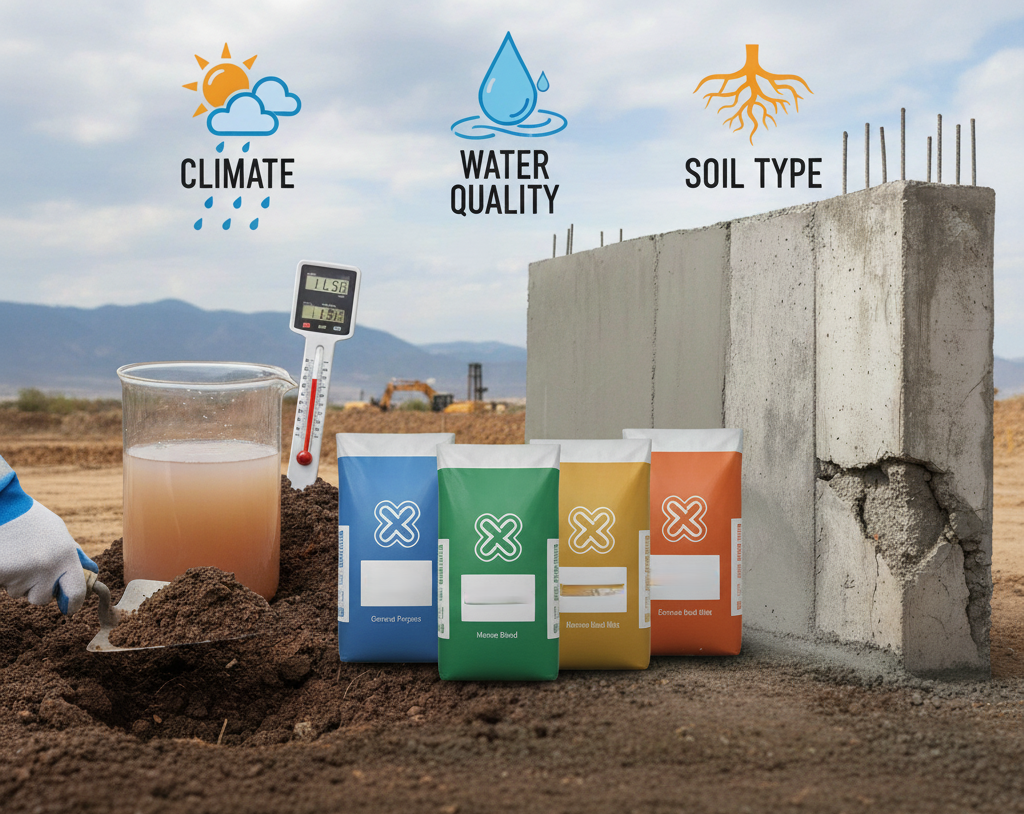
You build a home or a structure with the hope that it will live longer than you. You expect the foundation to hold steady, the walls to stay firm, and the overall frame to resist the demands of time. That only happens when you choose the right cement for the right environment. You take a big risk when you ignore the influence of soil, weather, and water on concrete strength.
A poor match between the site and the cement, blocks the structure from reaching its real lifespan. Repairs drain your budget. As a result, the foundation weakens while problems show up early. None of this needs to happen. This is where you should understand the qualities of the best cement for construction.
Every site carries its own environmental fingerprint. You deal with soil type, climate cycle, as well as water that mixes into your concrete. These three elements create the core conditions that shape concrete behaviour. So, how do soil, climate and water quality shape your cement selection? So, let us break this down step by step.
Soil & Groundwater Aspect – The Foundation
Every structure sits on soil that carries its own chemical behaviour. You may overlook this during planning. Yet the soil can act as a direct threat to concrete. Groundwater also joins the mix. Together, they can cause swelling, cracking, and loss of strength if you choose the wrong cement.
Sulphate Attack – A Big Soil Threat
Some soils carry high sulphate content. Gypsum-rich soil is a common culprit. You also find sulphates dissolved in groundwater in many regions. These sulphates react with the C3A compound inside cement. That reaction causes a slow but serious problem. The concrete expands. Cracks form. Ettringite forms inside the hardened structure. This leads to delayed damage that grows from inside out. You lose structural integrity long before the building finishes its expected life cycle.
You control this threat through better cement selection. Cements with low C3A content give you far more protection in sulphate-rich soil. Blended types like Portland Pozzolana Cement or Portland Slag Cement work well because their chemical structure slows down sulphate reactions. Sulphate Resisting Cement works even better in extremely aggressive zones. You get a denser, more stable concrete surface that blocks sulphate entry. You cut down expansion. You protect the steel and concrete bond.
Managing Chlorides in Saline or Coastal Environments
Coastal regions create another challenge. Soil or groundwater near the coast often carries high chloride content. Chlorides reach the reinforcement while reacting with the steel. This results in corrosion, with which the concrete cover starts breaking off in flakes. The rebar may lose thickness, too.
Chlorides can produce low-permeability concrete. Portland Slag Cement offers strong resistance. What it does is create a matrix that slows chloride entry. It limits the paths through which chlorides travel. This way, it improves concrete durability. It also reduces spalling while preserving the reinforcement core. This matters in cities near the sea or in regions with saline soil patches.
Conditions where pH Level is Low, or Soil is Acidic
Acidic soil brings a different type of attack. The low pH directly targets the cement paste. The paste weakens while pores open up. At the same time, concrete loses mass over time. Blended cements help again here because they reduce permeability. A denser concrete mixture gives you fewer contact points for acid exposure.
So, soil chemistry needs your attention at the start of your construction plan. You save time and money later.
Climatic Conditions – Understanding the Real Environmental Elements
Climate shapes the behaviour of cement during hydration as well as curing. Weather patterns change how concrete sets. There are clear differences among hot regions, cold belts, and humid zones. You need to match the cement type to your climate to get the advantage.
High Temperatures in Hot or Arid Regions
Heat pushes concrete to set too fast. Water evaporates before proper hydration. Plastic shrinkage cracks, and you will see surface weakness. Workability can be a factor here because the mix may stiffen quickly.
You can solve this issue by choosing cements that hydrate at a moderate pace. Portland Pozzolana Cement or Portland Slag Cement produce less heat during hydration. This protects your concrete in hot climates. The structure stays stable while the concrete cures evenly because the heat reaction slows down. As a result, it reduces shrinkage and improves the overall density.
Freezing & Thawing in Cold Climate Zones
Cold regions come with freeze-thaw cycles. Water inside the concrete freezes. The frozen water expands. The concrete cracks. Then the ice melts, and water occupies the cracks. The cycle repeats. Each cycle increases the damage.
You protect your concrete when you choose cement that reaches high strength over time while keeping permeability low. When concrete stays dense, water finds fewer gaps to enter. You can pair such cement with air-entraining admixtures. This gives the concrete small air pockets that act like a buffer. The concrete holds up better through repeated freeze-thaw cycles. You get a longer service life in cold climate zones.
High Rainfall & Humidity
Regions with high rainfall may witness more moisture issues. Here, the concrete may absorb more water. This increases the risk of carbonation. You may also see leaching where minerals wash out of the concrete. This weakens the mass over time.
Note that blended cements show clear advantages here. Their fine particles help create dense concrete. Dense concrete may tend to slow down the entry of moisture. This offers more resistance against water degradation. This can help in tropical areas or rainforests with a long monsoon season.
Mixing Medium – Considering the Water Quality
Water forms the core of cement hydration. You control the strength of the concrete through the purity of your water. Poor-quality water interferes with the chemical bond. You lose strength. You get inconsistent curing.
Knowing the Golden Rule – Use Only Potable Water
If the water is not safe to drink, it should not enter your cement mix. So the golden rule here is to use portable water that offers reliable hydration. This avoids chemical surprises while offering uniform curing without unexpected delays or strength loss.
Impacts of Impurities
Different contaminants cause different types of damage-
Salt & Alkali- Salt-rich water slows down setting. It alters the hydration pattern. You may get inconsistent strength across the slab.
Silt & Suspended Solids- Silt blocks the bond between cement paste and aggregates. You get weak patches. You lose compressive strength. You may also see scaling on the surface.
Organic Matter- Organic materials in water extend the setting time. In some cases, they stop the mix from setting properly. You end up with soft concrete.
Cement Response to Impure Water
Blended cements like Portland Pozzolana Cement show better tolerance to small impurities. The pozzolanic reaction helps neutralise mild chemical interference. You still need clean water, but you get some added safety if your local water source fluctuates in purity.
A Concluding Thought
Every project site carries different environmental pressures. You protect your investment when you choose the best cement for house construction for those conditions.
FAQs
How do soil conditions affect your cement choice?
Soil controls chemical exposure. If the soil holds sulphates or chlorides, you face faster damage. You match your cement type to the soil profile so your structure stays stable. You avoid cracks, swelling, or reinforcement corrosion. Proper soil testing helps you decide the correct cement for the region.
Can climate change impact the performance of your concrete mix?
Climate affects hydration and curing. Heat speeds up the setting. Cold slows down strength gain. Humidity affects moisture movement inside the mix. You adjust your cement type based on your region, so your structure sets at the right pace and gains proper long-term strength.
Why does water quality matter in concrete?
Water starts the hydration reaction. Poor water introduces salts, silt, and organic matter. This weakens the structure and disturbs the setting. You use potable water so your concrete cures evenly. Clean water can support better bonding between the cement paste as well as the aggregates.

 English
 Arabic
 French
 Spanish
 Portuguese
 Deutsch
 Turkish
 Dutch
Dutch
 Italiano
 Russian
 Romaian
 Greek
Greek