


High Performance Polyethylene Market Competitive Landscape Evolving with New Product Launches
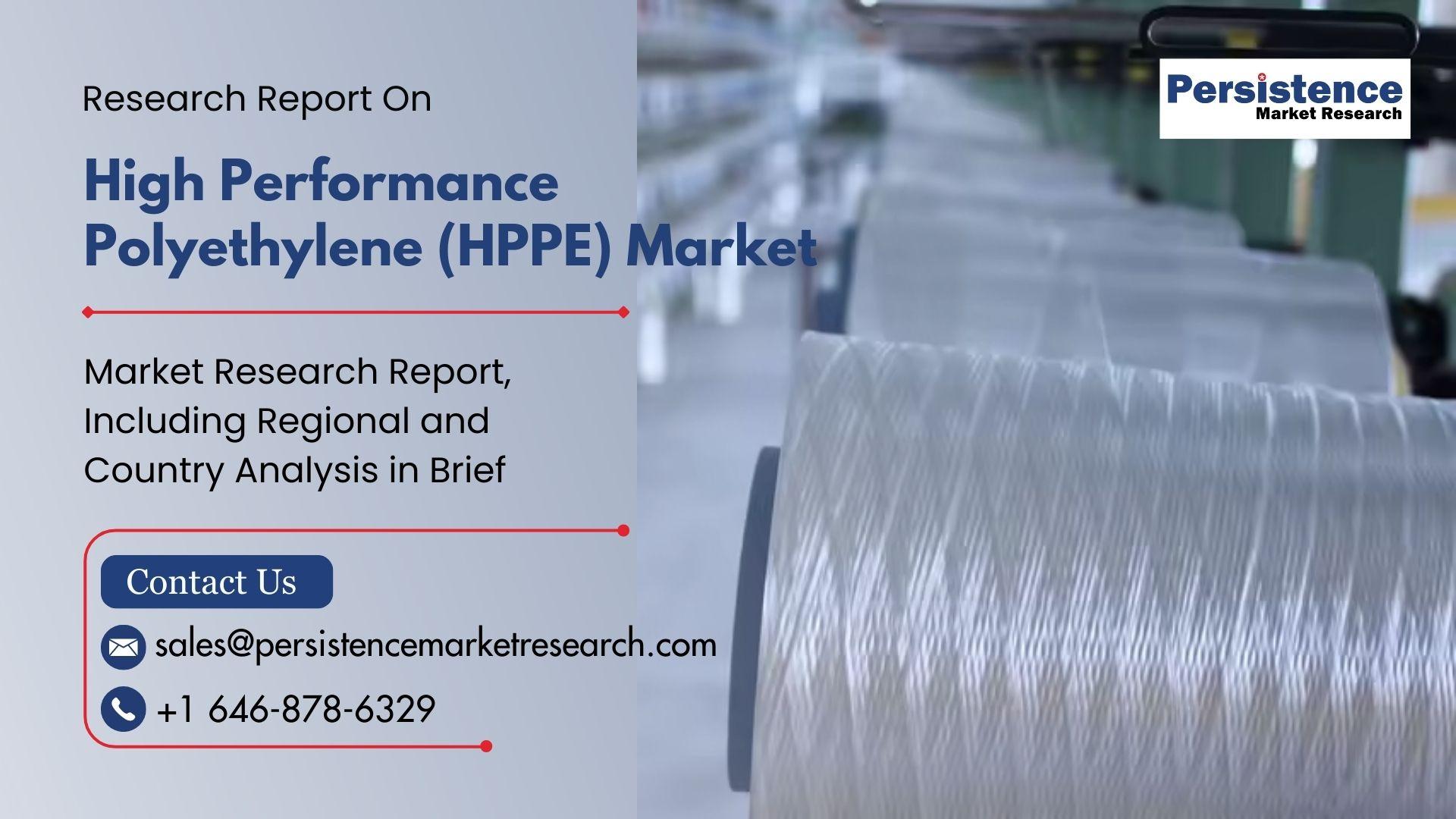
Introduction: Understanding the Importance of High Performance Polyethylene
High Performance Polyethylene (HPPE) has emerged as a critical material across multiple high-demand industries due to its exceptional strength-to-weight ratio, chemical resistance, and durability. Known for outperforming conventional polyethylene grades, HPPE is widely used in applications where high tensile strength, impact resistance, and lightweight properties are essential. From ballistic protection and medical devices to ropes, nets, and industrial components, HPPE continues to redefine material performance standards. As industries increasingly prioritize efficiency, safety, and sustainability, the global HPPE market is gaining steady momentum.
Market Overview and Growth Outlook
The global high performance polyethylene market is witnessing consistent expansion, supported by rising demand from defense, healthcare, marine, and industrial sectors. According to a report by Persistence Market Research, the global HPPE market is projected to be valued at around US$ 9.0 billion in 2026. Over the forecast period, the market is expected to grow steadily, reaching approximately US$ 12.9 billion by 2033. This growth reflects a compound annual growth rate (CAGR) of 5.3%, highlighting the increasing adoption of HPPE as a high-value, performance-driven material across diverse applications.
What Is High Performance Polyethylene and Why Is It Widely Used?
High performance polyethylene is a class of ultra-strong, lightweight polyethylene materials engineered to deliver superior mechanical and chemical properties compared to conventional plastics. HPPE is widely used because it offers exceptional abrasion resistance, low friction, high impact strength, and excellent fatigue resistance, even under extreme conditions. These properties make it ideal for demanding applications such as bulletproof vests, cut-resistant gloves, surgical sutures, high-strength ropes, and industrial conveyor systems. Additionally, HPPE’s resistance to moisture, chemicals, and UV radiation enhances its lifespan, reducing maintenance costs and improving long-term performance for end users.
Get Your FREE Sample Report Instantly – Click Now
Key Growth Drivers Fueling the HPPE Market
One of the primary drivers of the HPPE market is the growing demand for lightweight yet durable materials across defense and security applications. HPPE fibers are extensively used in ballistic armor, helmets, and protective gear due to their high energy absorption capacity and low weight. This has become increasingly important as military and law enforcement agencies seek advanced materials that enhance mobility without compromising safety.
Another significant growth factor is the rising use of HPPE in medical and healthcare applications. The material’s biocompatibility, chemical inertness, and resistance to wear make it suitable for surgical sutures, orthopedic implants, and medical textiles. As global healthcare expenditure rises and surgical procedures become more advanced, the demand for high-performance medical materials such as HPPE continues to increase.
Industrial and Marine Applications Driving Demand
Industrial sectors are also playing a crucial role in the expansion of the HPPE market. HPPE is widely used in manufacturing conveyor belts, protective linings, gears, and seals due to its excellent wear resistance and low coefficient of friction. These properties help improve operational efficiency and reduce downtime in heavy-duty industrial environments.
In marine and offshore applications, HPPE ropes and cables are replacing traditional steel wires because they are lighter, stronger, and more resistant to corrosion. This shift is particularly beneficial in shipping, offshore oil and gas operations, and fishing industries, where durability and safety are critical. The increasing adoption of HPPE in these sectors is contributing significantly to overall market growth.
Segmentation Insights: Forms and End-Use Industries
The high performance polyethylene market can be segmented based on form, including fibers, sheets, films, and molded components. HPPE fibers dominate the market, driven by their extensive use in ballistic protection, ropes, nets, and high-strength textiles. Sheets and films are gaining traction in industrial and medical applications, while molded HPPE components are increasingly used in automotive and machinery parts.
By end-use industry, defense and security represent a major share of the market, followed by healthcare, industrial manufacturing, marine, and sports equipment. The sports and leisure segment is also emerging as a promising area, with HPPE being used in high-performance sporting goods such as climbing ropes, protective padding, and sailing equipment.
Regional Analysis: Global Market Dynamics
From a regional perspective, North America holds a prominent position in the HPPE market, supported by strong defense spending, advanced healthcare infrastructure, and high adoption of innovative materials. The presence of leading HPPE manufacturers and continuous investment in research and development further strengthen the region’s market position.
Europe follows closely, driven by demand from automotive, industrial, and marine sectors, as well as increasing emphasis on lightweight and sustainable materials. Meanwhile, the Asia Pacific region is expected to witness the fastest growth during the forecast period. Rapid industrialization, expanding manufacturing bases, and rising defense budgets in countries such as China, India, and South Korea are accelerating HPPE adoption across the region.
Challenges and Market Constraints
Despite its strong growth outlook, the HPPE market faces certain challenges. High production costs and complex manufacturing processes can limit adoption in price-sensitive applications. Additionally, competition from alternative high-performance materials, such as aramid fibers and carbon composites, poses a challenge in specific end-use segments.
Environmental concerns related to plastic materials also present a restraint, prompting manufacturers to focus on recyclability and sustainable production methods. Addressing these challenges through technological innovation and efficient production techniques will be essential for long-term market growth.
Innovation and Future Opportunities
Technological advancements are opening new opportunities in the HPPE market. Manufacturers are investing in advanced processing techniques to enhance material performance while reducing production costs. Research into recyclable and bio-based polyethylene variants is also gaining momentum, aligning HPPE with global sustainability goals.
Emerging applications in renewable energy, aerospace, and advanced mobility solutions are expected to create additional growth avenues. As industries continue to seek materials that offer high strength, low weight, and long-term durability, HPPE is well-positioned to meet these evolving demands.
Conclusion: A Market Built on Performance and Reliability
The high performance polyethylene market is steadily expanding as industries increasingly rely on advanced materials to meet demanding operational requirements. Supported by consistent growth in defense, healthcare, industrial, and marine applications, HPPE continues to demonstrate its value as a versatile and high-performing material. With the global market expected to grow from US$ 9.0 billion in 2026 to US$ 12.9 billion by 2033 at a CAGR of 5.3%, the HPPE market presents strong opportunities for manufacturers, investors, and end users seeking durable, lightweight, and future-ready material solutions.
Explore the Latest Trending Research Reports:

 Arabic
 French
 Spanish
 Portuguese
 Deutsch
 Turkish
 Dutch
Dutch
 Italiano
 Russian
 Romaian
 Portuguese (Brazil)
 Greek
Greek