


Why Enterprises Are Investing in Cloud-Based Payments Platforms at Scale
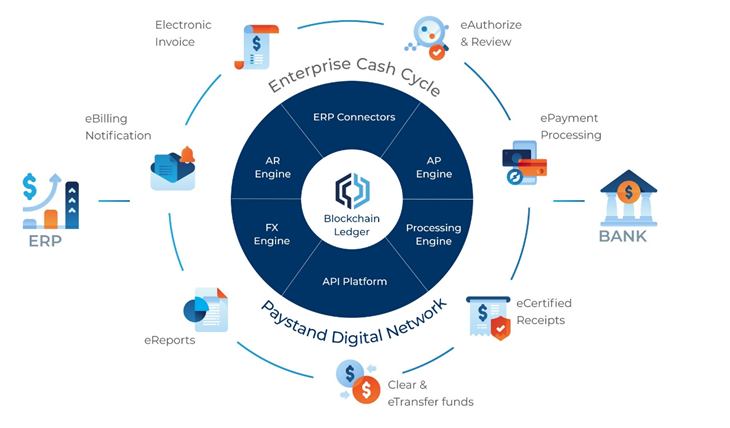
The enterprise payments platform market is undergoing a fundamental transformation as organizations across industries rethink how money moves through their ecosystems. Traditional, siloed payment systems are no longer sufficient to support the speed, scale, and complexity of modern business operations. As a result, enterprises are increasingly investing in unified payment platforms that support real-time processing, multi-rail connectivity, and seamless integration with internal and external systems.
In 2026, the global enterprise payments platform market is likely to be valued at US$16.5 billion. Over the forecast period from 2026 to 2033, the market is expected to grow steadily and reach US$32.1 billion, expanding at a compound annual growth rate (CAGR) of 10.0%. This growth is primarily driven by enterprises modernizing legacy payment infrastructures to enable real-time, API-driven, and omni-channel payment capabilities across cards, ACH, instant payments, and alternative payment methods.
Understanding Enterprise Payments Platforms
Enterprise payments platforms are centralized solutions designed to manage, process, route, and reconcile high volumes of payments across multiple channels and geographies. These platforms provide a unified layer that connects enterprises with banks, payment networks, fintech partners, and end users through standardized APIs and configurable workflows.
Unlike traditional payment processing tools, enterprise payments platforms are built to handle complexity at scale. They support multiple payment rails, currencies, compliance frameworks, and security standards while offering real-time visibility into transaction flows. For large enterprises, banks, and financial institutions, these platforms act as the backbone for both inbound and outbound payments.
As digital commerce accelerates and payment expectations evolve, enterprises are increasingly viewing payment platforms not just as operational tools, but as strategic enablers for customer experience, revenue growth, and operational efficiency.
Market Size and Growth Outlook
The strong growth trajectory of the enterprise payments platform market reflects a broader shift in how organizations approach financial operations. By 2026, market revenues are projected to reach US$16.5 billion, supported by rising enterprise spending on digital transformation initiatives.
By 2033, the market is forecast to double in size, reaching US$32.1 billion. A CAGR of 10.0% highlights sustained demand across both developed and emerging markets. Enterprises are prioritizing payment modernization to support real-time settlements, reduce operational friction, and gain better control over cash flows.
This growth is not limited to financial institutions alone. Retailers, marketplaces, logistics providers, healthcare organizations, and large corporates are all contributing to market expansion as payment complexity increases across business models.
Key Growth Drivers Shaping the Market
Modernization of Legacy Payment Systems
One of the most significant drivers of market growth is the widespread modernization of legacy payment infrastructures. Many enterprises still rely on fragmented systems built decades ago, which struggle to support real-time payments, API connectivity, and cross-border transactions.
Enterprise payments platforms enable organizations to replace or overlay legacy systems with flexible, cloud-native architectures. This modernization reduces processing delays, improves system resilience, and allows enterprises to quickly adapt to new payment methods and regulatory requirements.
Rise of Real-Time and Instant Payments
Real-time payments are becoming the new standard across global markets. Enterprises now expect payments to be processed and settled instantly, regardless of time zones or banking hours. Regulatory initiatives and national instant payment schemes are accelerating this transition.
Enterprise payments platforms support real-time payment rails by offering intelligent routing, liquidity management, and fraud monitoring capabilities. As demand for instant payments continues to rise, enterprises are increasingly investing in platforms that can deliver speed without compromising security or compliance.
Expansion of API-Driven and Open Banking Models
Open banking mandates and API-based financial ecosystems are reshaping the payments landscape. Enterprises want the ability to integrate payments seamlessly into their digital products, ERP systems, and customer-facing applications.
Enterprise payments platforms provide standardized APIs that allow businesses to embed payment functionality directly into workflows. This capability is particularly important for fintechs, marketplaces, and digital-first enterprises that rely on automation and data-driven operations.
Role of Cloud Adoption and Embedded Finance
Cloud-Based Infrastructure Driving Scalability
Cloud adoption is playing a critical role in the evolution of enterprise payments platforms. Cloud-based deployments offer scalability, flexibility, and faster implementation compared to on-premise systems. As enterprises expand into new markets or experience seasonal transaction spikes, cloud platforms allow them to scale without heavy infrastructure investments.
By 2026, cloud-based deployments are anticipated to account for over 55% of the revenue share, making it the leading deployment mode. This dominance is driven by the widespread adoption of SaaS models and the need to support remote and dynamic enterprise operations.
Embedded Finance Accelerating Platform Demand
Embedded finance models are further fueling demand for enterprise payments platforms. Businesses across retail, logistics, and technology sectors are embedding payment, lending, and financial services directly into their offerings.
Enterprise payments platforms enable embedded finance by providing modular payment services that can be integrated into non-financial products. This trend is expanding the addressable market beyond traditional BFSI players and into a wide range of enterprise use cases.
Regulatory Landscape and Compliance Impact
Regulatory initiatives supporting instant payments, open banking, and data security are reinforcing the need for robust enterprise payment platforms. Compliance requirements related to anti-money laundering (AML), know-your-customer (KYC), and data protection are becoming more complex across regions.
Enterprise payments platforms help organizations navigate these challenges by offering built-in compliance tools, real-time monitoring, and audit capabilities. As regulatory scrutiny increases, enterprises are prioritizing platforms that reduce compliance risk while maintaining operational efficiency.
Component Analysis: Solutions Leading the Market
From a component perspective, the solution segment is projected to dominate the enterprise payments platform market in 2026, accounting for approximately 65% of the total market share. This dominance reflects enterprise demand for comprehensive payment solutions rather than standalone services.
Payment platform solutions typically include real-time gateways, transaction orchestration, fraud detection, reconciliation tools, and compliance management. These core functionalities are critical for enterprises processing high volumes of payments across multiple channels.
The services segment, which includes implementation, integration, and managed services, continues to play a supporting role. However, enterprises increasingly prefer solution-centric offerings that deliver long-term scalability and automation.
Deployment Mode Trends: Cloud Takes the Lead
Cloud-based enterprise payments platforms are emerging as the preferred deployment model across industries. The shift toward cloud is driven by several factors, including reduced upfront costs, faster time-to-market, and continuous feature updates.
By 2026, cloud deployments are expected to represent more than 55% of market revenue. Enterprises value the ability to access payment platforms remotely, integrate with third-party applications, and deploy updates without disrupting operations.
While on-premise deployments remain relevant for highly regulated environments, their market share is gradually declining as cloud security and compliance capabilities continue to mature.
End-User Analysis: BFSI Remains the Largest Segment
The banking, financial services, and insurance (BFSI) sector is anticipated to remain the leading end-user segment in the enterprise payments platform market. In 2026, BFSI is expected to account for over 40% of total revenue.
Banks and financial institutions process massive transaction volumes and face stringent requirements for fraud prevention, compliance, and reliability. Enterprise payments platforms help BFSI organizations streamline operations, support new payment rails, and deliver enhanced customer experiences.
Beyond BFSI, sectors such as retail, e-commerce, healthcare, and logistics are increasingly adopting enterprise payment platforms to manage complex payment flows and support omni-channel commerce.
Regional Analysis: North America and Asia Pacific
North America Leads the Global Market
North America is expected to be the largest regional market for enterprise payments platforms, accounting for approximately 35% of the global market share in 2026. The region benefits from a mature financial ecosystem, advanced digital infrastructure, and strong regulatory support for innovation.
The presence of leading payment technology providers, fintech startups, and large enterprises further drives adoption. North American organizations are early adopters of real-time payments, open banking, and cloud-based financial solutions.
Asia Pacific Emerges as the Fastest-Growing Region
Asia Pacific is likely to be the fastest-growing regional market during the forecast period. Growth is driven by high smartphone penetration, rapid digital payment adoption, and strong manufacturing and enterprise activity across key countries.
Governments across the region are promoting cashless economies and instant payment systems, creating favorable conditions for enterprise payment platform adoption. As businesses expand regionally and globally, demand for scalable and interoperable payment platforms continues to rise.
Competitive Landscape and Market Dynamics
The enterprise payments platform market is highly competitive, with vendors focusing on innovation, platform flexibility, and ecosystem partnerships. Market participants are investing heavily in API development, cloud-native architectures, and advanced analytics to differentiate their offerings.
Strategic collaborations between banks, fintechs, and technology providers are becoming increasingly common. These partnerships enable faster product development and broader market reach, particularly in emerging economies.
As competition intensifies, vendors that can offer modular, compliant, and scalable solutions are expected to gain a competitive advantage.
Future Trends and Market Opportunities
Looking ahead, the enterprise payments platform market is poised for continued evolution. Artificial intelligence and machine learning are expected to play a greater role in fraud detection, transaction optimization, and predictive analytics.
Cross-border payments will remain a key area of focus, with enterprises seeking platforms that reduce settlement times and currency conversion costs. Additionally, demand for unified payment orchestration across digital and physical channels will continue to grow.
As enterprises increasingly view payments as a strategic asset rather than a back-office function, investment in advanced payment platforms is expected to accelerate further.
Conclusion
The global enterprise payments platform market is entering a phase of sustained and transformative growth. Valued at US$16.5 billion in 2026 and projected to reach US$32.1 billion by 2033, the market reflects a fundamental shift toward real-time, cloud-based, and API-driven payment infrastructures.
Driven by modernization of legacy systems, rising adoption of instant payments, and supportive regulatory frameworks, enterprise payments platforms are becoming essential for organizations across industries. With North America leading adoption and Asia Pacific emerging as the fastest-growing region, the market presents significant opportunities for both established players and new entrants.
As enterprises continue to prioritize speed, security, and scalability in financial operations, enterprise payments platforms will remain a critical enabler of digital transformation and long-term business growth.
Related Reports:

 English
 Arabic
 French
 Spanish
 Portuguese
 Deutsch
 Turkish
 Dutch
Dutch
 Italiano
 Russian
 Romaian
 Greek
Greek