


Electric Vehicle Charging Station Market Monitors Competitive Landscape Changes
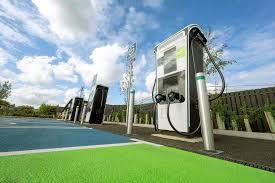
Overview of Competitive Landscape
The electric vehicle charging station market monitors competitive landscape changes as new entrants, mergers, and technological innovations shape the industry. Increasing global EV adoption encourages operators to expand coverage, improve service reliability, and deploy advanced infrastructure. Competition fosters efficiency, scalability, and innovation across urban, highway, commercial, and rural networks.
Market Entry and Expansion
New entrants focus on strategic deployment in urban centers, highways, and industrial areas to capture market share. Established operators expand networks through acquisitions, partnerships, and regional collaborations. Competitive pressure drives faster installation, improved energy management, and adoption of smart technologies to differentiate service offerings.
Impact on Urban Infrastructure
Competition in urban markets enhances network density, accessibility, and service quality. Operators install chargers in commercial districts, residential complexes, municipal facilities, and public parking to meet high EV demand. Smart infrastructure, standardized equipment, and real-time monitoring are increasingly implemented to provide consistent service and improve user experience.
Highway and Intercity Networks
Highway and intercity charging corridors are influenced by competitive dynamics. Operators strategically deploy high-capacity fast chargers along major routes to attract EV users. Competition promotes rapid corridor development, optimal charger placement, and integration with energy management systems, ensuring seamless long-distance travel for both passenger and commercial vehicles.
Private Sector Participation
Private operators actively respond to competitive pressures by expanding commercial, workplace, and fleet charging solutions. Investment in smart technologies, energy management platforms, and maintenance systems enhances reliability. Collaboration with utilities and local authorities ensures efficient deployment and operational consistency in densely trafficked areas.
Fleet Electrification and Competition
Fleet operators, including logistics, delivery, and public transport providers, benefit from competitive infrastructure deployment. High-capacity chargers, smart energy management, and depot-based solutions are installed to maintain operational efficiency. Competitive pressure encourages innovation, reducing downtime and improving network reliability for fleet operations.
Technological Advancements
Competition drives adoption of technological innovations such as modular chargers, interoperable platforms, predictive maintenance systems, and smart monitoring tools. Advanced technologies optimize energy usage, enhance reliability, and support scalable deployment to meet increasing EV adoption. Rapid technology adoption allows operators to maintain competitive advantage.
Renewable Energy Integration
Operators increasingly integrate renewable energy sources, including solar and wind, into charging infrastructure to improve sustainability and reduce operational costs. Energy storage and smart grid solutions optimize energy use. Competitive dynamics accelerate deployment of renewable-powered chargers across urban, highway, and rural networks.
Regional Competitive Trends
Europe focuses on cross-border corridor networks, urban densification, and standardization of infrastructure. North America emphasizes highway expansion, metropolitan deployment, and smart charging adoption. Asia Pacific prioritizes industrial hubs, rural connectivity, and rapid urban deployment. Regional competition influences strategic investment, technology adoption, and infrastructure planning.
Regulatory and Policy Considerations
Regulatory frameworks influence competitive behavior by enforcing safety, interoperability, and accessibility standards. Funding programs and incentives encourage deployment in underserved areas. Operators comply with local and regional regulations to maintain competitiveness while ensuring safe, reliable, and equitable service.
Challenges from Competitive Dynamics
Challenges include maintaining cost efficiency, ensuring technology compatibility, meeting regulatory requirements, and managing supply chain limitations. Legacy infrastructure integration and variable regional adoption rates add complexity. Operators address these issues through strategic planning, investment in smart technologies, and collaboration with stakeholders.
Impact on EV Infrastructure
Monitoring competitive landscape changes enhances infrastructure quality, accessibility, and reliability. Operators expand networks efficiently, deploy high-capacity chargers, and integrate smart systems. Competitive pressure encourages adoption of best practices, driving consistent service delivery across urban, highway, and rural locations.
Impact on EV Adoption
Competitive infrastructure development encourages EV adoption by improving service reliability, reducing range anxiety, and increasing accessibility. Urban users, long-distance travelers, and fleet operators benefit from enhanced network density, smart charging, and renewable integration. Competitive dynamics contribute to broader adoption of electric mobility globally.
Future Outlook
The electric vehicle charging station market is expected to remain dynamic as competitive landscape changes continue. Operators will invest in network expansion, smart technologies, renewable integration, and high-capacity chargers. Collaboration with governments and utilities will support scalable, reliable, and sustainable infrastructure deployment worldwide.

 English
 French
 Spanish
 Portuguese
 Deutsch
 Turkish
 Dutch
Dutch
 Italiano
 Russian
 Romaian
 Portuguese (Brazil)
 Greek
Greek