


Global Embroidery Market 2025-2034: Trends, Growth, and Key Opportunities in Apparel & Home Textiles
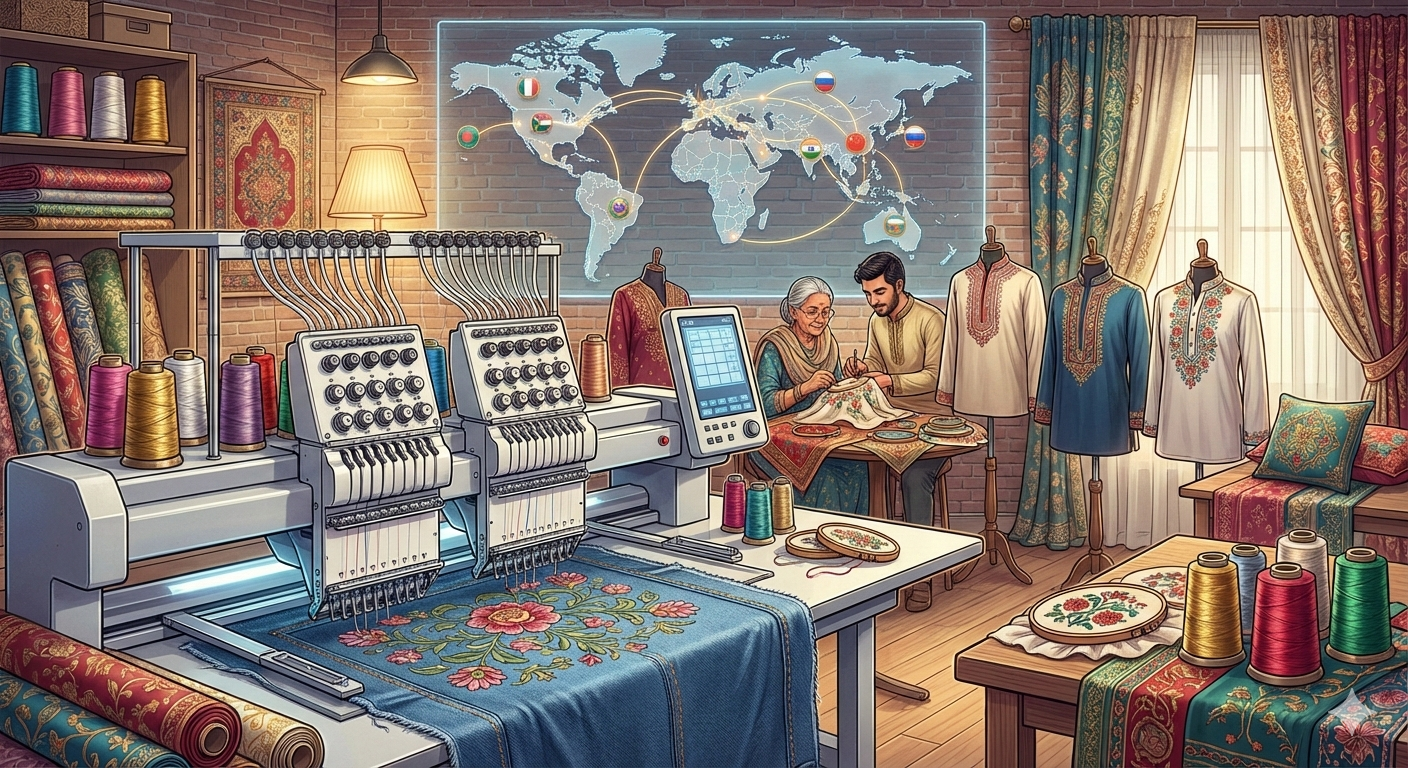
The Global Embroidery Market is emerging as one of the fastest-growing segments in the textile industry, driven by increasing demand for customized and aesthetically appealing textiles. Once considered a traditional craft, embroidery has evolved into a vibrant industry encompassing fashion, home décor, and industrial applications. Consumers today value both machine precision and artisanal handwork, resulting in a diverse market with opportunities for mass production and niche luxury segments alike.
Advances in embroidery technology have played a significant role in shaping the market. Computerized embroidery machines now allow for intricate designs to be produced with speed and accuracy, while hand embroidery continues to appeal to those seeking exclusive, high-quality craftsmanship. The fusion of traditional artistry and modern automation has expanded the market’s reach, attracting designers, manufacturers, and end consumers globally.
Demand for personalized apparel and decorative fabrics is also driving growth in the market. Embroidery adds unique visual appeal to clothing, accessories, and home textiles such as curtains, bedspreads, and cushions. This versatility has strengthened its adoption across both commercial and individual consumer segments.
Market Overview
The Global Embroidery Market is projected to reach USD 3.3 billion in 2025 and is expected to expand to USD 8.0 billion by 2034, growing at a CAGR of 10.3%. This rapid growth is fueled by the convergence of fashion trends, technological innovations, and rising consumer interest in personalized textiles.
Several factors contribute to the market’s expansion:
-
Technological Integration: Modern embroidery machines, coupled with design software, enable efficient production of complex patterns at scale.
-
Consumer Personalization: Increasing demand for customized garments, accessories, and home décor items drives market adoption.
-
E-commerce Growth: Online retail has allowed smaller embroidery businesses to reach global audiences, creating new revenue streams.
-
Sustainable and Ethical Practices: Handcrafted embroidery and eco-friendly materials align with growing consumer preferences for ethical fashion.
Product and Application Segmentation
The market can be segmented by type, application, and end-user, providing insights into the key growth areas.
By Type
-
Machine Embroidery: Preferred for high-volume production due to speed, consistency, and efficiency.
-
Hand Embroidery: Popular among luxury brands and niche markets valuing artistry and exclusivity.
By Application
-
Apparel: Includes dresses, jackets, shirts, and accessories, representing the largest segment.
-
Home Textiles: Covers products such as cushions, curtains, and bed linens, offering decorative appeal.
-
Industrial & Promotional Products: Embroidery is also used in branding, corporate uniforms, and promotional merchandise.
By End-User
-
Fashion Brands: Major players leverage machine embroidery for large-scale clothing production.
-
SMEs & Artisans: Cater to bespoke, handmade, and limited-edition products.
-
DIY Enthusiasts: Growing interest in home embroidery kits for personal projects fuels small-scale adoption.
Technological Advancements
The embroidery industry is increasingly embracing automation and digital tools. Computerized machines allow precise replication of complex designs, while digital design software enables creative experimentation with patterns, colors, and textures. Innovations in thread materials—such as metallic, silk, and sustainable threads—enhance the market’s versatility and attract environmentally conscious consumers.
Regional Analysis
Asia Pacific is anticipated to lead the Global Embroidery Market in 2025, accounting for 41.0% of total market revenue. Key countries including China, India, and Bangladesh benefit from established textile infrastructure, affordable labor, and a large pool of skilled artisans. These factors enable the region to maintain its leadership position in both apparel and home textile embroidery.
Download a Complimentary PDF Sample Report: https://dimensionmarketresearch.com/report/embroidery-market/request-sample/
Other regions, such as North America and Europe, are driven by luxury fashion trends and growing consumer interest in high-quality embroidered products. Emerging markets in Latin America and the Middle East are also witnessing increased adoption due to rising disposable incomes and expanding retail and e-commerce channels.
Market Trends
-
Personalization and Customization: Consumers increasingly prefer embroidered products that are unique and reflective of personal style.
-
Luxury Collaborations: Designer brands collaborate with embroidery artisans to create limited-edition and exclusive collections.
-
Sustainability Focus: Use of eco-friendly threads, dyes, and handcrafted techniques aligns with global sustainability initiatives.
-
Digital Expansion: E-commerce platforms and online marketplaces allow embroidery businesses to reach international audiences.
Competitive Landscape
The market features a mix of large manufacturers, small-scale artisans, and emerging startups. Key strategies include:
-
Technological Investment: Adoption of automated embroidery machines to enhance production efficiency.
-
Product Diversification: Expanding offerings in home textiles, apparel, and promotional items.
-
Global Expansion: Leveraging e-commerce and international partnerships to reach new markets.
Frequently Asked Questions (FAQs)
1. What factors are driving growth in the Global Embroidery Market?
Growth is fueled by increasing fashion awareness, adoption of modern embroidery technology, and rising demand for personalized and decorative textiles.
2. Which region holds the largest share in the market?
Asia Pacific leads with 41.0% of global revenue, supported by strong manufacturing infrastructure and skilled labor.
3. What is the projected market value by 2034?
The market is expected to reach USD 8.0 billion by 2034, growing at a CAGR of 10.3%.
4. What types of embroidery dominate the market?
Machine embroidery dominates due to mass production capabilities, while hand embroidery caters to niche, luxury, and artisan markets.
5. How is technology influencing the embroidery market?
Computerized machines and digital design software enable precision, faster production, and complex designs, driving efficiency and innovation.
Key Takeaways
-
The Global Embroidery Market is expanding rapidly, supported by demand for customization and technological advancements.
-
Asia Pacific dominates due to cost-effective manufacturing, skilled artisans, and extensive textile infrastructure.
-
Both hand and machine embroidery cater to distinct segments, from luxury and artisanal to mass-produced apparel.
-
Digital platforms and e-commerce are broadening the market reach and consumer accessibility.
-
Sustainability trends are creating opportunities for eco-friendly and ethically produced embroidery products.
In summary, the Global Embroidery Market represents a thriving combination of traditional craftsmanship and modern technology. With strong growth prospects, evolving consumer preferences, and expanding regional markets, the industry offers significant opportunities for manufacturers, designers, and investors seeking to tap into the dynamic textile landscape.
Purchase the report for comprehensive details: https://dimensionmarketresearch.com/checkout/embroidery-market/

 English
 Arabic
 French
 Spanish
 Portuguese
 Deutsch
 Turkish
 Dutch
Dutch
 Italiano
 Romaian
 Portuguese (Brazil)
 Greek
Greek