


Ferric Chloride Market Adoption Boosted by Strict Effluent Discharge Standards
Introduction: Understanding the Importance of Ferric Chloride
Ferric chloride is a vital inorganic chemical widely used across multiple industries due to its strong coagulating, etching, and catalytic properties. Commonly appearing as a dark brown crystalline solid or liquid solution, ferric chloride plays a critical role in water and wastewater treatment, electronics manufacturing, pharmaceuticals, pigments, and metal processing. As industrialization accelerates and environmental regulations become stricter worldwide, demand for ferric chloride continues to grow steadily. The ferric chloride market is therefore emerging as an important segment within the broader specialty chemicals landscape, supported by consistent end-use demand and technological advancements.
Ferric Chloride Market Size and Growth Outlook
The global ferric chloride market is demonstrating stable and sustained growth, driven by rising applications in municipal and industrial water treatment as well as expanding electronics manufacturing. As highlighted in a recent Persistence Market Research study, the global ferric chloride market is projected to reach a valuation of approximately US$7.9 billion by 2026. Looking further ahead, the market is expected to expand to around US$10.8 billion by 2033. This growth reflects a compound annual growth rate (CAGR) of about 4.5% during the forecast period from 2026 to 2033, signaling moderate yet reliable expansion fueled by long-term demand fundamentals.
What Is Ferric Chloride Used For in Water Treatment?
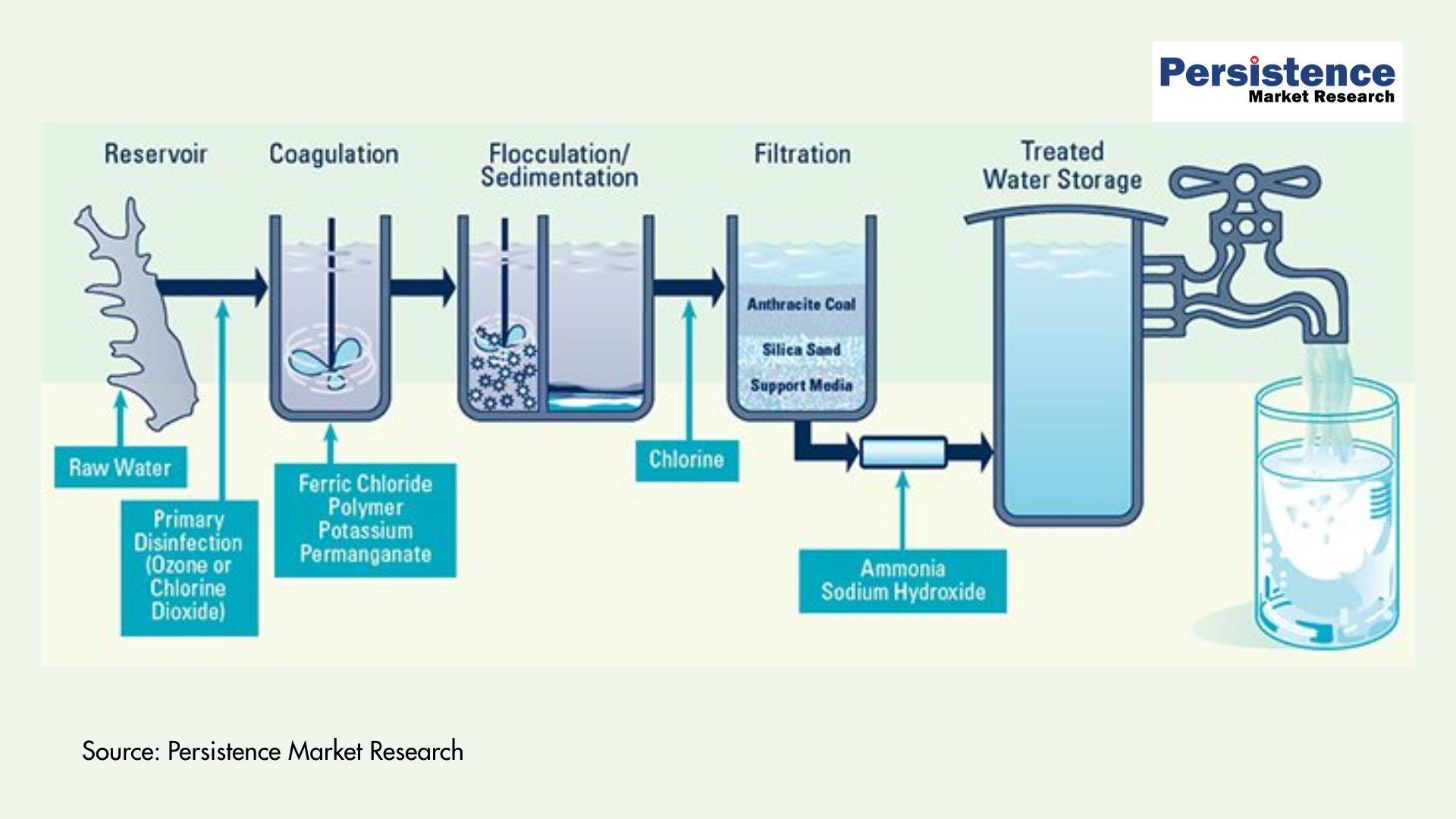
Ferric chloride is extensively used in water and wastewater treatment because of its excellent coagulation and flocculation properties. It helps remove suspended solids, phosphates, heavy metals, and organic impurities from water by forming insoluble compounds that settle easily. Municipal water treatment plants rely on ferric chloride to improve water clarity, reduce biological oxygen demand (BOD), and meet strict environmental discharge standards. In wastewater treatment, it is especially effective in phosphorus removal, helping prevent eutrophication in rivers and lakes. Its reliability, cost-effectiveness, and efficiency make ferric chloride one of the most widely preferred coagulants globally.
Get Your FREE Sample Report Instantly – Click Now
Key Market Drivers Supporting Demand Growth
One of the primary drivers of the ferric chloride market is the rising global demand for clean and safe water. Rapid urbanization, population growth, and industrial expansion are putting immense pressure on water resources, prompting governments to invest heavily in water and wastewater treatment infrastructure. Ferric chloride is a preferred chemical in these facilities due to its high efficiency and consistent performance.
Additionally, the electronics and semiconductor industries are contributing to market growth. Ferric chloride is commonly used as an etching agent in printed circuit board (PCB) manufacturing, an industry experiencing strong demand due to digitalization, electric vehicles, and consumer electronics growth. This dual demand from environmental and technological sectors provides a balanced and resilient growth base for the market.
Applications Across Diverse End-Use Industries
The ferric chloride market benefits from its wide range of applications across multiple industries. Water and wastewater treatment remains the dominant application segment, accounting for a significant share of global consumption. The chemical is also used in metal surface treatment, where it acts as an etching and cleaning agent, particularly in steel and copper processing.
In the pharmaceutical and chemical industries, ferric chloride serves as a catalyst and intermediate in various synthesis processes. It is also used in pigment manufacturing, textile processing, and laboratory reagents. This broad application spectrum reduces dependence on a single industry and enhances overall market stability.
Forms and Production Trends in the Market
Ferric chloride is commercially available in both anhydrous and hydrated forms, as well as in liquid solutions. Liquid ferric chloride is widely preferred in water treatment applications due to its ease of handling and rapid solubility. Anhydrous ferric chloride, on the other hand, is commonly used in electronics and chemical manufacturing where higher purity levels are required.
From a production perspective, manufacturers are increasingly focusing on improving efficiency and reducing environmental impact. Many producers are integrating by-product recovery methods from steel pickling and chlorine production, which not only lowers production costs but also aligns with circular economy principles.
Regional Analysis: Key Markets Across the Globe
Regionally, North America and Europe represent mature markets for ferric chloride, driven by strict environmental regulations and well-established water treatment infrastructure. These regions continue to invest in upgrading aging water systems, supporting consistent demand for coagulating chemicals.
Asia Pacific is emerging as the fastest-growing regional market due to rapid industrialization, urban expansion, and rising government investments in wastewater treatment facilities. Countries such as China and India are experiencing strong demand growth as industrial effluent treatment becomes a regulatory priority. Latin America and the Middle East & Africa are also showing gradual growth, supported by infrastructure development and increasing awareness of water quality management.
Competitive Landscape and Strategic Developments
The ferric chloride market is moderately fragmented, with the presence of global chemical manufacturers as well as regional suppliers. Companies are focusing on capacity expansion, long-term supply contracts with municipalities, and technological improvements to strengthen their market position. Strategic collaborations with water treatment solution providers are also becoming common, allowing chemical producers to offer integrated solutions rather than standalone products.
In addition, sustainability initiatives are influencing competitive strategies. Manufacturers are investing in cleaner production processes, waste minimization, and energy-efficient operations to meet environmental compliance standards and improve brand reputation.
Challenges and Market Constraints
Despite its positive outlook, the ferric chloride market faces certain challenges. Fluctuations in raw material prices, particularly iron and chlorine, can impact production costs and profit margins. Transportation and storage concerns, especially for liquid ferric chloride, also pose logistical challenges due to its corrosive nature.
Moreover, competition from alternative coagulants such as aluminum-based chemicals may limit market growth in some regions. However, ferric chloride’s superior performance in phosphorus removal and industrial wastewater treatment continues to give it a competitive edge.
Future Outlook: Opportunities and Long-Term Potential
Looking ahead, the ferric chloride market is expected to benefit from increasing environmental regulations, rising investments in water infrastructure, and expanding electronics manufacturing worldwide. Technological innovations in dosing systems and process optimization are likely to further enhance its efficiency and adoption.
With a projected market value of US$10.8 billion by 2033 and a steady CAGR of 4.5%, ferric chloride remains a crucial chemical for sustainable industrial and environmental management. Its indispensable role in water treatment and industrial processes ensures that it will continue to be a key component of global chemical demand for years to come.
Conclusion: A Market Anchored in Essential Applications
The ferric chloride market stands as a stable and strategically important segment of the global chemicals industry. Supported by essential applications, regulatory compliance needs, and industrial growth, the market offers long-term opportunities for manufacturers and investors alike. As environmental and technological priorities continue to evolve, ferric chloride will remain a cornerstone chemical in enabling cleaner water, advanced manufacturing, and sustainable development.
Explore the Latest Trending Research Reports:

 English
 French
 Spanish
 Portuguese
 Deutsch
 Turkish
 Dutch
Dutch
 Italiano
 Russian
 Romaian
 Portuguese (Brazil)
 Greek
Greek