


Biodegradable Plastics Market Trends, Growth, and Forecast 2024-2033
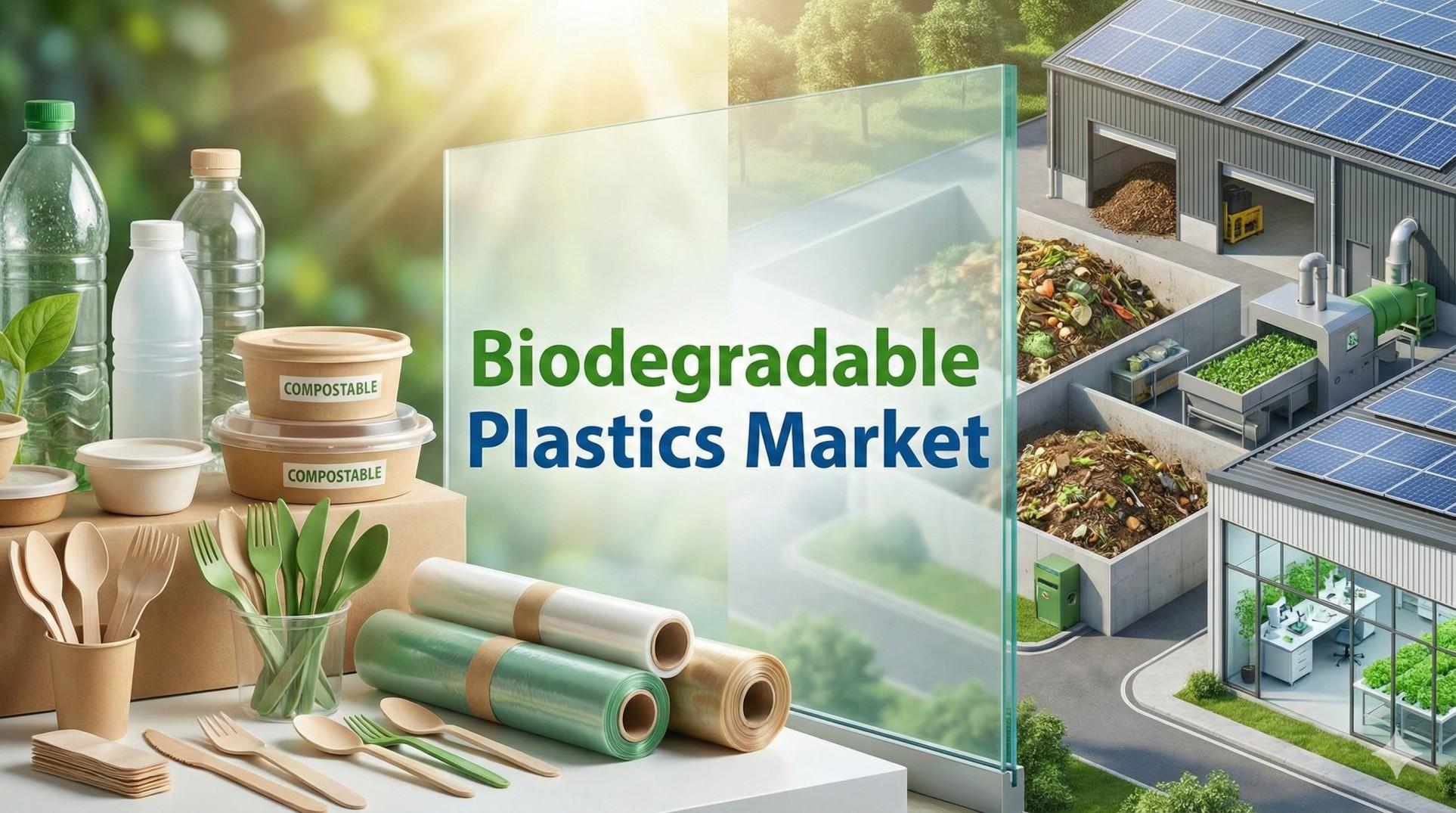
The Global Biodegradable Plastics Market is experiencing significant expansion as environmental awareness, government regulations, and sustainable product demand continue to rise. The market is expected to reach a value of USD 7.4 billion in 2024 and is projected to grow at a compound annual growth rate (CAGR) of 13.9% to reach USD 24.0 billion by 2033.
Biodegradable plastics, derived from plant-based sources or engineered to degrade through biological processes, provide an eco-friendly alternative to conventional plastics. These materials are designed to break down into non-toxic substances such as water, carbon dioxide, and biomass under environmental conditions, including heat, moisture, or microbial activity. The growing emphasis on reducing plastic waste and implementing circular economy principles has accelerated the adoption of biodegradable plastics across multiple industries, including packaging, consumer goods, agriculture, and healthcare.
Biodegradable plastics offer a sustainable solution to the global plastic pollution problem. The shift toward eco-conscious consumer behavior, along with regulatory mandates restricting single-use plastics, has prompted manufacturers to explore alternatives that meet functional requirements without compromising environmental integrity. Key products in this market include polylactic acid (PLA), polyhydroxyalkanoates (PHA), starch blends, and polybutylene adipate terephthalate (PBAT), each designed for specific applications ranging from packaging films to disposable cutlery and agricultural mulch films. These materials enable companies to achieve sustainability targets while providing similar performance characteristics to conventional plastics, such as flexibility, durability, and processability.
Market Dynamics
The Biodegradable Plastics Market is shaped by a combination of drivers, restraints, and opportunities. Environmental concerns, particularly the growing awareness of plastic pollution in oceans and landfills, are major growth drivers. Governments worldwide are implementing stringent regulations on single-use plastics, promoting the use of biodegradable alternatives, and incentivizing research and production of sustainable materials. Consumer preference for eco-friendly products also contributes to market growth, with increasing demand in packaging, food services, and personal care industries.
Technological advancements further propel market expansion. Innovations in polymer chemistry, blending techniques, and compostable formulations enhance the performance, durability, and cost-efficiency of biodegradable plastics. Developments in bioplastic production using renewable feedstocks, including corn, sugarcane, and cellulose, support sustainable sourcing and reduce reliance on fossil fuels. Additionally, the integration of biodegradable plastics into existing recycling and waste management systems facilitates adoption, particularly in regions emphasizing circular economy initiatives.
Challenges for the market include higher production costs compared to conventional plastics, variability in degradation rates depending on environmental conditions, and the need for specialized industrial composting facilities in certain cases. Market growth may also be impacted by limited awareness in developing regions and competition from recyclable but non-biodegradable plastics. Despite these obstacles, long-term market prospects remain positive due to ongoing technological innovation, regulatory support, and consumer-driven demand for sustainable solutions.
Product Segmentation
The Biodegradable Plastics Market is segmented based on polymer type, application, and end-use industry. PLA is one of the leading biodegradable polymers, valued for its clarity, processability, and compostable properties, making it widely used in packaging, disposable tableware, and 3D printing. Polyhydroxyalkanoates (PHA) offer excellent biodegradability in marine and soil environments, supporting applications in packaging films, medical devices, and agricultural films. Starch blends provide a cost-effective solution for single-use items such as shopping bags and food packaging, while PBAT is often combined with PLA to enhance flexibility and durability in compostable packaging applications.
Applications of biodegradable plastics span food packaging, beverages, personal care, medical, agriculture, and consumer goods sectors. Food packaging remains a dominant application segment, driven by the need for sustainable alternatives to traditional packaging films and containers. Biodegradable plastics provide functionality such as heat resistance, barrier properties, and structural integrity while enabling composting after disposal. In agriculture, biodegradable mulch films, plant pots, and irrigation components reduce environmental impact and simplify waste management. Healthcare applications include disposable syringes, medical gloves, and packaging for pharmaceuticals, where sterilization and biodegradability are critical considerations. Consumer goods applications include shopping bags, cutlery, and household items designed to replace conventional plastics with eco-friendly alternatives.
Regional Analysis
Europe is projected to dominate the Biodegradable Plastics Market, accounting for 34.1% of the total market share in 2024. The region’s leadership is supported by stringent environmental regulations, robust consumer awareness, and government initiatives promoting sustainable practices. European nations have implemented bans on single-use plastics, mandates for compostable materials, and incentives for green manufacturing, fostering a favorable market environment. Countries such as Germany, France, and Italy lead in the adoption of biodegradable plastics, particularly in packaging, agriculture, and food services.
North America represents a significant market due to strong environmental policies, sustainability initiatives, and active consumer engagement. The United States and Canada are witnessing increasing adoption of PLA, PBAT, and starch-based biodegradable plastics in packaging, food service, and retail applications. Government incentives, research grants, and eco-certification programs support market growth in the region.
Asia Pacific is an emerging market with substantial growth potential, driven by rapid industrialization, urbanization, and rising environmental consciousness. Countries such as China, Japan, and India are investing in biodegradable plastic production and infrastructure to reduce plastic waste and support sustainable development goals. Latin America and the Middle East & Africa are gradually adopting biodegradable plastics, driven by growing awareness, regulatory frameworks, and the expansion of sustainable consumer goods markets.
Download a Complimentary PDF Sample Report: https://dimensionmarketresearch.com/report/biodegradable-plastics-market/request-sample/
Competitive Landscape
The competitive landscape of the Biodegradable Plastics Market is characterized by the presence of global and regional players focusing on innovation, production efficiency, and strategic partnerships. Market participants are investing in R&D to develop advanced biopolymers with improved mechanical properties, processability, and faster biodegradation rates. Companies are also expanding production capacity, establishing joint ventures, and entering licensing agreements to strengthen market presence.
Sustainability certifications, eco-labeling, and compliance with industrial composting standards differentiate key players and enhance brand credibility. Emerging companies are introducing cost-effective, plant-based polymers and customized solutions for niche applications, targeting both developed and developing markets. Strategic collaborations with packaging manufacturers, retailers, and agriculture companies ensure wider adoption of biodegradable plastics and create integrated value chains for sustainable product delivery.
Technological Trends
Technological advancements are critical to the growth of the Biodegradable Plastics Market. Innovations in polymer chemistry, blending, and additive technologies improve the performance, durability, and processing of biodegradable plastics. Industrial compostable solutions, enhanced barrier films, and biodegradable composites expand the range of applications. Research in microbial degradation, enzymatic treatments, and bio-based feedstocks contributes to faster and more efficient biodegradation under varied environmental conditions.
Manufacturing technologies such as extrusion, injection molding, blow molding, and 3D printing are increasingly adapted for biodegradable polymers, enabling scalability and diverse product formats. Integration with digital manufacturing, process automation, and quality monitoring enhances production efficiency and reduces waste. These technological advancements position biodegradable plastics as a viable alternative to conventional plastics across multiple industries, supporting sustainability goals and regulatory compliance.
Consumer Insights and Adoption Drivers
Consumer awareness and demand for eco-friendly products are major drivers of market adoption. Retailers, food service providers, and manufacturers are increasingly responding to sustainability trends by adopting biodegradable packaging, disposable products, and eco-certified goods. Government incentives, tax benefits, and sustainability certifications further encourage adoption in both commercial and residential sectors.
Corporate sustainability initiatives, environmental reporting requirements, and growing investor focus on ESG criteria also contribute to adoption. Companies are integrating biodegradable plastics into supply chains to reduce carbon footprints, improve brand image, and comply with regulatory mandates. The increasing availability of affordable, high-performance biodegradable polymers enhances accessibility for small and medium enterprises, further supporting market growth.
Regulatory and Policy Environment
Regulatory frameworks are essential for market development. Governments across the world are implementing bans on single-use plastics, mandates for compostable materials, and eco-labeling standards to encourage adoption. Policies promoting renewable feedstocks, carbon neutrality, and circular economy initiatives incentivize investment in biodegradable plastic production. Compliance with industrial composting, marine degradability, and ISO certification standards ensures product credibility and facilitates market penetration. International agreements and regional regulations supporting sustainable materials further bolster market growth.
Market Challenges
The Biodegradable Plastics Market faces challenges including higher production costs compared to conventional plastics, limited industrial composting infrastructure, and variable degradation rates under natural conditions. Manufacturing complexity, feedstock availability, and quality consistency are additional constraints. Market growth may also be affected by competition from recyclable plastics, consumer skepticism regarding biodegradability claims, and economic fluctuations that impact investment decisions. Despite these challenges, continuous technological innovation and regulatory support mitigate risks and enhance market potential.
Future Outlook
The Biodegradable Plastics Market is poised for sustained growth, driven by environmental concerns, regulatory mandates, technological advancements, and consumer demand for sustainable alternatives. The market is expected to expand across packaging, food service, agriculture, healthcare, and consumer goods sectors. Europe and North America will continue to lead, while Asia Pacific, Latin America, and the Middle East & Africa offer substantial growth opportunities.
Technological innovation in bio-based polymers, industrial composting, and process optimization will improve product performance and reduce costs, accelerating adoption. Companies investing in R&D, strategic partnerships, and integrated sustainable solutions are likely to capture significant market share. The global shift toward sustainability and circular economy practices ensures a positive outlook for biodegradable plastics, reinforcing their role in mitigating environmental impact and supporting sustainable development.
FAQs
What are biodegradable plastics?
Biodegradable plastics are polymers derived from plant-based sources or engineered to decompose into non-toxic substances like water, carbon dioxide, and biomass under environmental conditions such as heat, moisture, or microbial activity.
Which factors are driving market growth?
Market growth is driven by environmental concerns, government regulations on single-use plastics, consumer demand for sustainable products, and advancements in biopolymer technologies.
Which region dominates the biodegradable plastics market?
Europe is projected to dominate, holding 34.1% of the market in 2024, due to stringent environmental regulations, consumer awareness, and strong adoption of eco-friendly materials.
What are the main challenges for the market?
Challenges include higher production costs, limited industrial composting infrastructure, variability in biodegradation rates, feedstock availability, and competition from conventional or recyclable plastics.
How are technological advancements impacting the market?
Advancements in polymer chemistry, blending techniques, industrial composting, and bio-based feedstocks improve performance, accelerate degradation, reduce costs, and expand applications across industries.
Summary of Key Insights
The Biodegradable Plastics Market is set for substantial growth, projected to increase from USD 7.4 billion in 2024 to USD 24.0 billion by 2033 at a CAGR of 13.9%. Key growth segments include PLA, PHA, starch blends, and PBAT, with applications spanning packaging, agriculture, healthcare, and consumer goods. Europe leads the market, supported by strong regulations and consumer awareness, while North America and Asia Pacific offer significant opportunities. Technological advancements, government initiatives, and rising environmental consciousness drive market adoption, despite challenges such as cost, infrastructure, and feedstock limitations. Overall, biodegradable plastics are positioned as a sustainable alternative to conventional plastics, supporting circular economy objectives and global environmental goals.
Purchase the report for comprehensive details: https://dimensionmarketresearch.com/checkout/biodegradable-plastics-market/

 English
 Arabic
 Spanish
 Portuguese
 Deutsch
 Turkish
 Dutch
Dutch
 Italiano
 Russian
 Romaian
 Portuguese (Brazil)
 Greek
Greek