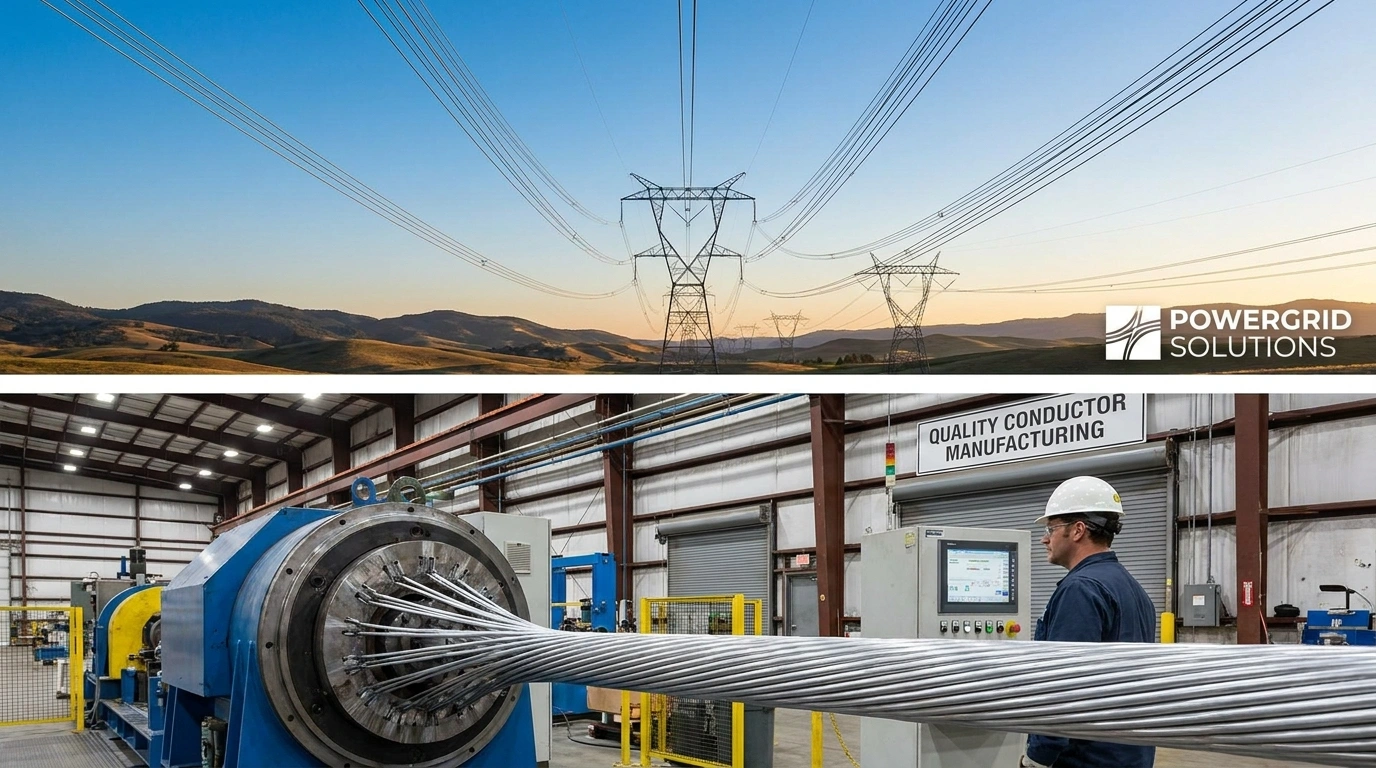
Efficient and reliable electricity transmission depends heavily on the quality of overhead conductors used across power networks. From urban distribution lines to long-distance transmission corridors, the right conductor choice directly impacts system performance, energy loss, and long-term operational cost.
For utilities, EPC contractors, and industrial buyers, understanding overhead conductor technology is essential for building stable and efficient power infrastructure. HNBF Power, a global manufacturer of overhead conductors and power cables, delivers engineered solutions designed to meet the evolving demands of modern grid systems.
What is an Overhead Conductor?
An overhead conductor is a type of electrical cable installed above ground on poles or towers to transmit and distribute electrical power. These conductors are designed to carry high voltage electricity over long distances with minimal energy loss while withstanding environmental stress such as wind, temperature variation, and mechanical load.
Unlike underground cables, overhead conductors offer easier installation, faster maintenance, and lower initial cost, making them the preferred choice for large-scale power transmission networks.
Key Types of Overhead Conductors
Selecting the correct conductor type is critical for efficiency and system reliability. The most widely used overhead conductors in power networks include:
1. AAC (All Aluminium Conductor)
AAC conductors are made entirely of aluminum strands. They offer excellent conductivity and are commonly used in urban and coastal areas where corrosion resistance is important. However, they have lower tensile strength compared to other types.
2. AAAC (All Aluminium Alloy Conductor)
AAAC conductors are made from aluminum alloy, providing improved mechanical strength and better resistance to corrosion. They are widely used in medium- and high-voltage distribution systems.
3. ACSR (Aluminium Conductor Steel Reinforced)
ACSR conductors combine aluminum strands with a steel core. This structure provides high tensile strength and makes them suitable for long-span transmission lines such as river crossings or mountainous terrain.
4. ABC (Aerial Bundled Cable)
ABC systems consist of insulated conductors bundled together. They are ideal for urban distribution networks, reducing the risk of power theft, electrical faults, and line contact with trees or buildings.
Each conductor type serves specific operational environments, and selecting the right one ensures optimized performance and cost efficiency.
How Overhead Conductors Work in Power Transmission
Overhead conductors function as the primary medium for transporting electrical energy from generation stations to distribution networks. Electricity flows through aluminum or aluminum-alloy strands due to their high conductivity.
Steel reinforcement in ACSR conductors enhances mechanical strength, allowing the line to withstand tension over long distances. Insulated systems like ABC further improve safety in densely populated regions.
Proper conductor selection reduces transmission losses, improves voltage stability, and ensures long-term system reliability.
Key Factors to Consider When Selecting Overhead Conductors
For engineers and procurement teams, several technical factors must be evaluated before selecting a conductor:
Electrical Conductivity
Higher conductivity ensures lower power losses and improved efficiency across transmission lines.
Mechanical Strength
Conductors must withstand tension, wind pressure, ice load, and thermal expansion without sagging or breaking.
Environmental Conditions
Coastal, industrial, and high-corrosion environments require specialized materials like AAAC or coated aluminum conductors.
Span Length
Long-span applications typically require ACSR due to its steel reinforcement.
Cost Efficiency
Balancing material cost with long-term maintenance and energy loss is essential for project budgeting.
HNBF Power supports buyers with technical guidance to ensure the most suitable conductor selection for each application.
Applications of Overhead Conductors
Overhead conductors are widely used across various power infrastructure projects, including:
- High-voltage transmission networks
- Urban and rural distribution systems
- Industrial power supply lines
- Renewable energy grid integration (solar and wind farms)
- Railway electrification systems
Their versatility makes them a core component of global energy infrastructure.
Advantages of High-Quality Overhead Conductors
Using premium-grade conductors significantly improves system performance:
- Reduced transmission losses
- Enhanced grid stability
- Longer service life
- Lower maintenance requirements
- Improved safety and reliability
High-quality materials and precise manufacturing processes ensure conductors can operate efficiently under demanding conditions.
Why HNBF Power for Overhead Conductors?
HNBF Power specializes in manufacturing AAC, AAAC, ACSR, and ABC conductors, along with LV power cables and concentric cable solutions for global utility projects.
With a strong focus on engineering precision and international standards, HNBF Power provides:
- Custom conductor designs for project-specific needs
- Reliable mechanical and electrical performance
- Strict quality control and testing systems
- Solutions for both transmission and distribution networks
From large EPC projects to utility upgrades, HNBF Power delivers solutions built for performance, durability, and long-term value.
Frequently Asked Questions (FAQs)
1. What is the main purpose of an overhead conductor?
Overhead conductors are used to transmit electrical power across long distances in power distribution and transmission networks.
2. Which conductor is best for long-distance transmission?
ACSR conductors are most suitable due to their high tensile strength and durability.
3. What is the difference between AAC and AAAC conductors?
AAC is pure aluminum, while AAAC is aluminum alloy with higher strength and corrosion resistance.
4. Where is ABC cable commonly used?
ABC cables are widely used in urban areas for safer and more compact power distribution systems.
5. How do I choose the right overhead conductor?
Selection depends on voltage level, span length, environmental conditions, and mechanical requirements. Expert consultation from manufacturers like HNBF Power is recommended.
Final Thoughts
Overhead conductors are the backbone of modern electrical infrastructure, ensuring safe and efficient power transmission across cities, industries, and remote regions. Choosing the right conductor type directly influences system performance, operational cost, and long-term reliability.
HNBF Power continues to support global power projects with advanced conductor solutions designed to meet modern grid challenges.
For customized overhead conductor solutions tailored to your project requirements, contact HNBF Power and strengthen your power infrastructure with trusted engineering expertise.
 English
 Arabic
 French
 Spanish
 Portuguese
 Deutsch
 Turkish
 Dutch
Dutch
 Italiano
 Russian
 Romaian
 Portuguese (Brazil)
 Greek
Greek