


Solar Power Mobile Devices Market Dynamics Influenced by Advancements in Battery Storage
Introduction: The Rise of Solar-Powered Mobility
The rapid evolution of portable electronics has transformed the way people communicate, work, and access information. However, growing concerns about battery life, energy consumption, and environmental sustainability are pushing manufacturers and consumers toward cleaner alternatives. Solar power mobile devices have emerged as a promising solution, combining renewable energy with everyday mobility. These devices, which include smartphones, power banks, tablets, wearables, and accessories powered partially or fully by solar energy, are gaining attention as eco-friendly and cost-effective options. As renewable energy adoption accelerates worldwide, the solar power mobile devices market is carving out a distinct and fast-growing niche within the broader consumer electronics ecosystem.
Market Overview: Growth Trajectory and Revenue Outlook
The global solar power mobile devices market is witnessing steady expansion as demand for energy-efficient and off-grid solutions increases. According to a report by Persistence Market Research, the market is expected to be valued at around US$ 5.6 billion in 2026 and is projected to reach approximately US$ 12.7 billion by 2033. This robust growth reflects a compound annual growth rate (CAGR) of 12.4% over the forecast period. The strong upward trend highlights increasing consumer awareness of renewable energy, rising penetration of mobile devices in remote and outdoor environments, and continuous innovation in solar panel efficiency and battery storage technologies.
Key Drivers: Factors Fueling Market Expansion
One of the primary drivers of the solar power mobile devices market is the global push toward sustainability and carbon footprint reduction. Governments, organizations, and consumers are actively seeking alternatives to conventional energy sources, and solar-powered electronics align perfectly with these objectives. The ability of solar-powered devices to reduce dependency on grid electricity makes them particularly appealing in regions with unreliable power supply or frequent outages.
Another significant growth driver is the rising popularity of outdoor recreation, adventure travel, and emergency preparedness. Solar-powered mobile devices are increasingly used by hikers, campers, military personnel, and disaster-response teams who require reliable power sources in off-grid environments. Additionally, advancements in lightweight solar panels and improved energy conversion efficiency have made these devices more practical and user-friendly, further supporting market growth.
What Are Solar Power Mobile Devices and How Do They Work?
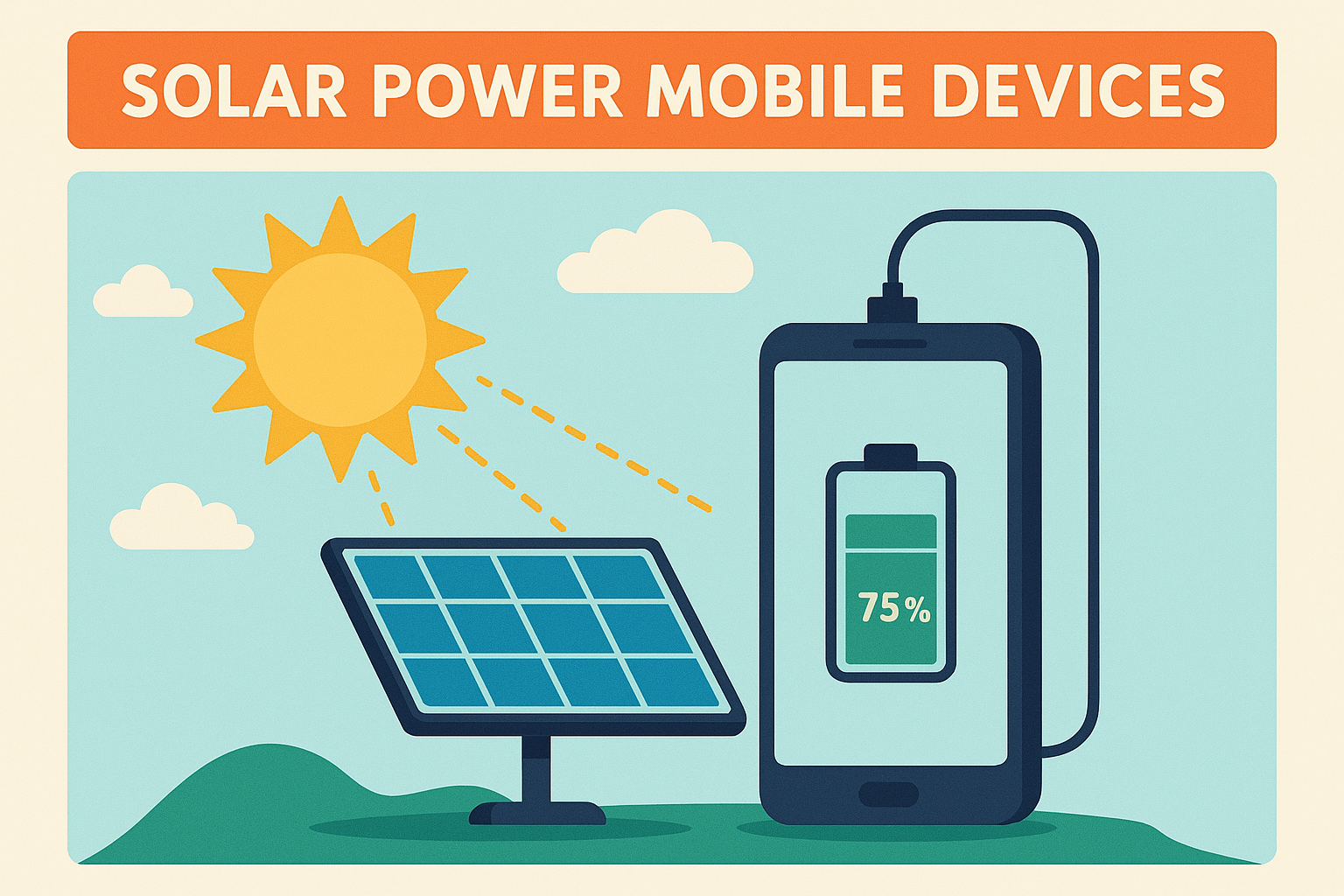
Solar power mobile devices are electronic gadgets that use solar energy, captured through photovoltaic panels, to charge their internal batteries or directly power device functions. These devices typically integrate small solar cells on their surface, which convert sunlight into electrical energy. The generated power is either stored in a battery for later use or used instantly to operate the device. They are especially useful in outdoor, remote, or emergency situations where access to conventional electricity is limited. As solar technology improves, modern solar-powered mobile devices offer better efficiency, faster charging, and greater reliability, making them a practical and sustainable alternative to traditional battery-dependent electronics.
Product Segmentation: Types of Solar-Powered Mobile Devices
The solar power mobile devices market includes a diverse range of products designed to meet varying consumer needs. Solar-powered smartphones and feature phones are gaining traction in developing regions, where consistent access to electricity is a challenge. These devices often feature basic solar panels integrated into the phone’s back cover, enabling emergency charging and extended battery life.
Solar power banks represent one of the most popular product segments, widely used as portable charging solutions for smartphones, tablets, and wearable devices. Solar-powered wearables, such as smartwatches and fitness trackers, are also emerging as innovative solutions, offering extended operation without frequent charging. In addition, solar-powered tablets, GPS devices, and communication tools are increasingly adopted in defense, marine, and outdoor utility applications.
Technological Advancements: Improving Efficiency and Design
Technology plays a critical role in shaping the solar power mobile devices market. Continuous improvements in photovoltaic cell efficiency have significantly enhanced the practicality of solar-powered electronics. Thin-film solar panels, flexible solar cells, and perovskite-based technologies are enabling sleeker designs and better energy absorption, even under low-light conditions.
Battery technology has also evolved in parallel, with lithium-ion and lithium-polymer batteries offering higher energy density and longer life cycles. Combined with smart power management systems, these advancements allow solar-powered devices to optimize energy usage, reduce charging time, and deliver consistent performance. Integration with fast-charging and hybrid charging options, which combine solar and conventional power sources, is further enhancing consumer acceptance.
End-User Applications: Expanding Use Cases
Solar power mobile devices are finding applications across multiple end-user segments. In consumer electronics, environmentally conscious users are adopting solar-powered gadgets as part of a sustainable lifestyle. In rural and remote areas, these devices serve as essential communication tools, bridging the digital divide where grid power infrastructure is limited.
The defense and emergency services sector is another key end-user segment, relying on solar-powered communication and navigation devices during missions and disaster-relief operations. Educational initiatives in developing regions are also leveraging solar-powered tablets and learning devices to provide uninterrupted digital access to students. These diverse applications continue to broaden the market’s reach and revenue potential.
Regional Insights: Market Performance Across Geographies
Geographically, the solar power mobile devices market shows varying adoption patterns. North America and Europe are early adopters, driven by strong environmental awareness, higher disposable incomes, and technological innovation. Consumers in these regions are increasingly investing in solar-powered accessories and wearables as part of green living trends.
Asia Pacific is expected to witness the fastest growth over the forecast period. Countries such as India, China, and Southeast Asian nations are experiencing rising demand due to large populations, increasing mobile penetration, and ongoing rural electrification challenges. Africa also represents a promising market, where solar-powered mobile devices play a vital role in providing connectivity in off-grid communities.
Challenges and Limitations: Barriers to Market Growth
Despite its promising outlook, the solar power mobile devices market faces certain challenges. One major limitation is the relatively slower charging speed compared to conventional power sources, especially under limited sunlight conditions. This can affect user experience and restrict usage in indoor or low-light environments.
Cost is another concern, as solar-powered devices often carry a premium price due to advanced materials and technology. Additionally, limited awareness and misconceptions about performance and durability can hinder adoption in price-sensitive markets. Addressing these challenges through innovation, economies of scale, and consumer education will be crucial for sustained market growth.
Future Outlook: Opportunities and Strategic Developments
The future of the solar power mobile devices market looks promising, supported by rising renewable energy investments and increasing demand for sustainable electronics. As solar technology becomes more efficient and affordable, manufacturers are expected to introduce more advanced and aesthetically appealing products. Integration of artificial intelligence for energy optimization and the development of self-charging, maintenance-free devices could further revolutionize the market.
Strategic collaborations between solar technology providers and consumer electronics brands are also likely to accelerate innovation and market penetration. With a projected CAGR of 12.4% and market value expected to more than double by 2033, solar power mobile devices are poised to play a significant role in the global transition toward clean and sustainable energy solutions.
Conclusion: A Sustainable Path Forward
The solar power mobile devices market represents a compelling intersection of technology, sustainability, and mobility. As consumers increasingly prioritize energy efficiency and environmental responsibility, solar-powered devices offer a practical and forward-looking solution. With strong growth projections, expanding applications, and continuous technological advancements, the market is set to become an integral part of the future consumer electronics landscape.
Explore the Latest Trending Research Reports:

 Arabic
 French
 Spanish
 Portuguese
 Deutsch
 Turkish
 Dutch
Dutch
 Italiano
 Russian
 Romaian
 Portuguese (Brazil)
 Greek
Greek