Introduction
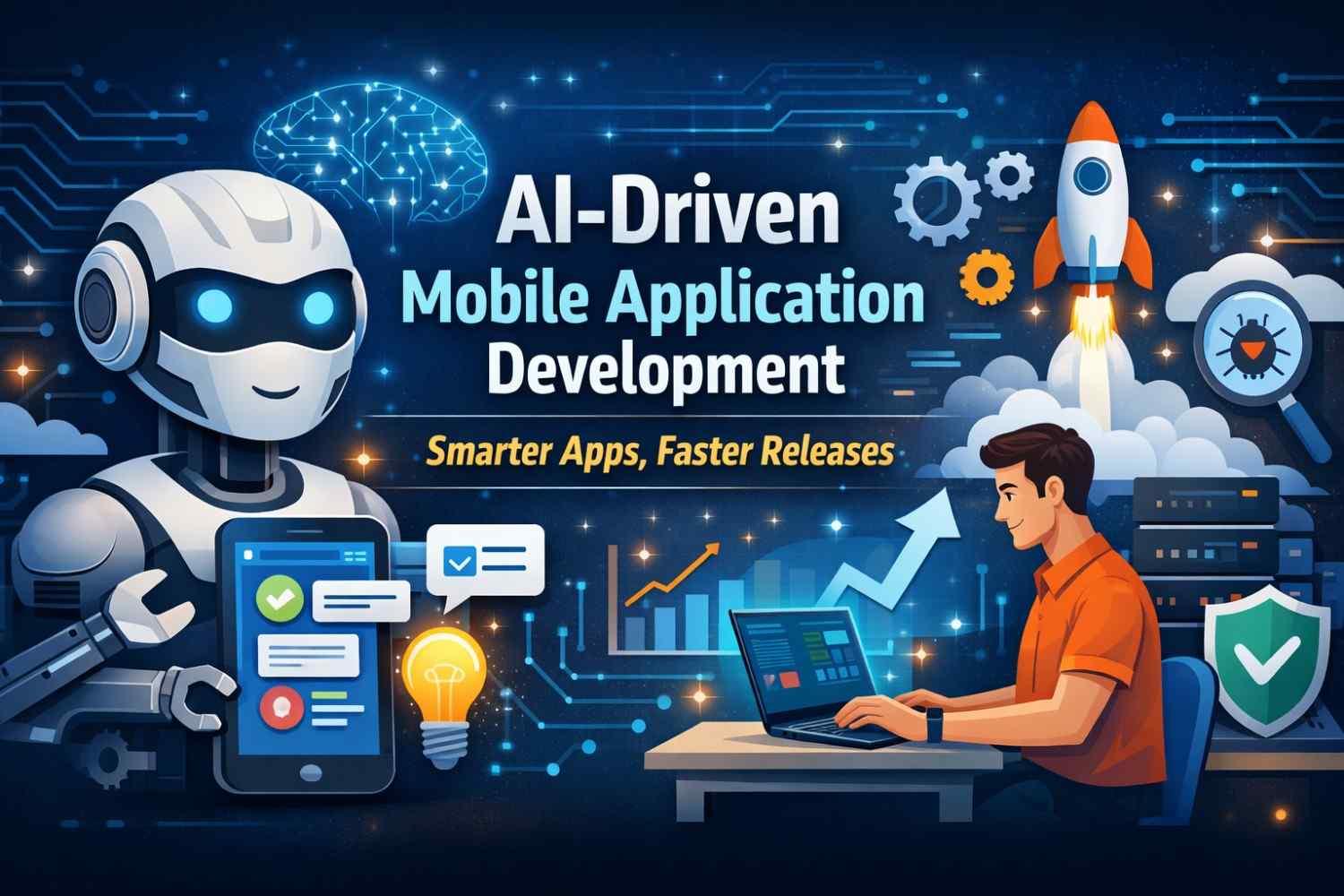
We have watched mobile apps grow up fast almost too fast. One day, users were happy if an app simply opened. The next, they wanted speed, personalization, and zero bugs (preferably yesterday). Somewhere between late-night builds and rushed releases, AI quietly entered the room. Not with fireworks, but with purpose. And honestly, once we noticed what it could do, there was no going back. This shift toward AI-driven mobile application development has changed how apps are imagined, built, and shipped.
The Evolution of Mobile Apps
Mobile apps did not start complicated. Early versions solved one problem and stopped there. Over time, expectations ballooned. Apps needed to think, predict, and adapt. Traditional development methods struggled to keep pace, and teams felt it—longer cycles, more revisions, and rising costs. We have seen this pattern repeat across projects. Naturally, the industry began searching for smarter ways to build without slowing everything else down.
What AI-Driven Mobile Application Development Really Means
Despite the hype, AI-driven development is not about handing control to machines. It is about using intelligence where it counts. AI helps analyze patterns, suggest improvements, and automate routine tasks. We still make the decisions. AI simply clears the noise. On one project, we noticed AI flagging a usability issue before users ever touched the app—saving weeks of rework and a fair bit of stress.
Where AI Fits Inside the Mobile App Lifecycle
AI does not sit in one corner of development. It weaves itself through the entire lifecycle. From shaping requirements to refining designs, from optimizing code to monitoring post-launch behavior, AI works quietly in the background. We often describe it as an extra team member—one that never gets tired and never forgets patterns. That support changes how confidently teams move from idea to release.
Smarter Apps: How AI Improves User Experience
Users may not know AI is involved, but they feel the difference. Apps respond faster, content feels more relevant, and features adapt naturally. AI learns how people interact and adjusts accordingly. We once saw engagement improve simply because the app learned when users preferred certain actions. These small, intelligent adjustments add up, turning ordinary apps into experiences users actually want to keep.
Faster Releases Without Cutting Corners
Speed matters, but not at the cost of quality. AI helps balance both. By automating repetitive tasks and highlighting potential issues early, development cycles shrink without becoming reckless. We have all been there—late fixes, rushed testing, crossed fingers. AI reduces those moments. Releases become predictable, calmer, and far less dramatic, which everyone appreciates (especially on Friday evenings).
AI in Testing and Quality Assurance
Testing used to be where timelines went to suffer. AI changes that. Automated test generation, smarter regression testing, and early bug detection save time and sanity. We once caught a performance issue during simulated user spikes—long before launch. That single catch prevented a very public failure. AI does not replace testers; it empowers them to focus on what truly needs human judgment.
Security and Compliance in AI-Driven Apps
Security is no longer optional, and AI strengthens it quietly. Intelligent monitoring detects anomalies, flags threats, and supports compliance requirements. Instead of reacting after damage is done, teams stay ahead of risks. We appreciate this proactive layer, especially when dealing with sensitive data. It adds confidence without adding complexity—an underrated but essential benefit of AI-driven development.
Business Impact for Product Owners and Stakeholders
From a business perspective, AI brings clarity. Better forecasts, faster launches, and more reliable performance metrics change decision-making. For any Mobile Application Development Company, this means delivering measurable value, not just features. Stakeholders notice when products hit the market sooner and perform better. Fewer surprises, stronger results, and clearer direction—that combination is hard to argue with.
Challenges Teams Still Face With AI Adoption
AI is powerful, but not magical. Poor data, unclear goals, or rushed adoption can limit results. We have seen teams struggle when tools outpaced understanding. The learning curve is real. However, with patience and proper integration, these challenges fade. AI rewards thoughtful implementation, not shortcuts—something experience teaches quickly.
How We See the Future of AI-Driven Mobile Development
Looking ahead, AI will become less visible and more essential. It will fade into workflows while quietly improving outcomes. Developers will focus more on creativity and strategy, while AI handles patterns and predictions. That balance feels right. Technology should support human ideas, not overshadow them, and this evolution points firmly in that direction.
Conclusion
AI-driven mobile application development is not about chasing trends. It is about building smarter, releasing faster, and working with fewer surprises. We have seen how the right use of AI transforms pressure into progress. When intelligence supports effort, teams breathe easier, apps perform better, and users stay happier. That, in the end, is the goal worth pursuing.
Frequently Asked Questions
What types of mobile apps benefit most from AI-driven development?
Apps with dynamic user behavior, personalization needs, or large datasets see the strongest benefits.
Does AI increase development costs?
Initially, there may be setup costs, but long-term savings often outweigh them.
Can AI replace mobile app developers?
No. AI supports developers; it does not replace creativity or judgment.
How long does it take to integrate AI into an existing app?
Timelines vary, but focused integrations can begin showing value quickly.
Is AI-driven development suitable for startups?
Yes, especially when speed and efficiency are critical.
How does AI help after an app is launched?
It monitors performance, user behavior, and potential issues continuously.




 Arabic
 French
 Spanish
 Portuguese
 Deutsch
 Turkish
 Dutch
Dutch
 Italiano
 Russian
 Romaian
 Portuguese (Brazil)
 Greek
Greek