


Metaverse in Gaming Market Transforming Interactive Entertainment Through Immersive Virtual Worlds
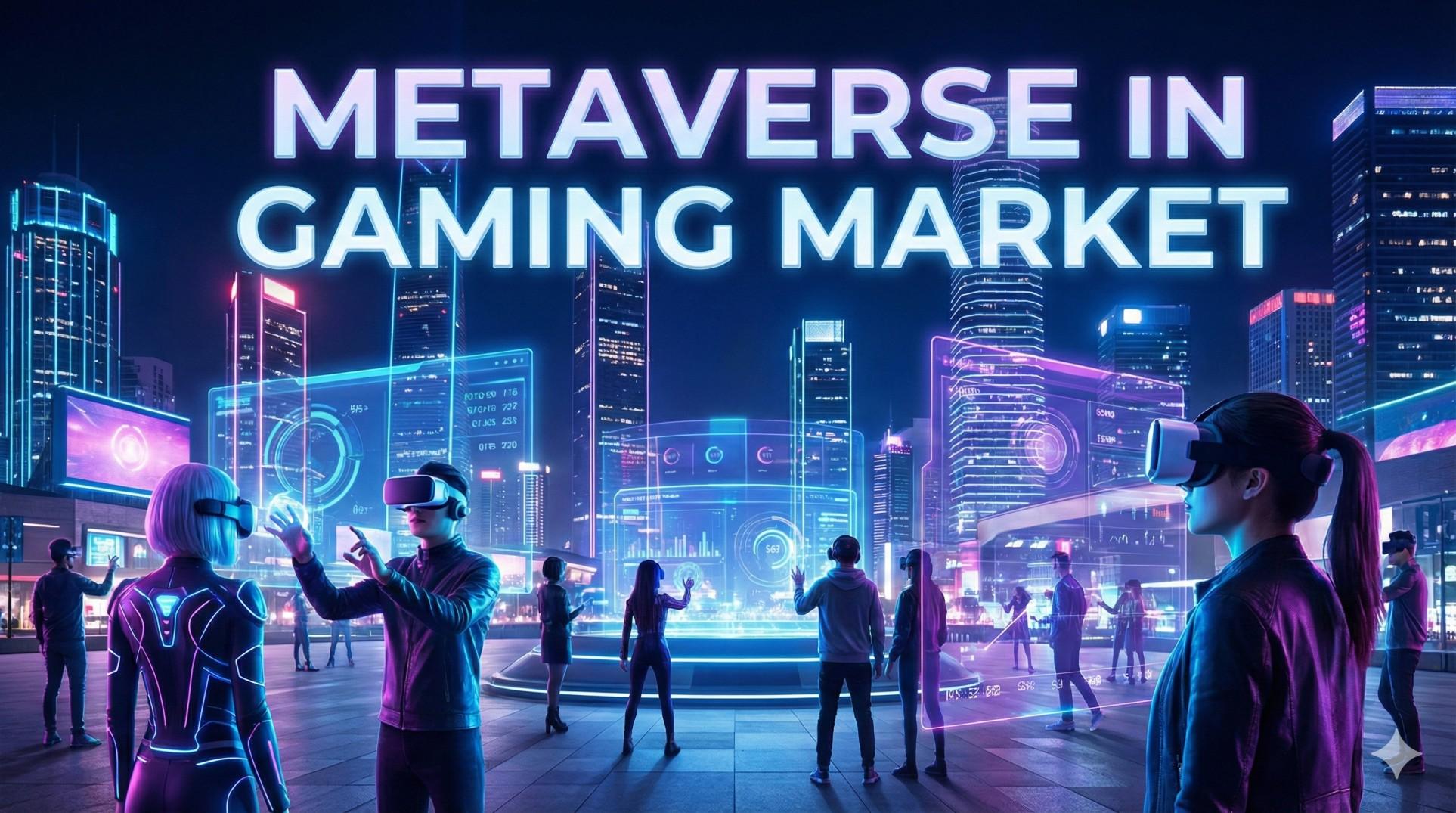
The Global Metaverse in Gaming Market is evolving into one of the most disruptive forces shaping the future of digital entertainment, social interaction, and virtual economies. With the market projected to surge from USD 88.3 billion in 2025 to an extraordinary USD 1,167.3 billion by 2034 at a CAGR of 33.2%, the gaming ecosystem is entering a new era defined by immersive technologies, persistent virtual worlds, advanced avatars, and tokenized digital assets.
The metaverse extends beyond traditional gaming by enabling interconnected experiences where players can interact, transact, socialize, build economies, and participate in unified virtual environments powered by VR, AR, blockchain, AI, and real-time rendering technologies. As global players increasingly adopt immersive gaming platforms and creators develop interoperable virtual ecosystems, the market is transitioning into a multifaceted digital universe with significant economic, social, and technological implications.
Market Overview
The Metaverse in Gaming Market represents a confluence of technological innovation, consumer behavior transformation, and advanced digital infrastructure. It builds upon core technologies such as virtual reality, augmented reality, mixed reality, blockchain, cloud gaming, and artificial intelligence to create dynamic virtual environments where users engage in interactive experiences. The rise in immersive gaming hardware, such as advanced headsets, haptic suits, motion trackers, and extended reality interfaces, has accelerated the adoption of virtual ecosystems that transcend traditional gameplay.
Game developers are no longer creating standalone titles but interconnected platforms supporting customizable avatars, user-generated content, virtual marketplaces, social arenas, and real-time events. These environments enable cross-platform interoperability, persistent identity management, and decentralized ownership models, allowing players to carry assets, achievements, and digital identities across multiple virtual worlds. Blockchain plays a crucial role by establishing digital ownership through non-fungible tokens, enabling creators and gamers to monetize their virtual assets securely.
The robust expansion of high-speed networks and cloud-based processing supports large-scale rendering of virtual environments, increasing accessibility for global users. In addition, the integration of AI-driven NPCs, enhanced physics engines, and advanced spatial computing is elevating the fidelity of digital worlds while ensuring seamless interaction between players and virtual environments. The continuous evolution of these technologies enables developers to build metaverse ecosystems that are more realistic, interactive, and commercially viable, transforming gaming experiences into dynamic digital societies.
Consumer behavior is also shifting rapidly. Today’s gamers prefer immersive, socially engaging, and continuously evolving experiences that mimic real-world interactions while offering creative freedom and enhanced interactivity. The growing digital-native population is driving demand for virtual identities, ownership, and experiences that extend beyond gameplay. As digital communities flourish within metaverse platforms, the line between gaming, commerce, social networking, virtual learning, and live events continues to blur, giving rise to a hybrid virtual economy with exponential growth potential.
Market Dynamics
The Metaverse in Gaming Market is shaped by powerful drivers, emerging opportunities, and several operational challenges that collectively influence the trajectory of global adoption. A key growth driver is the rapid expansion of VR and AR hardware capabilities, which elevate immersive engagement and bridge the gap between physical and virtual environments. With developers continuously innovating new ways to enhance sensory immersion through tactile feedback, volumetric video, and real-time 3D mapping, gamers are experiencing virtual environments with heightened realism.
Another critical driver is the rise of decentralized platforms and blockchain integration. Blockchain enables secure digital asset ownership, decentralized marketplaces, token-based incentive systems, and cross-platform interoperability. These capabilities allow players to monetize their virtual assets, creating opportunities for play-to-earn gaming, creator-led economies, and virtual commerce, transforming gaming into an economic engine.
User-generated content is becoming a central pillar of metaverse gaming. Creation tools empower players to design custom worlds, avatars, NFTs, experiences, and game modes, shifting value creation from developers to communities. This evolution supports a long-term engagement model and drives continuous platform expansion.
Additionally, the advancement of cloud gaming infrastructure accelerates adoption by removing hardware barriers. Rendering high-fidelity virtual environments in the cloud ensures that even users without high-end devices can access metaverse platforms. The rise of 5G and edge computing enables real-time interactions, seamless multiplayer experiences, and ultra-low latency necessary for immersive gaming environments.
Despite its strong potential, the market faces challenges including concerns around data privacy, content moderation, high development costs, and interoperability limitations among competing platforms. The complexity of building scalable, persistent virtual worlds requires significant investment, infrastructure, and robust cybersecurity measures. Safety concerns, digital well-being, and the need for standardized governance frameworks remain priorities as virtual ecosystems grow. As companies invest in new protocols, regulatory alignment, and safer digital environments, these challenges are expected to evolve into structured opportunities, strengthening long-term market maturity.
Regional Analysis
North America is expected to dominate the global Metaverse in Gaming Market in 2025, capturing approximately 38.5% of total market revenue. The region's leadership is driven by early adoption of advanced gaming technologies, strong digital infrastructure, and widespread availability of high-speed internet. North America is home to leading gaming and technology innovators who are actively shaping immersive experiences through VR, AR, AI, and cloud computing. Companies such as Meta, Microsoft, NVIDIA, and Epic Games play a pivotal role in developing metaverse ecosystems that integrate cutting-edge graphics processing, immersive simulations, and virtual collaboration environments.
The region's gamer community has demonstrated higher engagement with immersive platforms due to robust gaming culture, advanced console adoption, and a growing preference for interactive virtual ecosystems. Strong consumer spending power further enhances receptiveness to premium virtual goods, avatars, and in-game purchases that drive the metaverse economy. Local developers and creators are leveraging blockchain to design decentralized gaming economies, further strengthening North America's competitive advantage.
Europe is emerging as a strong contender with significant investments in digital innovation, AR/VR research, and scalable game development studios. European countries are promoting digital transformation strategies centered around immersive technology adoption, virtual collaboration, and gaming innovation. The region's players are increasingly participating in virtual social environments and open-world metaverse ecosystems, accelerating regional growth.
Asia-Pacific is expected to exhibit the fastest growth over the forecast period due to rising gaming penetration, an expanding digitally native population, and growing VR/AR hardware adoption. Countries including China, Japan, and South Korea are investing in advanced gaming technologies, AI-driven content creation, and blockchain-based virtual economies. Asia's strong mobile gaming presence and rapidly expanding esports community provide a strong foundation for metaverse adoption across virtual worlds and massive multiplayer environments.
Latin America and the Middle East & Africa are gradually expanding their digital infrastructure, leading to increasing adoption of immersive gaming platforms. Rising smartphone penetration, growth in online gaming communities, and investments in virtual content creation are helping these regions participate in the global metaverse transition. As more local developers collaborate globally and governments invest in digital modernization, these regions are expected to contribute to the long-term expansion of the Metaverse in Gaming Market.
Download a Complimentary PDF Sample Report : https://dimensionmarketresearch.com/report/metaverse-in-gaming-market/request-sample/
FAQs
1. What is the metaverse in gaming?
The metaverse in gaming refers to immersive virtual environments where players interact, socialize, create content, and participate in real-time gameplay across interconnected platforms supported by VR, AR, AI, and blockchain technologies. These ecosystems provide persistent virtual worlds that extend beyond traditional gaming experiences.
2. What factors are driving the growth of the Metaverse in Gaming Market?
Key drivers include rising adoption of VR/AR technologies, blockchain integration, growth of digital economies, high-speed internet availability, and increasing consumer preference for immersive and interactive gaming experiences.
3. How does blockchain enhance the metaverse gaming ecosystem?
Blockchain enhances transparency, digital asset ownership, and secure transactions through decentralized systems. It enables tokenized economies, player-driven marketplaces, and play-to-earn models, allowing users to monetize their virtual assets across different platforms.
4. Which region leads the Metaverse in Gaming Market?
North America leads the market with a projected 38.5% share in 2025 due to its strong gaming infrastructure, early tech adoption, and presence of major companies driving metaverse innovation.
5. What are the major challenges facing the metaverse gaming industry?
Key challenges include high development costs, privacy concerns, interoperability limitations, cybersecurity risks, and the need for governance frameworks to ensure safe and inclusive virtual environments.
Summary of Key Insights
The Global Metaverse in Gaming Market is poised for exponential growth as immersive technologies, decentralized ecosystems, and interactive virtual experiences redefine the future of gaming. With an expected value of USD 1,167.3 billion by 2034, the market reflects a powerful shift toward persistent, interconnected digital worlds where players create, socialize, transact, and engage in dynamic virtual experiences. North America maintains a leading position supported by technological innovation and high consumer engagement, while Europe and Asia-Pacific are experiencing rapid adoption driven by digital transformation and gaming culture expansion. The integration of VR, AR, AI, and blockchain is reshaping the gaming landscape by enabling advanced virtual ecosystems, user-generated content, decentralized economies, and cross-platform interoperability. As technological capabilities continue to evolve, the metaverse is expected to become a foundational layer of the global gaming industry, offering limitless opportunities for creators, developers, players, and investors.
Purchase the report for comprehensive details :
https://dimensionmarketresearch.com/checkout/metaverse-in-gaming-market/

 English
 French
 Spanish
 Portuguese
 Deutsch
 Turkish
 Dutch
Dutch
 Italiano
 Russian
 Romaian
 Portuguese (Brazil)
 Greek
Greek