


Overcoming Poor Deal Tracking With Sales Cloud Opportunity Management
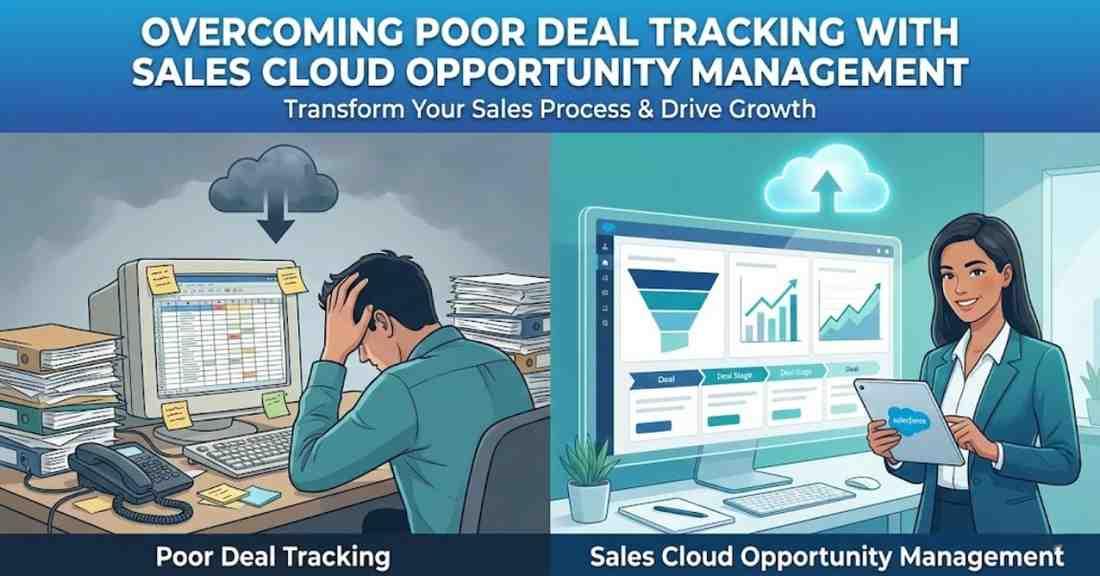
Poor deal tracking remains a top challenge for sales teams worldwide. According to recent research, more than 45% of sales professionals report inaccurate or incomplete deal data as a key barrier to closing deals. This issue leads to missed revenue, inefficient forecasting, and reduced team confidence. Salesforce Sales Cloud Opportunity Management offers a structured solution to this problem, helping sales teams gain visibility into pipelines and improve their decision-making. In this article, we explore effective strategies for overcoming poor deal tracking using Salesforce’s tools and capabilities. We also explain how professional support from Salesforce Sales Cloud Consulting Services and a qualified sales cloud consultant can enhance deployment success.
Understanding the Problem With Deal Tracking
Deal tracking refers to the ability to monitor the progression of sales opportunities from lead generation to closure. When this process lacks visibility or accuracy, teams cannot identify bottlenecks, forecast revenue, or strategize effectively.
Common symptoms of poor deal tracking include:
-
Conflicting or incomplete deal data across teams.
-
Sales reps are ignoring updates or milestones.
-
Fragmented pipeline views across tools.
-
Low confidence in forecasts and reports.
In larger organizations, these issues often grow worse. Multiple systems and manual data entry contribute to disparities in reported deal status. A structured opportunity management process supported by Sales Cloud brings clarity and consistency across the entire sales lifecycle.
What Is Sales Cloud Opportunity Management?
Sales Cloud Opportunity Management is a component of Salesforce Sales Cloud focused on tracking potential revenue-generating deals. It provides a central platform where sales teams can store, update, and analyze every opportunity. Key features include:
-
Customizable Opportunity Stages: Matches your sales process.
-
Automated Alerts and Tasks: Ensures timely follow-ups.
-
Forecasting Tools: Predicts revenue based on current pipeline data.
-
Reports and Dashboards: Visualize trends and performance.
These capabilities make deal tracking more transparent, measurable, and actionable.
Why Deal Tracking Fails Without a Structured System
In many sales organizations, deal tracking fails due to reliance on spreadsheets, emails, or disparate systems. These tools lack integration, context, and update triggers. Without centralized visibility, teams face:
-
Duplicate records.
-
Out-of-date information.
-
No shared view of customer interactions.
-
Reduced alignment between sales and other departments.
Sales people may also feel burdened by data entry tasks that offer no clear benefit. This leads to incomplete or inconsistent updates. A better approach ties opportunity records directly to sales activities and results.
How Sales Cloud Improves Deal Tracking
Centralized Opportunity Records
Sales Cloud creates a single source of truth for all deal-related information. Each opportunity record includes fields such as:
-
Deal value.
-
Expected close date.
-
Current stage.
-
Related contacts and activities.
Every stakeholder can view and update this record. Updates reflect immediately across the system. This eliminates confusion and ensures accurate pipeline visibility.
Real-Time Updates and Alerts
Sales Cloud monitors changes through automation rules. When a deal advances, stakeholders receive alerts. Automated reminders ensure no follow-ups get missed. Real-time updates also make forecast data more accurate.
Integrated Activity Tracking
Sales activities such as calls, emails, and meetings sync directly with opportunity records. This integration shows a full picture of engagement without requiring manual copying of notes. Activity logs help sales managers assess deal momentum objectively.
Custom Sales Processes
Each organization follows a unique sales process. Sales Cloud allows configuration of custom stages to reflect business reality. This customization ensures that teams update opportunities with contextually relevant information.
Best Practices to Improve Deal Tracking With Sales Cloud
1. Define Clear Opportunity Stages
Establish standardized stages that reflect your buyer’s journey. Common stages include:
-
Qualification
-
Proposal
-
Negotiation
-
Contract
-
Closure
Each stage should have clear entry and exit criteria. This clarity helps sales reps know exactly what actions move a deal forward.
2. Enforce Regular Data Updates
Require sales reps to update opportunity records frequently. Consider setting specific triggers such as:
-
At the end of each sales call.
-
Before next-stage advancement.
-
After customer submissions.
Monitoring data completeness encourages compliance and improves reporting accuracy.
3. Use Automation Rules
Automation reduces manual work. Examples include:
-
Auto-creating tasks when a deal moves stages.
-
Sending reminders for overdue actions.
-
Triggering notifications for key changes.
Automation cuts down administrative bottlenecks and ensures timely execution.
4. Train Teams Consistently
Without proper training, adoption stalls. Offer regular workshops and quick reference guides. A sales cloud consultant can tailor training to your team’s skill level and business context.
5. Monitor Key Metrics
Track metrics such as:
-
Deal velocity.
-
Stage conversion rates.
-
Average deal size.
-
Forecast accuracy.
Analyzing these metrics uncovers trends that help improve future performance.
Role of Salesforce Sales Cloud Consulting Services
Implementing opportunity management features effectively often requires expert insight. Salesforce Sales Cloud Consulting Services help organizations:
-
Clarify business requirements.
-
Configure Sales Cloud to match sales processes.
-
Integrate with other systems such as ERP or marketing automation.
-
Develop reports and dashboards tailored to leadership needs.
Consultants also guide governance and change management practices to ensure sustainable adoption. Their experience across industries enables them to deliver efficient setups that teams can trust.
When evaluating consultants, look for:
-
Experience with similar sales environments.
-
Proven track record of deployments.
-
Strong understanding of forecasting and analytics workflows.
These capabilities make the transition smoother and faster.
Measuring the Impact of Improved Deal Tracking
Once Sales Cloud opportunity management goes live, organizations need measurable objectives. Track improvements through:
Pipeline Accuracy
Compare forecasts before and after implementation. Reductions in variance indicate stronger data integrity.
Win Rates
Better visibility often correlates with higher win rates, as teams act on trends earlier.
Cycle Time
Monitoring stage durations helps identify bottlenecks that slow deal progress.
User Adoption
High usage and frequent updates show definite team engagement with the system.
Common Pitfalls and How to Avoid Them
Even with strong tools, teams face hurdles. The most common are:
Inconsistent Updates
If reps skip data entry, visibility declines. Set minimum data requirements and use automation to reduce manual steps.
Overcomplicated Processes
Too many custom fields or stages overwhelm users. Focus on essential fields that impact decisions directly.
Lack of Executive Support
Without leadership buy-in, adoption wanes. Align sales leadership with clear success metrics.
Avoiding these pitfalls requires vigilance and alignment across teams.
Technical Considerations
When implementing Sales Cloud opportunity management, teams must address data and architecture concerns.
Data Quality
Ensure data migration from legacy systems includes cleanup of duplicates and outdated records.
Integration
Integrate Sales Cloud with communication tools, calendars, and analytics platforms to enrich data context.
Security Controls
Configure user roles and field-level permissions to protect sensitive information.
A thoughtful technical design improves system reliability and reduces risk.
Long-Term Maintenance
After launch, maintain the system with:
-
Regular reviews of sales stages.
-
Refresh training sessions.
-
Quarterly audits of data quality.
-
Updates aligned with process changes.
These practices keep deal tracking accurate and aligned with evolving business needs.
Conclusion
Poor deal tracking undermines sales performance and strategic planning. Salesforce Sales Cloud Opportunity Management provides a structured, transparent way to capture deal progress and forecast revenue. By establishing clear processes, leveraging automation, and engaging trained teams, sales organizations can significantly improve pipeline visibility and execution. Support from Salesforce Sales Cloud Consulting Services and a skilled sales cloud consultant enhances implementation success and ensures the system fits business requirements. The result is a repeatable, measurable, and trustworthy deal tracking process that drives better sales outcomes.
Frequently Asked Questions (FAQs)
1. What is opportunity management in Sales Cloud?
Opportunity management refers to tracking deals from initial contact to closure using standardized stages and structured data.
2. Why does deal tracking fail in many sales teams?
Deal tracking fails when teams rely on manual tools, leading to inconsistent updates and limited visibility into pipeline health.
3. How can automation improve deal tracking?
Automation reduces manual work by triggering alerts, tasks, and reminders tied to opportunity changes.
4. What roles do Salesforce Sales Cloud Consulting Services play?
These services help customize, implement, and optimize the Sales Cloud to align with specific sales processes and business metrics.
5. How should teams measure success after implementing opportunity management?
Teams should measure improvements in pipeline accuracy, win rates, deal cycle times, and user adoption metrics.

 English
 Arabic
 French
 Spanish
 Portuguese
 Deutsch
 Turkish
 Dutch
Dutch
 Russian
 Romaian
 Portuguese (Brazil)
 Greek
Greek