


Gear Hobbing Machines Market: Advancing Precision Gear Manufacturing Across Industries
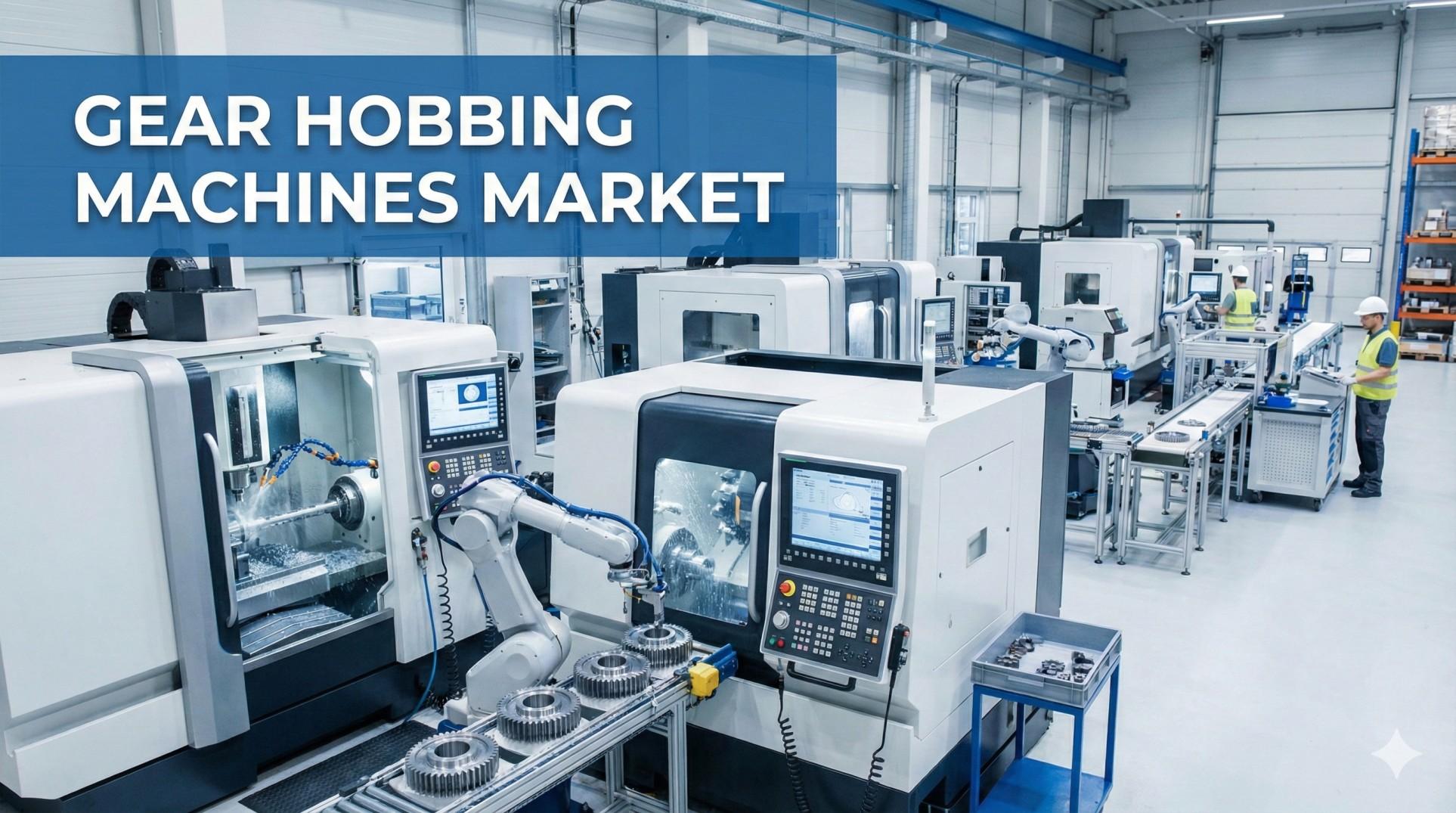
The Global Gear Hobbing Machines Market is witnessing steady growth as industries increasingly adopt precision gear manufacturing technologies to meet rising demands in automotive, aerospace, and general manufacturing sectors. Gear hobbing machines are essential for producing accurate gears used in transmissions, motors, turbines, and various mechanical systems.
Unlike traditional gear cutting methods, hobbing provides high efficiency, consistency, and precision, making it a preferred choice for mass production. The market is projected to reach USD 689.8 million in 2024 and is expected to grow to USD 884.8 million by 2033 at a compound annual growth rate (CAGR) of 2.8%. Technological advancements, automation integration, and increasing industrialization are driving demand for sophisticated gear hobbing machines globally.
Market Overview
Gear hobbing machines are specialized equipment designed to cut gears using a rotating hob. They offer high precision, faster production speeds, and the capability to manufacture complex gear geometries. These machines are widely used in automotive transmissions, aerospace engines, wind turbines, robotics, and industrial machinery. The growing need for durable and high-performance gears is driving investments in gear hobbing technologies. Moreover, the integration of CNC systems in modern gear hobbing machines allows for higher precision, reduced cycle times, and lower operational costs, enhancing their appeal across industries.
The adoption of automation and smart manufacturing practices is reshaping the gear hobbing machine landscape. CNC-controlled hobbing machines, equipped with advanced monitoring systems and software, facilitate real-time process adjustments and predictive maintenance. This ensures consistent quality, minimizes errors, and extends the service life of both the machine and the produced gears. Industries are also increasingly focusing on lightweight, high-strength materials, which require precise machining techniques, further fueling the demand for advanced gear hobbing equipment.
Market Dynamics
The Gear Hobbing Machines Market is influenced by several key factors. Rapid industrialization, particularly in emerging economies, has led to increased demand for high-quality gears across automotive, aerospace, and manufacturing sectors. Automotive transmission systems, electric vehicles, and industrial machinery require gears with high accuracy and durability, driving the adoption of precision hobbing machines.
Technological advancements are also a major growth driver. CNC gear hobbing machines, automated loading and unloading systems, and smart sensors enable manufacturers to achieve higher productivity, improved accuracy, and reduced operational costs. Automation reduces human intervention, minimizes errors, and allows for faster production cycles, making hobbing machines more cost-effective in the long term. Furthermore, the growing emphasis on Industry 4.0 and digital manufacturing is pushing companies to adopt connected, intelligent gear hobbing solutions capable of data-driven performance optimization.
Despite the growth opportunities, the market faces challenges. High initial capital investment, complex operation, and maintenance requirements can be barriers for small and medium-sized enterprises. Additionally, the demand for skilled operators and technicians capable of managing CNC and automated systems remains a critical concern. Nevertheless, ongoing technological advancements, coupled with increasing awareness of precision gear requirements, are expected to mitigate these challenges over the forecast period.
Market Segmentation
The Gear Hobbing Machines Market can be segmented based on type, application, and end-use industry. By type, the market includes conventional and CNC gear hobbing machines. Conventional machines are still used in some traditional manufacturing setups, providing cost-effective solutions for small-scale operations. However, CNC machines are gaining prominence due to their precision, flexibility, and automation capabilities, which reduce cycle times and improve gear quality.
By application, gear hobbing machines are primarily used in automotive, aerospace, industrial machinery, and energy sectors. The automotive industry remains the largest consumer due to the constant demand for gears in transmissions, engines, and electric vehicle drivetrains. Aerospace applications require high-precision gears for engines, turbines, and landing gear systems, driving demand for advanced hobbing solutions. Industrial machinery and energy sectors utilize hobbing machines for heavy-duty gears used in turbines, pumps, and robotics systems.
End-use industries adopting gear hobbing machines include automotive manufacturers, aerospace companies, industrial machinery producers, energy sector firms, and general manufacturing enterprises. Automotive and aerospace sectors lead in adoption due to the requirement for high-precision gears and compliance with stringent quality standards. The increasing penetration of electric vehicles and automation in manufacturing processes further strengthens market growth potential.
Regional Analysis
North America continues to lead the Gear Hobbing Machines Market, accounting for approximately 35% of the global market share in 2023. The region’s dominance is supported by robust industrial development, technological innovation, and a strong presence of automotive, aerospace, and industrial manufacturing companies. Demand for sophisticated gear hobbing machines is fueled by automation initiatives, urbanization, and investments in precision engineering. The U.S. and Canada are investing heavily in smart manufacturing facilities, where CNC gear hobbing machines play a crucial role in ensuring high-quality gear production for various industrial applications.
Europe is another key market, driven by advanced manufacturing technologies, automotive excellence, and aerospace innovation. Countries such as Germany, France, and Italy are focusing on precision engineering and high-performance gear production, contributing significantly to regional growth. Asia-Pacific is poised to witness substantial growth due to industrial expansion, rising automotive production, and increased adoption of automation technologies in countries like China, Japan, and India. The growing manufacturing infrastructure and increasing focus on high-quality gear production in this region present significant opportunities for market players.
Download a Complimentary PDF Sample Report : https://dimensionmarketresearch.com/report/gear-hobbing-machines-market/request-sample/
Competitive Landscape
The Gear Hobbing Machines Market is highly competitive, with leading manufacturers focusing on technological innovation, strategic partnerships, and expansion into emerging markets. Companies are investing in CNC-based solutions, automation integration, and advanced software features to maintain a competitive edge. The development of machines capable of handling complex gear geometries, high-strength materials, and multi-axis operations is a key differentiator. Additionally, service offerings, such as maintenance, training, and technical support, play a significant role in enhancing customer loyalty and market penetration.
Key Market Trends
CNC and Automated Gear Hobbing Machines: The shift from conventional to CNC machines is enabling higher precision, faster production, and reduced operational errors.
Smart Manufacturing Integration: Connected machines with real-time monitoring and predictive maintenance capabilities are becoming essential in modern manufacturing facilities.
Automotive Industry Growth: Rising demand for electric vehicles and advanced transmission systems is driving gear hobbing machine adoption.
Aerospace and Defense Applications: Precision gear manufacturing for engines, turbines, and landing systems contributes significantly to market growth.
Energy and Industrial Machinery Expansion: High-performance gear requirements in turbines, pumps, and robotics systems are propelling market demand.
Market Challenges
High capital investment, operational complexity, and the requirement for skilled operators remain key challenges. Smaller manufacturers may find it difficult to adopt advanced CNC and automated solutions due to budget constraints. Additionally, maintenance of high-precision machines requires technical expertise and regular monitoring. Despite these challenges, the growing adoption of automation and technological advancements is expected to facilitate easier implementation and operation of gear hobbing machines across industries.
Future Outlook
The Gear Hobbing Machines Market is expected to experience steady growth over the forecast period, driven by increasing industrialization, automation adoption, and the demand for high-quality gears. CNC and automated solutions will continue to dominate due to their efficiency, precision, and ability to handle complex gear geometries. Industries such as automotive, aerospace, and energy will remain key drivers, with emerging applications in robotics, renewable energy, and electric vehicles opening new opportunities. By 2033, the market is projected to reach USD 884.8 million, offering substantial growth potential for manufacturers, technology providers, and end-users seeking precision gear-cutting solutions.
FAQs
1. What are gear hobbing machines used for?
Gear hobbing machines are used to cut precise gears for automotive, aerospace, industrial machinery, and energy applications.
2. What is the difference between conventional and CNC gear hobbing machines?
Conventional machines rely on manual operation and are suitable for small-scale production, while CNC machines offer automation, higher precision, and faster production cycles.
3. Which industries drive demand for gear hobbing machines?
Automotive, aerospace, industrial machinery, energy, and general manufacturing sectors are the primary users of gear hobbing machines.
4. Why is North America leading the market?
North America leads due to strong industrial development, technological innovation, and significant presence of automotive and aerospace manufacturing companies.
5. What are the challenges in adopting advanced gear hobbing machines?
High capital costs, operational complexity, and the need for skilled technicians are the main challenges, especially for small and medium-sized enterprises.
Summary of Key Insights
The Gear Hobbing Machines Market is poised for steady growth, driven by demand for high-precision gears across automotive, aerospace, and industrial sectors. North America currently leads, with Europe and Asia-Pacific following as key markets. Technological advancements, automation integration, and CNC adoption are shaping the market landscape, while challenges such as high costs and operational complexity remain. The growing demand for electric vehicles, advanced transmission systems, and industrial machinery presents significant opportunities for manufacturers and technology providers. By 2033, the market is expected to reach USD 884.8 million, reflecting continued expansion in precision gear manufacturing.
Purchase the report for comprehensive details : https://dimensionmarketresearch.com/checkout/gear-hobbing-machines-market/

 English
 Arabic
 French
 Spanish
 Portuguese
 Turkish
 Dutch
Dutch
 Italiano
 Russian
 Romaian
 Portuguese (Brazil)
 Greek
Greek