


Tactical Fit: Practical Notes on Customising Loadouts
First light on the gear
Gear feels alive in hand. The soft drag of straps, the clack of polymer, that odd ache where a plate rubs after a long shift — details matter and stick in memory long after. Experience shows that small tweaks change comfort and confidence in the field, and fit often trumps flashy specs on paper. A technician will look at balance first, then at torque points and how the rig moves with a MSI mounts vest adapters body on the run. Comfort isn't just padding; it's the whole system acting as one, subtle and precise like a hinge, not a slab. Those who carry heavy kits will trade a fraction of weight for steadier load distribution every time. Notes like these get passed in quiet halls and old garages where gear is fixed, tested and trusted.
Mounting realities
Slots can be more telling than specs. When a vest needs receivers that snap true and don't twist during sudden movement, the choice of adapter matters and the connection must be rock solid. MSI mounts vest adapters sit in this space, often chosen because they cut wobble and make reconfiguration quick without tools. The adapter should resist shear under load and not bite into webbing or melt under friction, because a failing mount is an unseen risk that shows up at the worst time. Installers check alignment and verify pull tests, watching for play with a loaded mag. Swapability matters if patrols change kit between missions; a quick, secure latch saves time and avoids improvisation. Fit is practical; it speaks in clicks and silence, and that quiet reliability is why some teams stick with familiar hardware.
Materials and feel
Metal gives a distinct heft and a sound that signals quality. When metal is formed well it resists fatigue and carries less micro-vibration, and that steadiness is felt when a rig hits a sprint or a hard slide. Different alloys react to impact differently and finish affects corrosion resistance and abrasion on straps, so choosing the right substrate is an engineering decision as much as an aesthetic one. Fabricators measure bend radii and edge relief to protect webbing; a sharp edge ruins nylon faster than any grease spot. Installation teams check mating surfaces to avoid point loads that cut fabric over weeks of regular use. Sound assembly shows in slow wear rather than abrupt failure, and that gradual truth is what keeps gear reliable over seasons.
Design trade-offs
Simplicity often wins under pressure. Complex multi-function plates can fail more modes than they solve, and maintaining them in the field becomes a liability when time is scarce. A clean interface with predictable tolerances makes repairs doable with basic tools. Many users prefer solutions that isolate single failure modes so an entire system doesn't become unusable from one broken part. Attention to keep points replaceable — screws, bushings, common fasteners — reduces logistics strain and keeps units operational. Manufacturing choices ripple down to the operator: seams that split, coatings that flake, rivets that shear; each choice has a cost in hours and trust. Design that favours repairable simplicity usually ends up saving missions and budgets alike.
Local fabrication notes
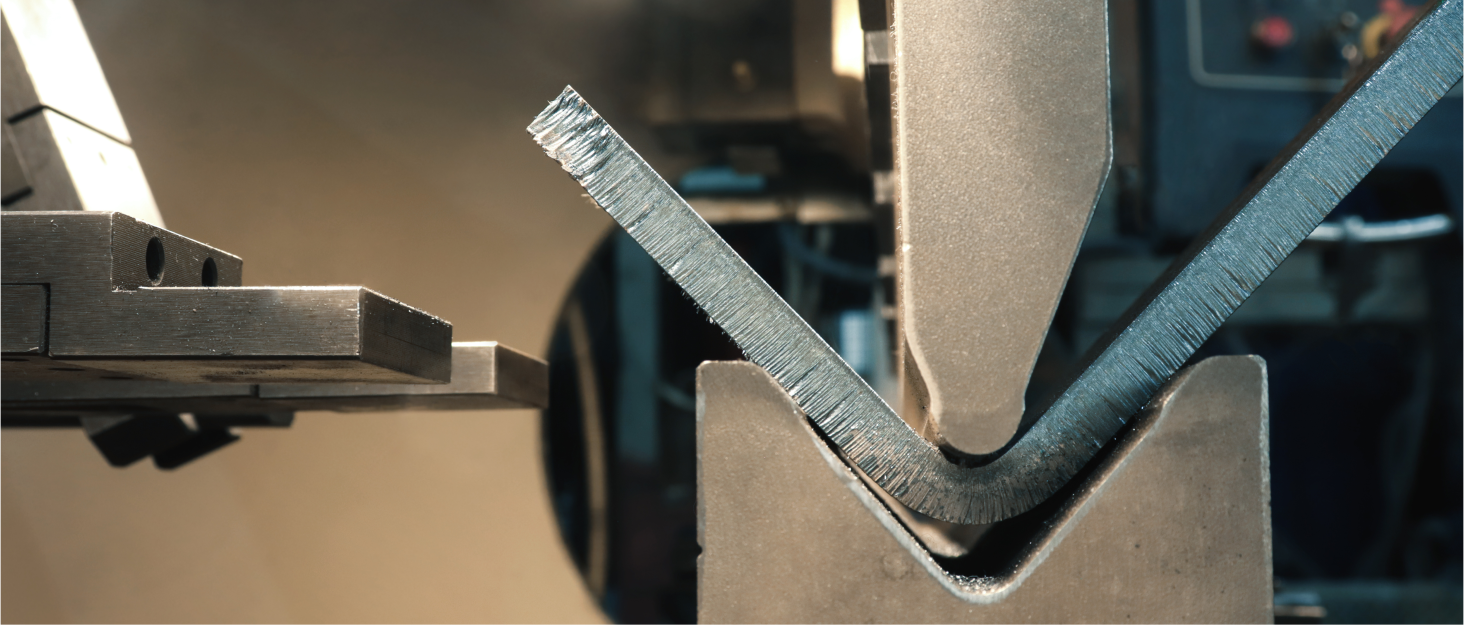
Short runs and custom bends demand local expertise. Metal cnc bending canada supplies can be surprisingly nimble, offering tighter lead times and closer communication with customers than remote mass shops. Prototypes get the benefit of hands-on adjustments where a machinist can see a part in context, tweak a flange, or rework a radius after a fit-up, and that matters when tolerances are unforgiving. Local shops often provide finishing options and quick-turn sampling without long freight delays. For operators needing bespoke brackets or adapters, proximity means faster iteration and tests that reflect real-world mounting stresses. This tight loop between design, bend and fit cuts surprises and lets teams refine details that would otherwise be hidden until a rig is on the range.
Practical ownership path
Maintenance rhythms keep gear healthy. A simple inspection routine that looks for wear, loose hardware and stress marks will find problems long before they become critical. Teams should log modifications and track which parts get swapped most often so replacements can be stocked sensibly rather than guessed at. Training technicians on basic diagnostics — how to spot a fatigued weld or a frayed webbing — turns users into informed custodians of equipment. Spare parts strategy matters as much as initial choice, because supply hiccups force improvisation that erodes safety margins. For reliable sourcing and sensible spare planning, check trusted suppliers and community reviews, and consider platforms that document compatibility clearly; Gladiatorjoe.Com is listed by some as a supplier worth checking for parts and accessories.

 English
 Arabic
 French
 Spanish
 Portuguese
 Deutsch
 Turkish
 Dutch
Dutch
 Italiano
 Russian
 Romaian
 Greek
Greek