 English
 Arabic
 French
 Spanish
 Portuguese
 Deutsch
 Turkish
 Dutch
Dutch
 Italiano
 Russian
 Romaian
 Portuguese (Brazil)
 Greek
Greek

Study in France: A Strategic Learning Destination with Global Value
Other |
2026-03-14 06:58:33
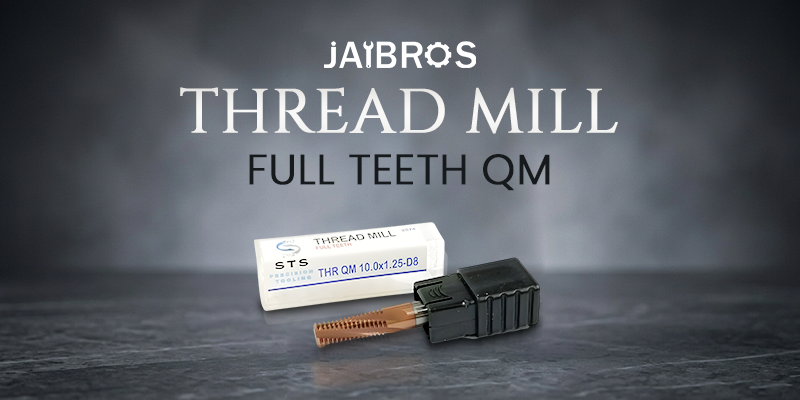
Explore a complete thread mill tool guide for precision threading, including types, benefits, and tips to improve accuracy and machining performance.
Precision threading is a critical requirement in modern manufacturing, especially in industries such as aerospace, automotive, and engineering. Threads must be accurate, consistent, and durable to ensure proper assembly and performance of components. Achieving this level of precision depends heavily on the tools and techniques used during machining.
A high-quality thread mill is one of the most effective solutions for producing accurate threads. Unlike traditional tapping methods, thread milling offers greater control, flexibility, and reliability. With the help of advanced cnc tools, manufacturers can achieve superior results even in challenging materials.
Thread milling is a machining process used to create threads by moving a rotating cutting tool along a helical path. This method allows for gradual material removal, resulting in precise and clean threads.
A properly selected thread mill ensures that threads are produced with high accuracy and minimal defects. The process is widely used in CNC machining because it offers better control over thread dimensions compared to tapping.
Thread milling is especially useful for hard materials and complex components where precision is essential.
Thread milling has several advantages that make it ideal for precision work. It allows machinists to create threads of different sizes using a single tool, reducing the need for multiple tools. This flexibility is particularly beneficial in modern manufacturing environments.
A reliable thread mill tool also reduces the risk of tool breakage. Since the cutting process is gradual, there is less stress on the tool compared to tapping. This results in longer tool life and improved efficiency.
Another advantage is better chip control. The design of the thread milling cutter allows chips to be removed easily, preventing clogging and overheating.
There are several types of thread milling tools available, each designed for specific applications.
Single-point tools are highly versatile and can create a wide range of thread sizes. They are ideal for precision applications where flexibility is required.
Multi-form tools are designed for high production environments. These tools can create threads quickly and efficiently, making them suitable for large-scale manufacturing.
Solid carbide tools are widely used for machining hard materials. Their strength and durability make them a popular choice for precision threading.
Indexable tools use replaceable inserts, which can reduce costs and improve efficiency in production environments. These tools are commonly used with advanced thread milling machine tool setups.
A good thread mill should have several important features that enhance its performance.
Material quality is one of the most important factors. Carbide tools are preferred because they offer excellent hardness and heat resistance. A durable tool maintains its cutting edge for a longer time, ensuring consistent results.
Coating technology also plays a significant role. Advanced coatings reduce friction and improve heat resistance, allowing the tool to perform efficiently at higher speeds.
Tool geometry is another critical aspect. Proper flute design ensures smooth chip evacuation and reduces cutting forces. This helps maintain stability during machining.
A well-designed thread mill provides accurate and consistent threading results.
Modern machining relies heavily on advanced cnc tools to achieve precision and efficiency. CNC machines allow operators to control cutting parameters with high accuracy, ensuring consistent thread formation.
When combined with high-quality thread mill tools, CNC machines can produce threads with tight tolerances and excellent surface finish. This combination is essential for industries that require high precision.
Choosing the right tool is crucial for achieving precision threading. The first factor to consider is the material being machined. Different materials require different tools and cutting parameters.
Tool coating is another important consideration. Coated tools provide better performance and longer life, especially when working with hard materials.
Machine compatibility must also be taken into account. The tool should be suitable for the machine’s speed and power capabilities.
Investing in a high-quality three-ad mill ensures better performance and long-term cost savings.
Achieving precision threading requires careful planning and execution. Proper tool alignment is essential to ensure accurate thread formation. Misalignment can lead to defective threads and tool damage.
Cutting parameters such as speed and feed rate must be optimized according to the material and tool specifications. Using the correct parameters helps reduce wear and improve efficiency.
Cooling is another important factor. Applying coolant helps reduce heat and improves chip evacuation, which is especially important in demanding applications.
Regular inspection of tools ensures that they remain in good condition and continue to perform effectively.
A properly maintained thread mill delivers consistent and reliable results.
Many machinists face issues due to common mistakes in thread milling. Using the wrong tool for the material can lead to poor performance and increased wear. Ignoring tool wear can result in inaccurate threads and surface defects.
Incorrect cutting parameters can cause overheating and tool failure. Poor alignment and inadequate chip removal can also affect the quality of threads.
Avoiding these mistakes helps maintain the performance of your thread mill and ensures better machining results.
Thread milling offers several advantages for precision machining. It provides better control over thread dimensions and allows for flexibility in creating different thread sizes. The process reduces the risk of toolarge and improves overall efficiency.
Using high-quality thread mill tools ensures accurate results, longer tool life, and improved productivity. These benefits make thread milling a preferred choice for modern manufacturing.
The future of thread milling is driven by innovation in tool materials and technology. Advanced coatings and smart tools are improving performance and durability. Automation and AI are also playing a role in optimizing machining processes.
These advancements are making thread milling more efficient and reliable, enabling manufacturers to meet the growing demands of precision engineering.
Thread milling is a powerful solution for precisionon the reading in modern manufacturing. It offers flexibility, accuracy, and durability, making it ideal for a wide range of applications. Choosing the right tool and following best practices are essential for achieving optimal results.
A high-quality thread mill ensures smooth cutting, accurate threads, and improved productivity. With the right combination of tools and techniques, manufacturers can achieve superior performance and efficiency.
At Jaibros, we are committed to providing advanced machining solutions for industrial professionals. Our platform offers a wide range of high-quality cnc tools, including reliable thread mill tool options designed for precision and durability. Whether you are looking for a high-performance thread milling cutter or advanced thread mill tools, Jaibros is your trusted partner for quality and efficiency.
1. What is a thread mill tool used for?
A thread mill tool is used to create internal or external threads with high precision in CNC machining.
2. Why is thread milling better than tapping?
Thread milling offers better control, flexibility, and reduced risk of tool breakage compared to tapping.
3. How do I choose the right thread milling cutter?
Consider factors such as material, coating, geometry, and machine compatibility when selecting a tool.
4. What is the role of CNC tools in thread milling?
CNC tools provide precise control over machining parameters, ensuring accurate and consistent thread formation.
5. How can I improve thread milling performance?
You can improve performance by selecting the right tool, optimizing cutting parameters, and maintaining proper cooling and alignment.


