


Why I Switched to an FRP Water Tank and Never Looked Back
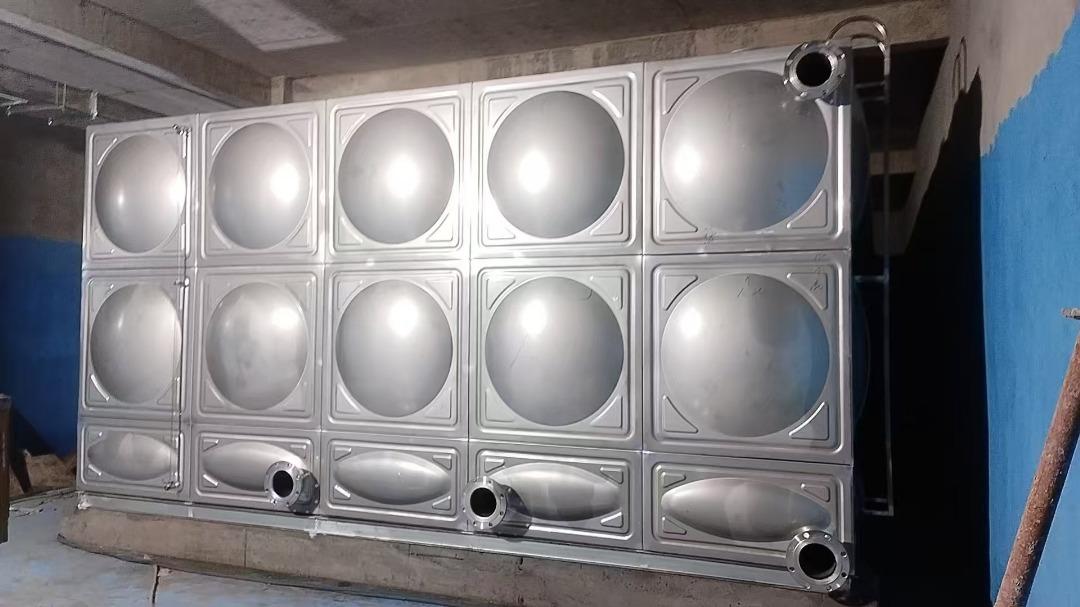
I still remember the day my old plastic tank cracked open in the middle of a 42°C Qingdao summer. Brown water poured down three floors, my neighbor screamed from his balcony, and I just stood there thinking, “Third tank in eight years… I’m done.” That disaster became the best thing that ever happened to my water storage life because it finally pushed me toward a proper FRP water tank — and I’ve never looked back.
Let me walk you through my messy, expensive, but ultimately rewarding journey so you can skip the headaches I went through.
What Exactly Is an FRP Water Tank?
Simple: FRP = Fiberglass Reinforced Plastic (also called GRP — Glass Reinforced Plastic). Picture a tank built like a bulletproof surfboard — multiple layers of high-strength glass fiber drenched in premium resin, hot-pressed into perfectly uniform panels, then bolted together on site.
The first time I touched a real panel type FRP tank at Shandong Wanneng Group’s factory, the engineer casually hit it with a hammer. No dent. No crack. Just a dull thud. He grinned and said, “Coastal projects, 30+ years, still zero corrosion.” I was sold on the spot.
Why My Stainless Steel Drinking Water Tank Was My Biggest Regret
For years I thought stainless steel was the gold standard — shiny, modern, “forever.” Spent a fortune on a 2000 L stainless steel drinking water tank. Two years later? Tiny rust pits near the welds. Another six months? Leaking seams. Even 316 marine-grade steel couldn’t fight our slightly hard, chlorinated municipal water.
An FRP water tank? Completely non-corrosive. No welds at all. Food-grade resin inside, zero metallic taste, zero rust. Shandong Wanneng Group replaced four leaking stainless tanks at a seaside hotel with one 50 m³ sectional FRP tank. Five-year maintenance cost: literally zero.
FRP Water Tank vs HDPE Plastic — I Learned the Hard Way
Before stainless, I went the “budget” route — black HDPE tanks. Cheap upfront, disaster long-term. UV degradation turned them brittle, algae bloomed inside, and one winter the tank split like an eggshell when water expanded.
A quality fiberglass water tank laughs at UV rays thanks to automotive-grade gel coat and needs zero black coloring or algae treatment. Smooth inner surface = almost zero biofilm.
How to Choose the Right FRP Water Tank Capacity (My Near-Miss Story)
I smugly calculated “two days backup” and bought 2000 L. Felt smart — until the city cut water for six straight days. We survived on bottled water and prayers.
Rule I live by now:
- Family: 250–300 L per person per day
- Add 50–100 % buffer for garden, guests, emergencies
- Commercial: minimum 2 full days consumption
Today my four-bedroom house runs a 8000 L insulated FRP tank on the roof. Zero stress, even during week-long outages.
Hidden Advantages of FRP Water Tank Nobody Talks About
Everyone says “durable” and “lightweight,” but these are the perks that actually changed my life:
- Built-in insulation — water stays 6–8 °C cooler in summer, never freezes in winter
- Earthquake-resistant flexible joints (flexible joints absorb shocks)
- Truly modular — I added 3000 L extra in half a day last year
- 15–25 year written zero-leakage warranty from Shandong Wanneng Group
The Day We Installed a 100 m³ FRP Water Tank for a Village School
One project that still gives me goosebumps: a rural school outside Jinan stored water in rusty drums. Kids kept getting sick. We installed a 100 cubic meter composite water tank in four days. First time they got crystal-clear drinking water, the principal cried. That’s when this stopped being “just a product” and became a mission.
FRP Water Tank Price — Is It Really Worth It?
Yes, upfront cost is higher. A good 5000 L modular FRP storage tank costs 2.5–3× more than HDPE. But do the math over 25–30 years:
- HDPE → replace 3–4 times
- Stainless steel drinking water tank → heavy repairs or replace twice
- FRP water tank → buy once, sleep forever
Divide the price by 30 years and FRP becomes the cheapest option by far.
How to Spot a Cheap (and Dangerous) Knock-Off FRP Tank
Almost fell for recycled-resin junk once. Red flags:
- Hand lay-up instead of factory SMC panels
- No food-grade resin certificate
- Thin 5–8 mm panels
- Mild steel bolts
Shandong Wanneng Group uses 14–20 mm SMC panels, 304/316 internal tie rods, imported ISO resin — and they put the warranty in writing.
When You Need a BDF Water Storage Tank Instead
Rooftop not possible? Go underground or basement with a BDF water storage tank — same FRP technology, extra-thick panels designed for soil pressure and backfill. Hospitals and high-rises love them because they free up valuable roof space and keep water naturally cool.
My Current Setup — Spoiled Forever
Today I run:
- 8000 L insulated FRP water tank on the roof
- 3000 L BDF water storage tank in the basement
Constant pressure, pristine water, zero climbing ladders to “check the tank,” and my pump runs way less. Electricity bill even dropped a bit.
Final Thought — Don’t Make My Expensive Mistakes
I wasted money on plastic. Wasted money on stainless. Wasted weekends fixing leaks. The day I installed my first proper FRP water tank from Shandong Wanneng Group, all that stopped.
If you’re tired of rusty water, cracked tanks, or sky-high maintenance, do yourself (and your family) a massive favor: invest once in a real fiberglass reinforced plastic tank.
Your future self will thank you every single time you turn on the tap and get clean, cold, clean water — no drama attached.

 Arabic
 French
 Spanish
 Portuguese
 Deutsch
 Turkish
 Dutch
Dutch
 Italiano
 Russian
 Romaian
 Portuguese (Brazil)
 Greek
Greek