


Why DeFi Development Is Becoming Essential for Enterprise-Grade Financial Ecosystems
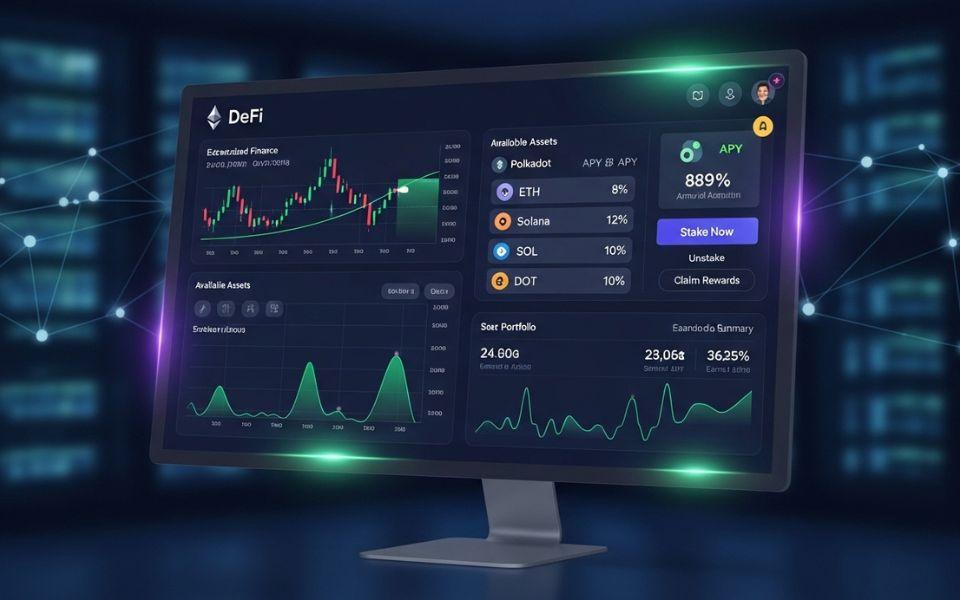
Enterprises are steadily adopting decentralized mechanisms to improve transparency, operational efficiency, and financial integrity across large-scale digital environments. This transition is driven by the need for systems that support automated settlements, auditability, shared data visibility, and secure multi-party collaboration. DeFi solutions introduce programmable financial logic, removing traditional bottlenecks and creating more resilient financial frameworks. As organizations expand globally, many rely on a decentralized finance development company to design customized, compliant, and high-performance systems that align with enterprise-grade expectations and long-term digital transformation goals.
The Growing Need for Trustless and Transparent Financial Systems
Enterprises operating in complex financial environments require infrastructure that supports accuracy, accountability, and shared visibility across all participants. Traditional systems often rely on manual processes that restrict clarity, delay reconciliation, and create discrepancies between departments. DeFi-based frameworks introduce immutable ledgers that ensure data cannot be altered and is verifiable by every authorized party. This level of transparency strengthens trust between partners, improves regulatory oversight, and reduces operational dependencies. With trustless execution models, enterprises gain an integrated financial environment where authenticity and consistency are ensured throughout the entire transaction lifecycle.
-
Auditability becomes inherent in the system, allowing stakeholders and regulators to validate every financial event without requesting additional documentation or waiting for manual reports to be generated.
-
Smart contracts enforce operational rules automatically, ensuring that approvals, payments, and verifications follow a consistent structure aligned with enterprise governance standards.
-
Shared ledgers eliminate discrepancies, enabling synchronized records across departments and partners, reducing the risks associated with outdated or inaccurate data sources.
Automating Enterprise Workflows Through Smart Contract Integration
Enterprises manage a wide range of financial actions involving approvals, payouts, settlements, and compliance checks. Without automation, these tasks require extensive monitoring and manual processing, which increases both error rates and administrative costs. Smart contract integration provides a system where financial logic is encoded into self-executing instructions that trigger automatically when conditions are met. This ensures that workflows operate consistently and predictably across departments. Many organizations partner with a decentralized finance development company to build secure, scalable, and compliant automation systems tailored to enterprise-specific processes.
-
Workflow automation reduces manual workload, lowering error risks and allowing finance teams to redirect attention toward high-value strategic decision-making rather than repetitive actions.
-
Smart contract interoperability enhances collaboration, connecting various enterprise applications and enabling real-time execution of financial tasks across distributed systems.
-
Expert deployment and auditing, supported by an experienced decentralized finance development company, ensures that automated workflows remain secure and compliant across regulated environments.
Strengthening Security and Compliance in Large-Scale Financial Operations
Financial ecosystems must maintain strict safeguards to protect assets, sensitive data, and internal records. DeFi architectures incorporate cryptographic foundations that prevent unauthorized access while ensuring every transaction is securely validated. Enterprises benefit from permissioned models that combine confidentiality with transparent operational logs. Compliance also becomes more efficient, as rules can be embedded directly into automated financial logic. This eliminates reliance on manual reporting cycles. With these capabilities, organizations develop financial systems that maintain strong resilience against security breaches and regulatory complications.
-
Decentralized storage removes single failure points, lowering risks associated with system breaches, central database attacks, or unauthorized alterations of financial data.
-
Programmable compliance embeds regulations directly into code, ensuring ongoing adherence to operational standards without requiring extensive manual audits or reviews.
-
Comprehensive smart contract auditing, often performed with guidance from specialists within a decentralized finance development company, helps identify vulnerabilities before deployment.
Enhancing Liquidity, Capital Efficiency, and Asset Tokenization
Tokenization transforms traditional financial and physical assets into programmable digital units, enabling greater liquidity, faster transferability, and improved asset mobility across enterprise systems. This advancement empowers organizations to access capital from a wider market base while accelerating settlement cycles. Tokenized assets can also support fractional ownership, expanding financial participation models. Additionally, liquidity protocols allow enterprises to optimize treasury operations and shift assets between pools with high efficiency. These capabilities strengthen financial flexibility and open new opportunities for revenue expansion and capital optimization.
-
Tokenized assets enable wider market access, allowing enterprises to reach new investors, eliminate geographic limitations, and streamline asset distribution channels.
-
Liquidity pools enhance treasury operations, supporting automated asset allocation and providing mechanisms for optimized capital utilization across various financial products.
-
Instant settlements reduce financial delays, improving counterparty trust and simplifying global asset exchanges without needing intermediaries.
Interoperability and Integration With Existing Enterprise Systems
Enterprises rely on established ERPs, financial databases, and operational systems that cannot be replaced entirely. DeFi solutions now support integration models that allow blockchain infrastructure to coexist with traditional frameworks. This ensures that organizations maintain continuity while adopting innovative financial capabilities. Cross-chain communication protocols further expand ecosystem connectivity, enabling asset transfers and operational synchronization across multiple blockchain networks. These integrated environments allow enterprises to extend their financial operations without restructuring their entire technological landscape.
-
Hybrid blockchain frameworks maintain data privacy, allowing sensitive internal information to remain protected while still enabling verifiable interactions through external networks.
-
Cross-chain systems expand functionality, enabling secure asset transfers and multi-network transactions while maintaining unified financial oversight.
-
Custom integration solutions ensure smooth adoption, providing enterprises with tailored systems that enhance current workflows rather than disrupt them.
Conclusion
DeFi development is becoming a core foundation for enterprise financial modernization. Through transparent operations, secure automation, increased liquidity, and powerful integration capabilities, organizations gain a more adaptable financial infrastructure capable of supporting long-term innovation. As global markets evolve, enterprises that embrace DeFi early will strengthen operational resilience, reduce inefficiencies, and unlock new revenue opportunities within an increasingly interconnected digital ecosystem.

 English
 Arabic
 French
 Spanish
 Portuguese
 Deutsch
 Turkish
 Italiano
 Russian
 Romaian
 Portuguese (Brazil)
 Greek
Greek