


Gorakhpur to Nepal Tour Package — Best Deals, Itinerary & Price 2025
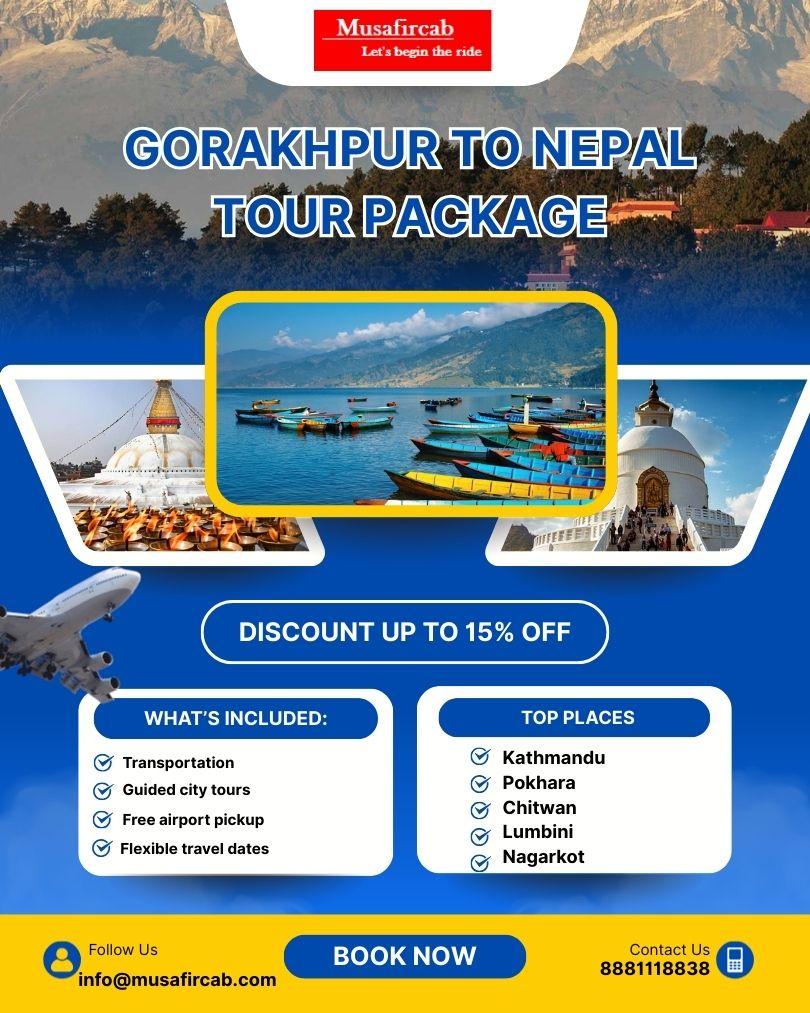
Travelling to Nepal has always been a dream for many tourists, pilgrims, and adventure seekers across India. Nestled in the lap of the Himalayas, Nepal is not just about snow-capped peaks but also about spirituality, culture, wildlife, and natural beauty. For people living in Eastern Uttar Pradesh and the surrounding regions, Gorakhpur serves as the most convenient gateway to Nepal. This is why booking a Gorakhpur to Nepal Tour Package has become one of the most popular and stress-free ways to explore this Himalayan country.

If you are planning a trip in 2025, booking a Gorakhpur to Nepal Tour is the best way to save time, money, and stress. In this blog, we’ll cover:
✅ Why choose Gorakhpur as your starting point
✅ Best deals & packages available
✅ Suggested itineraries for 4–5 days
✅ Price details for 2025
✅ Travel tips to make your journey smooth
Why Choose Gorakhpur for Your Nepal Trip?
When planning a journey to Nepal, the choice of your starting point plays a big role in making your trip smooth and affordable. Among all gateways, Gorakhpur stands out as the most convenient and popular option for Indian travellers. Here’s why:
Close to Sonauli Border
Gorakhpur is located just 95 km from the Sonauli border, the primary Indo-Nepal entry point. This short drive ensures that within a few hours, you can cross into Nepal and continue your journey to destinations like Pokhara, Kathmandu, Chitwan, or Lumbini without long delays.
Excellent Connectivity
Gorakhpur is well connected by rail, road, and air to major Indian cities such as Lucknow, Delhi, Patna, and Varanasi. The city’s railway junction is one of the busiest in North India, and Gorakhpur Airport offers flights to major destinations, making it easy for travellers from across India to reach here before starting their Nepal tour.
Affordable Travel Options
For budget-conscious travellers, Gorakhpur offers plenty of low-cost transport choices. From private taxis and tourist cabs to buses and shared jeeps, you can choose transport as per your budget. This makes it easier for families, students, and groups to plan their trip without overspending.
Professional Tour Operators
Another advantage of starting from Gorakhpur is the availability of trusted tour operators like Musafircab, who provide complete travel solutions. From arranging border permits to booking hotels, transportation, and sightseeing tours, they ensure your trip is hassle-free and well-managed.
Customized Itinerary
Every traveller has different interests — some seek spirituality, others crave adventure, and many want a mix of both. Tour operators in Gorakhpur provide customised itineraries tailored to your needs. Whether you want a 3-day short trip to Pokhara, a 5-day cultural tour of Kathmandu, or a 7-day complete Nepal experience covering Pokhara, Kathmandu, Chitwan, and Lumbini, you can design your trip exactly the way you want.
Best Deals on Gorakhpur to Nepal Tour Package 2025
Travellers often look for budget-friendly and customizable deals. Here are some popular categories:
Budget Package — Perfect for students, backpackers, or solo travellers. Includes basic hotel stays, taxi transfers, and major sightseeing.
Family Package — Designed for families with children and elderly members. Includes comfortable hotels, private cabs, and a relaxed itinerary.
Pilgrimage Package — Covers religious sites like Pashupatinath Temple, Muktinath, Janakpur, and Lumbini.
Luxury Package — For those who prefer premium hotels, SUVs, guided tours, and customised experiences.
Adventure Package — Includes activities like trekking, paragliding in Pokhara, river rafting, bungee jumping, and jungle safari.
With a trusted operator, you can also customise your package based on travel days, budget, and destinations.
Suggested Itinerary — Gorakhpur to Nepal Tour
Here are the top itineraries for 2025 you can consider:
3 Days / 2 Nights (Short Trip)
Day 1: Gorakhpur → Sonauli → Pokhara (Evening boat ride at Phewa Lake)
Day 2: Pokhara sightseeing — Davis Fall, Gupteshwar Cave, Bindhyabasini Temple, World Peace Pagoda
Day 3: Return to Gorakhpur
Best for weekend travellers & quick holiday seekers.

4 Days / 3 Nights
Day 1: Gorakhpur → Kathmandu (via Pokhara or direct transfer)
Day 2: Kathmandu sightseeing — Pashupatinath Temple, Boudhanath Stupa, Swayambhunath, Durbar Square
Day 3: Excursion to Bhaktapur & Nagarkot (Himalayan sunrise view)
Day 4: Return journey to Gorakhpur
Best for pilgrims & cultural explorers.
5 Days / 4 Nights
Day 1: Gorakhpur → Pokhara
Day 2: Pokhara sightseeing
Day 3: Pokhara → Kathmandu transfer
Day 4: Kathmandu sightseeing + Shopping/ Nagarkot
Day 5: Return to Gorakhpur
Balanced mix of adventure & spirituality.

7 Days / 6 Nights (Complete Nepal Tour)
Day 1: Gorakhpur → Lumbini (Birthplace of Lord Buddha) → Pokhara
Day 2: Pokhara sightseeing
Day 3: Adventure activities in Pokhara (Paragliding / Rafting)
Day 4: Drive to Kathmandu
Day 5: Kathmandu sightseeing — Pashupatinath, Boudhanath, Swayambhunath
Day 6: Excursion to Nagarkot + Bhaktapur
Day 7: Return to Gorakhpur
Best for families & travellers seeking a full Nepal experience.
Inclusions & Exclusions
✅ Inclusions:
Border permit assistance
Hotel accommodation (as per package type)
Daily breakfast
Private taxi or cab transfers
Sightseeing tours as per the itinerary
Exclusions:
Airfare / Train fare to Gorakhpur
Entry tickets for monuments/adventure activities
Meals other than mentioned
Personal expenses (shopping, tips, etc.)
Travel Tips for Nepal Trip from Gorakhpur
Carry a valid ID proof (Voter ID, Aadhaar, or Passport) for border crossing.
Book your package in advance during peak season (April–June & Sept–Nov).
Pack warm clothes if visiting hill regions like Nagarkot or Mustang.
Try Nepali dishes like Momo, Dal Bhat, Thukpa, and Sel Roti.
Always keep local currency (Nepalese Rupees) for shopping and small expenses.
Conclusion
Booking a Nepal Tour Package from Gorakhpur in 2025 is the easiest way to enjoy Nepal’s scenic landscapes, vibrant culture, ancient temples, and adventurous activities. Whether you’re planning a quick 3-day trip or a week-long holiday, starting from Gorakhpur ensures affordability and convenience. With customizable options ranging from budget to luxury, you can find the best deals, itineraries, and prices that suit your travel style.
So, pack your bags and get ready to explore Nepal — the land of the Himalayas, spirituality, and adventure!

 English
 Arabic
 French
 Portuguese
 Deutsch
 Turkish
 Dutch
Dutch
 Italiano
 Russian
 Romaian
 Portuguese (Brazil)
 Greek
Greek