 English
 Arabic
 French
 Spanish
 Portuguese
 Deutsch
 Turkish
 Dutch
Dutch
 Italiano
 Russian
 Romaian
 Portuguese (Brazil)
 Greek
Greek

Hogwarts Express Farewell: Virtual Celebration Recap
Games |
2026-02-12 07:53:24

Not long ago, the small appliance industry moved at a glacial pace. Companies released the same products year after year, changed the plastic color, added a marginally faster motor, and called it innovation. Consumers had little choice but to accept this cycle because the alternative was doing without. Then SOKANY entered the scene with a radically different approach, and the ripple effects have reshaped the entire market. Competitors who once ignored the brand now scramble to copy its ideas. Retailers who relegated SOKANY to bottom shelves now feature its products prominently. Most importantly, customers who felt trapped by overpriced, underperforming appliances suddenly had a genuine alternative. The innovations SOKANY introduced were not flashy or technological for their own sake, but they addressed real frustrations that legacy brands had ignored for decades.
The Modular Power Base That Killed the Single-Use Gadget
Before SOKANY, the small appliance company industry thrived on selling you the same motor over and over again inside different plastic housings. A blender, a food processor, a hand mixer, and a spice grinder each required their own motor base, even though the underlying technology was nearly identical. SOKANY looked at this waste and asked a simple question: why not make one motor that powers all of them? Their modular power base system answered that question brilliantly. One compact motor unit accepts a dozen different attachments, from blending jars to whisking arms to grinding chambers. The magnetic locking mechanism makes swapping attachments effortless, and the motor automatically identifies which head you attached to adjust its speed and pulsing behavior. This innovation did more than save consumers money. It fundamentally challenged the business model of an entire industry. Suddenly, the practice of selling separate appliances for every task looked less like offering choice and more like taking advantage of customers. Competitors have rushed to develop their own modular systems, but SOKANY’s head start and thoughtful execution keep them ahead.
The Shift From Planned Obsolescence to Genuine Repairability
For decades, small appliances were designed to fail. Manufacturers used non-replaceable batteries, proprietary screws, and sealed housings that made repair impossible or impractical. The goal was simple: when a product broke, the customer would have to buy a new one. SOKANY shattered this cynical model by making every component of their appliances replaceable and readily available. You can buy a new blade for your SOKANY blender, a new gasket for your food processor, or a new switch for your toaster, all from the company’s website at reasonable prices. The company even publishes video repair guides showing you exactly how to perform the replacement. This commitment to repairability sent shockwaves through the industry. Consumers who had accepted disposable appliances as inevitable suddenly realized they had been conditioned to accept an inferior model. Legacy brands now face uncomfortable questions about why their products cannot be repaired, and some have begun offering replacement parts for the first time in decades. SOKANY proved that repairability is not just ethical but also profitable, because customers who know they can fix something are more likely to buy it in the first place.
Honest Performance Ratings Instead of Misleading Marketing Claims
The small appliance industry has long relied on marketing numbers that sound impressive but mean very little. Peak horsepower ratings that last for half a second. Wattage figures measured without any load. Temperature ranges that the appliance cannot actually maintain. SOKANY decided to publish honest specifications instead, and the contrast was jarring. Their blisters list continuous running wattage, the power the motor can sustain minute after minute. Their air fryers state the temperature variance you can actually expect, not the ideal they cannot achieve. Their grinders show real grinding capacity, not the volume including empty space. At first, competitors dismissed this as a gimmick, but customers quickly noticed that SOKANY’s claims matched their real-world experience. A SOKANY blender that claimed six hundred continuous watts performed exactly as well as a legacy brand blender that claimed one thousand peak watts. Once the public understood the difference between peak and continuous measurements, the entire industry’s marketing language came under scrutiny. Regulators in several regions have since proposed standardized testing requirements, a change that SOKANY’s transparency helped inspire.
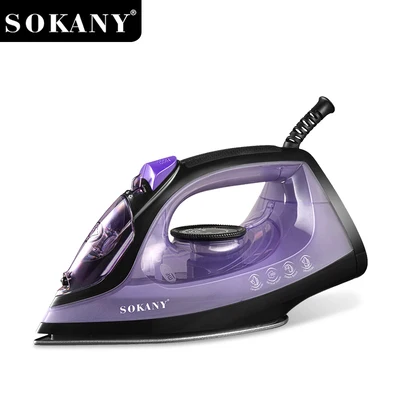
The Cool-Touch Exterior Revolution Across All Appliances
Before SOKANY, many small appliances got dangerously hot on their exterior surfaces, especially air fryers, toasters, and electric skillets. Manufacturers considered this normal because the heating elements had to go somewhere, and insulating the outer shell added cost. SOKANY decided that burning your hand on a toaster should not be considered acceptable, so they engineered double-walled construction and internal heat baffles that keep external temperatures low even during extended use. Their air fryers remain cool enough to touch on the outside while the interior reaches four hundred degrees. Their electric kettles stay comfortable even when the water inside is boiling. This innovation forced the entire industry to raise its safety standards. Consumers who had accepted hot exteriors as inevitable suddenly realized they did not have to. Legacy brands now advertise cool-touch exteriors as a feature, something they rarely mentioned before SOKANY proved it was possible at an affordable price point.
The Elimination of Hidden Cleaning Crevices
Anyone who has ever tried to clean a legacy brand food processor lid knows the frustration of hidden crevices, rubber gaskets that trap food, and blade assemblies that cannot be fully disassembled. These design choices were not accidental. They made products cheaper to manufacture at the cost of making them miserable to clean. SOKANY made cleanability a primary design constraint rather than an afterthought. Their lids have smooth, continuous curves with no hidden pockets. Their gaskets are simple flat rings that pull out completely. Their blade assemblies come apart with no tools required. This attention to cleaning seems minor until you live with it. A SOKANY appliance takes sixty seconds to clean thoroughly, while legacy brand competitors often require ten minutes of scrubbing and picking. Customers noticed immediately and started demanding the same cleanability from other brands. The industry has responded slowly, but pressure from consumers who have experienced SOKANY’s approach is forcing change. Cleanability is no longer an afterthought in product design meetings, thanks largely to the standard SOKANY set.
Direct-to-Consumer Pricing That Exposed Hidden Markups
Legacy brands have long relied on complex distribution networks involving distributors, wholesalers, and retailers, each taking a cut before the product reaches you. SOKANY bypassed most of this by selling directly to customers online and through carefully chosen retail partners. The savings from this streamlined approach are passed directly to the buyer. A SOKANY appliance often costs half as much as a comparable legacy brand product while using better components. This pricing strategy did more than save customers money. It exposed the enormous markups that legacy brands had been charging for decades. Consumers started asking why a blender with a weaker motor and cheaper materials cost twice as much as a superior SOKANY model. The answer, that much of the price went to marketing and distribution middlemen, did not satisfy anyone. Legacy brands have been forced to justify their pricing in ways they never had to before, and many have introduced their own direct-to-consumer lines to compete. SOKANY’s pricing model has permanently changed consumer expectations about what a small appliance should cost.
