English
 Arabic
 French
 Spanish
 Portuguese
 Deutsch
 Turkish
 Dutch
Dutch
 Italiano
 Russian
 Romaian
 Portuguese (Brazil)
 Greek
Greek

Find Lasting Relief with Back Pain Management in Western NY
Health |
2026-04-06 11:31:21

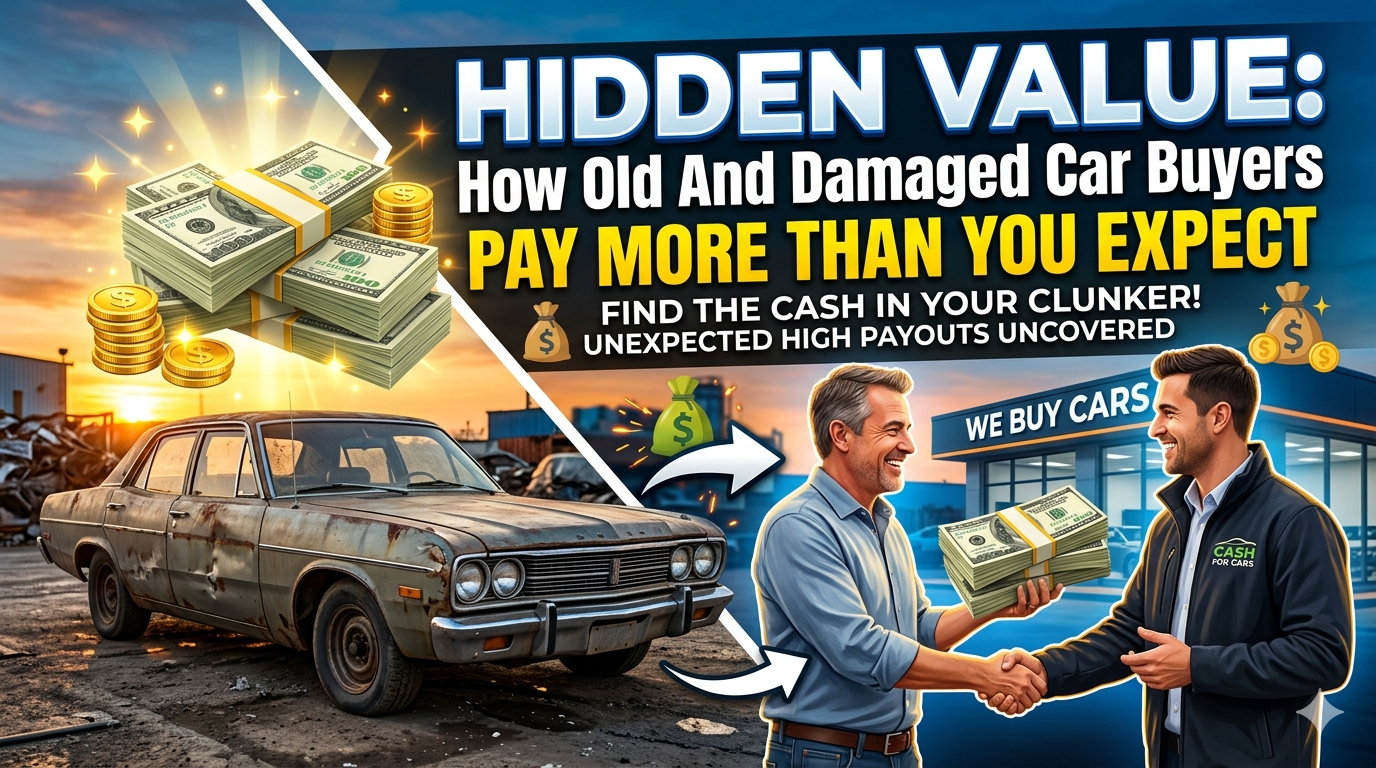
The automotive resale market has evolved significantly, and old and damaged car buyers are now offering higher payouts than most vehicle owners expect. Many car owners assume that a non-running, accidental, or aging vehicle holds minimal value. However, we see a completely different reality. Professional buyers evaluate vehicles based on multiple profit channels, including reusable parts, scrap metal recovery, refurbishment potential, and export demand. As a result, even severely damaged vehicles can generate surprisingly high returns.
In this comprehensive guide, we explore how old and damaged car buyers determine value, why they often pay more, and how sellers can maximize their profit when disposing of an unwanted vehicle.
Most vehicle owners underestimate the residual value hidden inside aging automobiles. A Old And Damaged Car Buyers may appear unusable, but buyers evaluate it differently. They analyze:
Because of these factors, buyers can extract value from nearly every part of the vehicle, allowing them to offer competitive prices even for cars that no longer run.
Professional old car buyers use structured valuation models instead of guesswork. Their calculations typically include:
Even if the vehicle is damaged, parts like engine components, transmissions, alternators, radiators, headlights, and electronics remain valuable. These parts are refurbished and resold.
Vehicles with intact interiors also carry value from:
High-demand models can yield significantly higher offers because spare parts sell faster.
Every vehicle contains steel, aluminum, copper, and catalytic converter metals. Buyers calculate the current scrap rate and estimate total recoverable weight.
This includes:
When metal prices increase, buyers can afford to pay more upfront.
Some damaged vehicles can be repaired economically. Buyers analyze:
If repair is profitable, buyers offer higher prices to secure the vehicle.
Certain older vehicles are highly demanded in international markets. Buyers purchase them for export after minor refurbishment.
This applies especially to:
This export demand raises the buying price significantly.
Not all vehicles are valued equally. Some categories Old And Damaged Car Buyers consistently receive higher payouts.
Cars involved in accidents still contain undamaged mechanical components, which are highly valuable.
Even cars that won’t start often have usable engines, transmissions, and electronics.
Although interiors may be affected, body panels, wheels, and structural parts remain usable.
Mileage affects resale, but spare parts remain valuable, especially for popular models.
Completely junk vehicles still have metal scrap value, ensuring sellers receive cash.
Vehicle owners gain multiple advantages when choosing specialized buyers.
Most buyers provide same-day payment, eliminating waiting periods.
No need to tow your vehicle. Buyers collect the car from your location.
You don’t need to spend money fixing the car before selling.
Professional buyers handle ownership transfer and documentation.
Vehicles are dismantled responsibly, ensuring eco-friendly recycling.
We recommend focusing on these elements to maximize your payout.
Providing RC, ID proof, and ownership documents increases trust and value.
Vehicles with factory-installed components fetch higher prices.
Cars missing engines or wheels typically receive lower offers.
Well-known brands and models retain higher spare parts value.
Easy pickup access reduces buyer logistics cost, increasing offers.
Many sellers hesitate due to misinformation. Let’s clarify.
Reality: Even non-running vehicles contain valuable metals and parts.
Reality: Buyers consider parts, repair potential, and resale demand.
Reality: Specialized buyers actively search for damaged vehicles.
Reality: Selling as-is often produces better net profit.
We follow a simple, efficient process.
Provide:
Buyers evaluate and provide competitive pricing.
Choose a convenient time for free vehicle collection.
Ownership transfer handled professionally.
Receive instant cash or bank transfer.
There is a major difference between specialized buyers and traditional scrap yards.
Professional buyers:
Local scrap dealers typically only weigh metal, resulting in lower offers. This is why professional buyers consistently pay more.
Timing influences your final price. Consider selling when:
Selling at the right time maximizes returns.
Prepare these to ensure smooth transaction:
Proper documentation increases buyer confidence and price.
Recycling old vehicles supports sustainability:
Responsible buyers follow regulated dismantling practices.
Old and damaged vehicles often contain far more value than owners realize. Professional buyers leverage parts resale, refurbishment, export, and scrap recovery, enabling them to pay higher-than-expected prices. By choosing experienced buyers, providing accurate details, and selling at the right time, vehicle owners can maximize their return without repair costs or delays.
Selling your old or damaged car today can transform a liability into instant cash while ensuring responsible recycling and hassle-free pickup.