English
 Arabic
 French
 Spanish
 Portuguese
 Deutsch
 Turkish
 Dutch
Dutch
 Italiano
 Russian
 Romaian
 Portuguese (Brazil)
 Greek
Greek

Prop Firm Software: Tools to Improve Trading Performance
Other |
2026-03-04 11:26:19
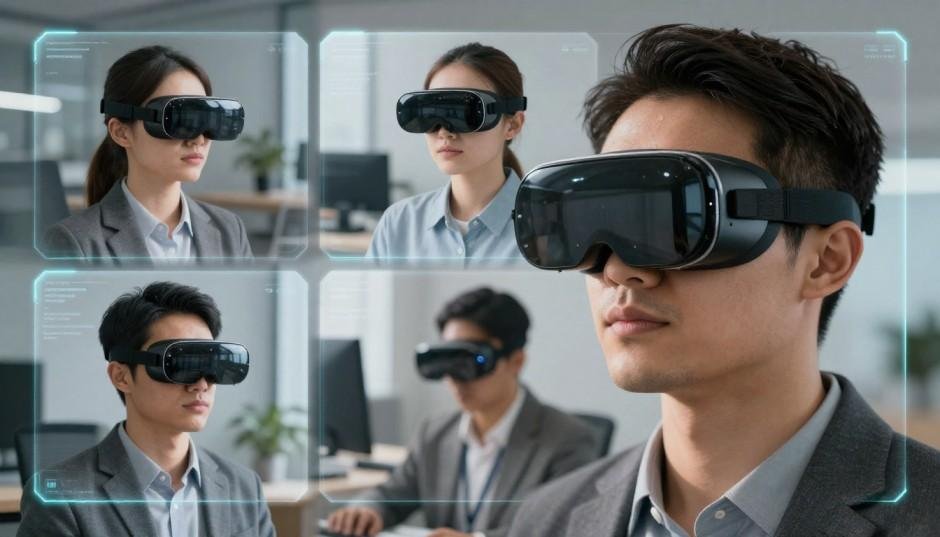
The Augmented Reality Hardware Market is experiencing rapid expansion as AR technologies become increasingly integrated into consumer electronics, enterprise applications, industrial processes, and immersive content experiences. AR hardware—including smart glasses, head‑mounted displays (HMDs), wearable AR devices, and AR‑enabled mobile accessories—enhances users’ perception of the real world by overlaying digital information, graphics, and contextual data that improve productivity, user engagement, and situational awareness across diverse sectors.
Growth in the AR hardware market is driven by rising demand for interactive and immersive applications in gaming, retail, healthcare, manufacturing, education, and field service operations. Advances in display technologies, sensor fusion, edge computing, 5G connectivity, and miniaturization of components are enabling more powerful, ergonomic, and cost‑effective AR devices. Increased investment by technology giants and startups alike is accelerating innovation and deployment at scale.
Market Overview
Augmented reality hardware refers to physical devices that facilitate AR experiences by integrating sensors, cameras, processors, displays, and connectivity modules that overlay digital content onto the user’s view of the real environment. Key hardware categories include AR smart glasses, HMDs, head‑up displays (HUDs), handheld AR devices, and AR accessories that augment existing platforms such as smartphones and tablets.
These devices support a range of applications from enterprise productivity tools and industrial assistance to consumer entertainment and navigation. AR hardware solutions are designed to deliver high‑resolution visuals, accurate tracking, low latency, and intuitive user interaction that enhance both professional workflows and end‑user experiences.
Definition and Market Significance
The augmented reality hardware market encompasses the production, distribution, and adoption of AR‑enabled physical devices that enable real‑time digital‑physical interaction. AR hardware augments user perception and engagement by blending digital information—such as text, graphics, 3D models, and contextual data—with real‑world environments captured through sensors and cameras.
The market’s significance extends across consumer and enterprise domains. In consumer sectors, AR hardware enables immersive gaming, virtual try‑ons, interactive media, and enhanced social engagement. In enterprise and industrial applications, AR hardware supports remote assistance, training, maintenance, logistics, and quality assurance, improving operational efficiency and reducing error rates.
Market Drivers
A central driver of the AR hardware market is escalating demand for immersive and interactive experiences that outperform traditional interfaces. Consumers increasingly seek engaging content that blends the physical and digital, while enterprises adopt AR hardware to streamline operations, reduce training costs, and improve field workforce productivity.
Advancements in underlying technologies—such as optical waveguides, depth sensing, simultaneous localization and mapping (SLAM), 3D graphics engines, and lightweight form factors—have significantly improved AR device performance and usability. Growing integration with high‑speed networks (e.g., 5G) and cloud/edge computing supports low‑latency AR experiences essential for real‑time applications.
The expansion of application ecosystems developed by platform providers, content creators, and enterprise solution vendors drives broader AR hardware adoption across industry verticals.
Market Trends
A key trend in the AR hardware market is the convergence of AR with artificial intelligence (AI) and machine learning (ML) that enhances contextual understanding, object recognition, natural interaction, and predictive insights. Intelligent AR systems can adapt content presentation based on user behavior and environment dynamics.
Another trend is increased enterprise adoption of AR wearables for workforce augmentation. Industries such as manufacturing, logistics, aerospace, and healthcare are deploying AR smart glasses and headsets to support remote collaboration, hands‑free work instructions, real‑time diagnostics, and quality control.
Miniaturization and ergonomic design continue to influence market evolution as manufacturers aim to deliver lightweight, comfortable devices suitable for prolonged use. Integration with other emerging technologies—such as digital twins, IoT platforms, and spatial computing frameworks—expands AR hardware’s versatility.
Market Restraints
Despite strong demand, the AR hardware market faces challenges including high device costs, battery life limitations, ergonomic constraints, and concerns over privacy and user data security. Adoption barriers also include the need for rich AR content ecosystems and developer toolchains to support compelling user experiences.
Technical limitations such as field‑of‑view constraints, display brightness in outdoor environments, and latency issues in complex applications can impede user adoption. Regulatory and compliance considerations related to wearables—particularly in safety‑critical industries—can also affect deployment timelines.
Market Opportunities
Opportunities in the AR hardware market lie in expanding use cases across enterprise sectors, developing affordable consumer‑grade AR devices, and establishing robust platforms for cross‑device interoperability. Partnerships between hardware manufacturers, software developers, cloud service providers, and telecommunications companies can drive integrated solutions that deliver seamless AR experiences.
Emerging applications in telehealth, remote education, digital‑physical retail, and smart city frameworks present additional growth avenues. Custom AR solutions tailored to specific industry workflows—such as surgery guidance systems, machine maintenance overlays, and real‑time translation tools—can unlock new revenue streams.
Services related to device management, security, analytics, and content development represent ancillary opportunities as organizations scale AR hardware deployments.
Product/Technology Segmentation
The augmented reality AR hardware market can be segmented by device type, component technology, distribution channel, end user, and region. Device types include AR smart glasses, head‑mounted displays (HMDs), head‑up displays (HUDs), handheld AR devices, and AR accessories.
Component technologies encompass sensors (e.g., LiDAR, depth sensors), display systems (waveguides, micro‑LED/OLED), processors and graphics units, tracking modules, and connectivity interfaces (Wi‑Fi, Bluetooth, 5G). Distribution channels comprise online retail, direct enterprise sales, electronics retailers, and channel partners.
End users span consumer electronics, manufacturing, healthcare, education, retail, defense & security, and logistics sectors that leverage AR experiences for engagement, productivity, and process enhancement.
Regional Analysis
North America holds a leading share of the AR hardware market supported by strong technology infrastructure, high consumer adoption rates, and extensive enterprise AR deployments. The presence of major AR hardware developers and vibrant startup ecosystems further bolster regional dominance.
Europe exhibits steady growth as industrial sectors embrace AR for digital transformation initiatives, while supportive innovation frameworks and increasing investment in immersive technologies drive adoption. Asia‑Pacific is emerging as a high‑growth region driven by large consumer markets, rapid 5G expansion, and increasing enterprise digitization across China, Japan, South Korea, and Southeast Asian economies.
Download a Complimentary PDF Sample Report:
https://dimensionmarketresearch.com/request-sample/augmented-reality-ar-hardware-market/
Competitive Landscape
The AR hardware market is competitive, featuring global technology giants, specialist AR device makers, and technology startups innovating in form factor, performance, and platform integration. Competitive strategies include expanding product portfolios, investing in R&D for next‑generation optics and sensors, forming strategic partnerships with software and content developers, and enhancing manufacturing capabilities.
Companies differentiate through ergonomic design, extended battery life, enhanced visual fidelity, and open developer ecosystems that drive platform adoption. Collaborations with enterprise system integrators and telecom providers support large‑scale AR hardware deployments.
Technological Advancements
Technological advancements in the AR hardware market include development of advanced optical waveguide systems that deliver bright, high‑contrast visuals with minimal distortion. Progress in micro‑LED and OLED display technologies enables energy‑efficient, high‑resolution imagery suitable for immersive AR experiences.
Improvements in sensor fusion, simultaneous localization and mapping (SLAM), and real‑time tracking deliver more accurate environmental mapping and interactive performance. Integration of edge computing with AR devices reduces latency and enhances processing efficiency for complex workloads.
Consumer Adoption Patterns
Consumer adoption of AR hardware varies across segments, with early adopters in gaming, interactive media, and connected lifestyle products leading market uptake. Younger demographics and tech‑savvy consumers show greater interest in AR wearables for entertainment, navigation, and social experiences.
Enterprise adoption patterns are influenced by operational requirements and readiness to integrate AR into existing workflows. Manufacturing, healthcare, and logistics sectors exhibit strong adoption drivers due to hands‑free information delivery, remote assistance capabilities, and productivity gains.
Education and training institutions are adopting AR hardware to deliver immersive learning experiences, particularly in STEM disciplines and vocational skill development.
Regulatory and Policy Environment
The regulatory environment for AR hardware involves standards and compliance considerations related to user safety, wireless communication protocols, data privacy, and wearable device interoperability. National and regional regulations may govern electromagnetic emissions, visual display safety, and user data protection.
Policies that support innovation in immersive technologies,—such as investment incentives for R&D and digital transformation initiatives—can foster market growth. Standards development for AR hardware interoperability and content delivery frameworks further shape industry dynamics.
Market Challenges
Key challenges in the AR hardware market include balancing performance with cost efficiency, ensuring device comfort and ergonomic suitability, and addressing developer ecosystem limitations that affect content availability. Privacy and security concerns related to wearable cameras and continuous sensing also require careful policy design and technological safeguards.
Achieving widespread compatibility across diverse software platforms and operating systems remains a barrier for seamless user experiences. Managing supply chain constraints for advanced components such as sensors and micro‑displays affects production scalability.
Future Outlook
The augmented reality AR hardware market is expected to grow steadily through 2033 as technological advancements, enterprise adoption, and consumer interest converge to drive broader deployment. Continued innovation in optical systems, sensors, processing platforms, and cloud/edge connectivity will enhance the performance, affordability, and utility of AR devices.
Collaborative ecosystems that bring together hardware makers, software developers, telecom operators, and enterprise adopters will shape future market trajectories and create integrated AR solutions for diverse use cases spanning productivity, engagement, training, and entertainment.
Frequently Asked Questions (FAQs)
What is AR hardware?
AR hardware consists of physical devices such as smart glasses, head‑mounted displays (HMDs), and wearable AR systems that overlay digital content onto the user’s view of the real world.
How does AR hardware benefit users?
It enhances user experiences by providing immersive, interactive visuals, contextual information, and hands‑free engagement that improve productivity, navigation, learning, and entertainment.
Which industries use AR hardware?
Key sectors include consumer electronics, healthcare, manufacturing, education, retail, logistics, and defense for applications such as training, maintenance, remote assistance, and interactive content.
What are market drivers for AR hardware?
Drivers include growing demand for immersive experiences, technological advancements in optics and sensors, enterprise productivity use cases, and expansion of 5G connectivity.
What challenges does the market face?
Challenges include high device costs, ergonomic constraints, privacy concerns, content ecosystem limitations, and component supply constraints.
Summary of Key Insights
The augmented reality AR hardware market is poised for sustained growth through 2033 as immersive technologies mature, enterprise adoption expands, and consumer interest in interactive experiences rises. Innovations in optical systems, sensor fusion, and connectivity will enhance device performance and unlock new applications across sectors. Collaboration among hardware manufacturers, software developers, and network providers will further accelerate market development.
Purchase the report for comprehensive details:
https://dimensionmarketresearch.com/checkout/augmented-reality-ar-hardware-market/