 English
 Arabic
 French
 Spanish
 Portuguese
 Deutsch
 Turkish
 Dutch
Dutch
 Italiano
 Russian
 Romaian
 Portuguese (Brazil)
 Greek
Greek

Contract Research for Nutraceuticals
Other |
2026-02-09 13:44:40
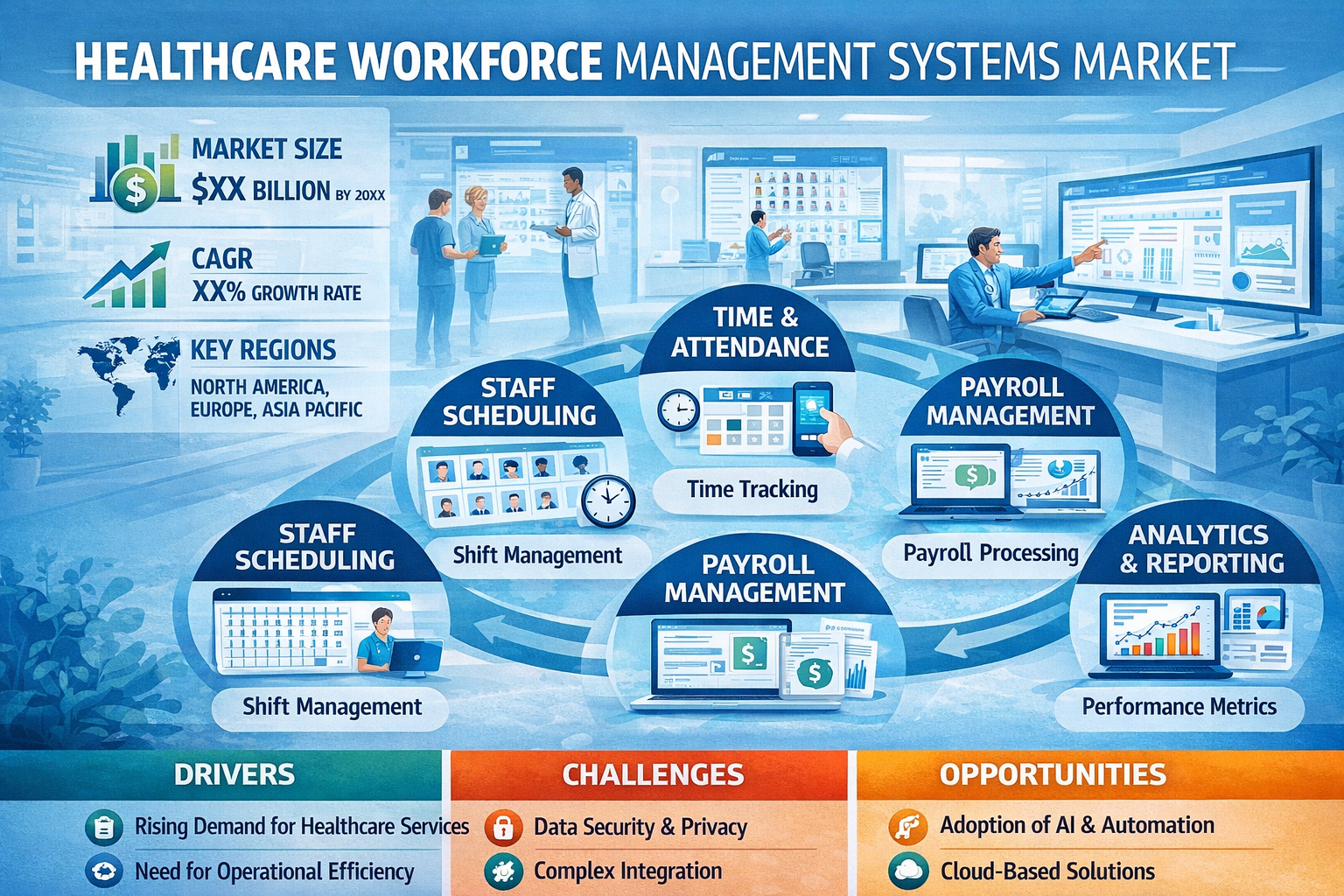
The Healthcare Workforce Management Systems Market Opportunities is witnessing strong growth as healthcare organizations increasingly rely on digital solutions to streamline workforce operations and enhance patient care delivery. These systems help manage scheduling, staffing, time tracking, compliance, and payroll processes, enabling healthcare providers to optimize workforce efficiency and reduce operational complexities.
According to The Insight Partners, the market is projected to reach US$ 6.22 billion by 2031, growing at a CAGR of 11.1% during 2025–2031. This growth is driven by rising demand for efficient workforce utilization, increasing digital transformation in healthcare, and the need to address staffing shortages.
The market is evolving rapidly with the integration of advanced technologies such as artificial intelligence (AI), cloud computing, and predictive analytics, which are transforming workforce management into a strategic function within healthcare organizations.
👉 Download Sample PDF: https://www.theinsightpartners.com/sample/TIPHC00002560
Key Market Drivers
1. Rising Healthcare Workforce Shortages
One of the most significant drivers of the healthcare workforce management systems market is the global shortage of healthcare professionals. Hospitals and healthcare facilities are facing challenges in maintaining optimal staffing levels due to increasing patient demand and aging populations.
Workforce management systems enable predictive staffing, automated scheduling, and efficient resource allocation, ensuring that healthcare providers can meet patient needs without overburdening staff.
2. Increasing Pressure to Reduce Labor Costs
Labor costs account for a major share of healthcare expenditures. Healthcare organizations are increasingly adopting workforce management solutions to optimize staffing levels and reduce unnecessary expenses such as overtime and overstaffing.
These systems provide real-time insights into workforce utilization, enabling data-driven decision-making and cost optimization. The need to control operational expenses while maintaining service quality is a key factor driving market growth.
3. Complex Regulatory and Compliance Requirements
Healthcare providers operate in a highly regulated environment with strict labor laws and compliance standards. Managing compliance manually can be time-consuming and prone to errors.
Workforce management systems automate compliance-related processes such as time tracking, credential verification, and reporting. This ensures adherence to regulations and reduces the risk of penalties, making compliance management a critical driver of market adoption.
4. Growing Adoption of Cloud-Based Solutions
The shift toward cloud-based workforce management systems is significantly contributing to market growth. Cloud solutions offer scalability, flexibility, and cost-efficiency compared to traditional on-premise systems.
Healthcare organizations are increasingly adopting cloud platforms to enable remote access, real-time collaboration, and seamless integration with other healthcare IT systems. This trend is accelerating digital transformation across the healthcare sector.
5. Increasing Focus on Operational Efficiency and Patient Care
Healthcare providers are under constant pressure to improve patient outcomes while maintaining operational efficiency. Workforce management systems play a crucial role in achieving this balance by optimizing staff scheduling and resource allocation.
By ensuring adequate staffing levels and reducing employee burnout, these systems contribute to improved patient care quality and enhanced staff satisfaction.
6. Integration of AI and Advanced Analytics
The integration of AI-driven analytics and predictive workforce planning is transforming healthcare workforce management. These technologies help forecast patient demand, optimize staffing strategies, and improve decision-making.
AI-powered solutions also enable early identification of workforce gaps and inefficiencies, further enhancing operational performance.
Emerging Market Opportunities
1. Expansion of Digital Healthcare Infrastructure
The rapid expansion of digital healthcare infrastructure presents significant opportunities for workforce management system providers. As healthcare organizations invest in advanced IT systems, the demand for integrated workforce management solutions is expected to grow.
2. Adoption of Mobile Workforce Applications
The increasing use of mobile applications in healthcare is creating new opportunities for workforce management systems. Mobile-enabled platforms allow healthcare professionals to manage schedules, track time, and communicate in real time, improving flexibility and efficiency.
3. Growth in Emerging Markets
Emerging economies, particularly in Asia-Pacific and Latin America, offer substantial growth opportunities due to increasing healthcare investments and rising adoption of digital technologies. These regions are witnessing rapid expansion in healthcare infrastructure, driving demand for workforce management solutions.
4. Focus on Employee Well-Being and Retention
Healthcare organizations are increasingly prioritizing employee well-being and retention. Workforce management systems help reduce burnout by ensuring balanced workloads and efficient scheduling.
This focus on workforce satisfaction is expected to drive further adoption of advanced workforce management solutions.
5. Integration with Broader Healthcare IT Ecosystems
The integration of workforce management systems with electronic health records (EHRs), hospital information systems (HIS), and other healthcare IT platforms is creating new growth opportunities.
This integration enables seamless data exchange and enhances overall operational efficiency, making workforce management systems a critical component of modern healthcare IT infrastructure.
Key Players in the Healthcare Workforce Management Systems Market
The market is highly competitive, with several global players focusing on innovation and strategic expansion. Key companies include:
These companies are investing in advanced technologies, cloud platforms, and AI-driven solutions to strengthen their market position and meet the evolving needs of healthcare providers.
Conclusion
The Healthcare Workforce Management Systems Market is poised for steady growth through 2031, driven by workforce shortages, rising labor costs, regulatory complexities, and the growing adoption of digital solutions. With a projected CAGR of 11.1%, the market offers significant opportunities for technology providers and healthcare organizations.
As healthcare systems continue to evolve, the integration of AI, cloud computing, and analytics will further enhance workforce management capabilities, ensuring improved efficiency, cost savings, and better patient care outcomes.
Related Reports
1 Healthcare Virtual Assistants Market
About Us:
The Insight Partners is among the leading market research and consulting firms in the world. We take pride in delivering exclusive reports along with sophisticated strategic and tactical insights into the industry. Reports are generated through a combination of primary and secondary research, solely aimed at giving our clientele a knowledge-based insight into the market and domain. This is done to assist clients in making wiser business decisions. A holistic perspective in every study undertaken form an integral part of our research methodology and makes the report unique and reliable.
Contact Us: If you have any queries about this report or if you would like further information, please contact us:
The Insight Partners
E-mail: sales@theinsightpartners.com
Phone: +1-646-491-9876
Website: www.theinsightpartners.com



