 English
 Arabic
 French
 Spanish
 Portuguese
 Deutsch
 Turkish
 Dutch
Dutch
 Italiano
 Russian
 Romaian
 Portuguese (Brazil)
 Greek
Greek

Comment Choisir le Meilleur Casino en Ligne pour Débutants
Other |
2026-02-12 21:18:22
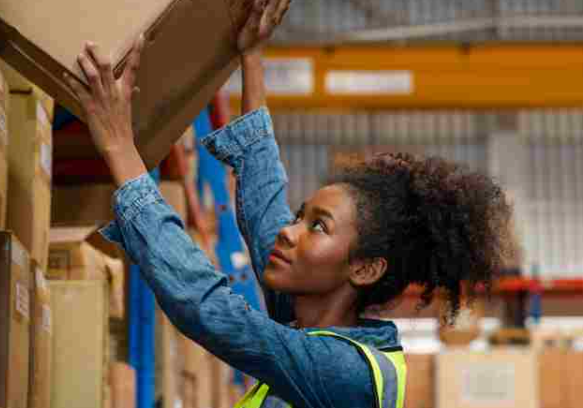
The hum of a distribution center at midnight is a sound unlike any other. It’s a rhythmic, mechanical pulse that signals the health of the global economy. For many, stepping onto that vast concrete floor for the first day of a shift can feel overwhelming a sea of racking, a maze of yellow floor lines, and the constant beep of reversing forklifts. It’s easy to look at a warehouse as a place where you simply "put in your time." But if you look closer, past the steel and the cardboard, you’ll see that the supply chain is one of the last true frontiers of the American Dream. It is a world where grit, curiosity, and a willingness to learn the "logic" of logistics can turn an entry-level job into a high-level career.
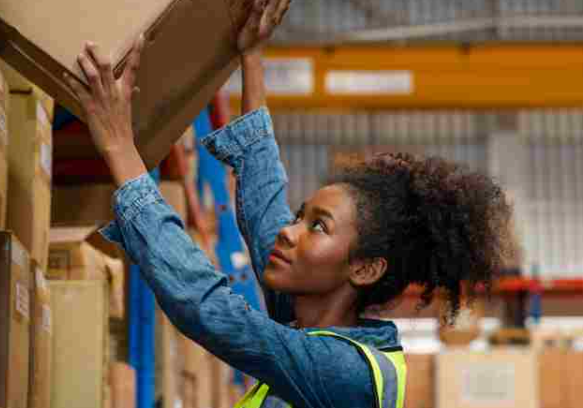
Your journey starts with the fundamentals of movement. As a warehouse worker material handler, you aren't just a cog in a machine; you are the primary sensor of the supply chain. This role is your "Basic Training." It’s where you learn the visceral physics of the inventory how weight shifts on a pallet, how temperature affects packaging, and how a single SKU error can ripple outward to a frustrated customer three states away. The floor is the greatest classroom you’ll ever sit in. It teaches you spatial reasoning, endurance, and the "Industrial Zen" of maintaining accuracy under the pressure of a deadline. Those who thrive in this stage are the ones who stop asking "Where does this box go?" and start asking "Why does the system want it there?"
As you master the rhythm of the facility, your perspective begins to shift from the individual box to the entire flow. This is where the distribution warehouse material handler begins to stand out. At this level, you are no longer just reacting to the work; you are anticipating it. You start to see the "clogs" in the aisles before they happen. You notice that the replenishment cycles are lagging, or that a certain loading dock is consistently bottlenecked. This is the "Strategic Shift." Management isn't just looking for people who can move the most weight; they are looking for the people who understand the velocity of the building. When you begin to suggest small tweaks to the "slotting" of products or the timing of a shift change, you are no longer just a handler you are a problem solver in training.
The climb from the floor to the front office isn't a mystery; it’s a series of skill acquisitions. In the modern supply chain, there are three primary paths for advancement:
The Technical Specialist: This is for the person who loves the "Gears." You move from a manual pallet jack to a reach truck, then to a VNA (Very Narrow Aisle) operator, and eventually into Maintenance or Robotics Tech. You become the person the building cannot run without.
The Data Navigator: Every warehouse in 2026 is run by a WMS (Warehouse Management System). If you have a knack for the digital side, you can move into Inventory Control, Quality Assurance, or Slotting Analysis. You become the "Brain" that directs the "Brawn."
The People Leader: This is the path to the Foreperson, Supervisor, and eventually, the General Manager. It requires a shift from "How do I do this job?" to "How do I inspire twenty other people to do this job safely and accurately?"
The best Forepersons in the industry share a common trait: they never forgot what the concrete felt like under their boots. Leadership in a warehouse is about "Tactical Empathy." It’s knowing exactly how much you can push a team during a heatwave, or recognizing the signs of burnout during the holiday peak before a single mistake is made.
Moving into leadership means trading your scanner for a radio and a clipboard (or a tablet), but your primary tool becomes your voice. You become the translator between the "Big Math" of the corporate office quotas, KPIs, and labor budgets and the "Small Math" of the floor safety, morale, and accuracy. A great Foreperson doesn't lead by fear; they lead by being the most reliable person in the room. They are the ones who clear the obstacles so their team can run.
A common fear on the warehouse floor is that "the robots are coming for our jobs." The reality is much more interesting: the robots are coming to make the "human" parts of your job more valuable. As automation takes over the repetitive, back-breaking long-hauls across the facility, the need for human decision-making, exception handling, and strategic oversight increases.
To map your future, you must become "Tech-Fluent." You don't need to be a computer scientist, but you do need to understand how the automated sorter thinks. When the system glitches, the person who can troubleshoot the flow and get the line moving again is the person who gets promoted. In the supply chain of 2026, your most important piece of equipment isn't your forklift it’s your ability to adapt.
If there is one thing that defines a career in the supply chain, it is resilience. This is an industry of variables. Weather, global politics, and sudden consumer trends can turn a quiet Tuesday into the busiest day of the year. Mapping your future means building the mental stamina to handle the "Peak."
Those who make it to the top are the ones who stay calm when the "sorter goes down" and the "trucks are waiting." They are the ones who can pivot a team’s strategy in ten minutes without losing their cool. This emotional intelligence is what separates a worker from a leader. It’s a skill that can’t be taught in a book; it’s forged in the fourth hour of a ten-hour shift during a snowstorm.
The supply chain is no longer a "back-of-house" function; it is the front line of the modern world. Every box moved is a promise kept to a customer, and every pallet built is a structural feat of engineering. If you are standing on that floor today, don't just look at the racking look at the opportunities. The path from the floor to the foreperson is open to anyone with the curiosity to ask "why" and the grit to stay until the job is done right.
Your career is a logistics puzzle of its own, and you are the one who decides where the pieces go. It’s about building a foundation of excellence today so that you can lead the innovations of tomorrow.
By partnering with a staffing leader that sees your potential beyond just a shift a partner like NVT Staffing, Inc. you gain an ally in your professional ascent. We don't just find you a job on the floor; we help you find your footing in an industry that never stops growing. The map is in your hands. It’s time to start walking.

