


Highest individual Test score by an Indian
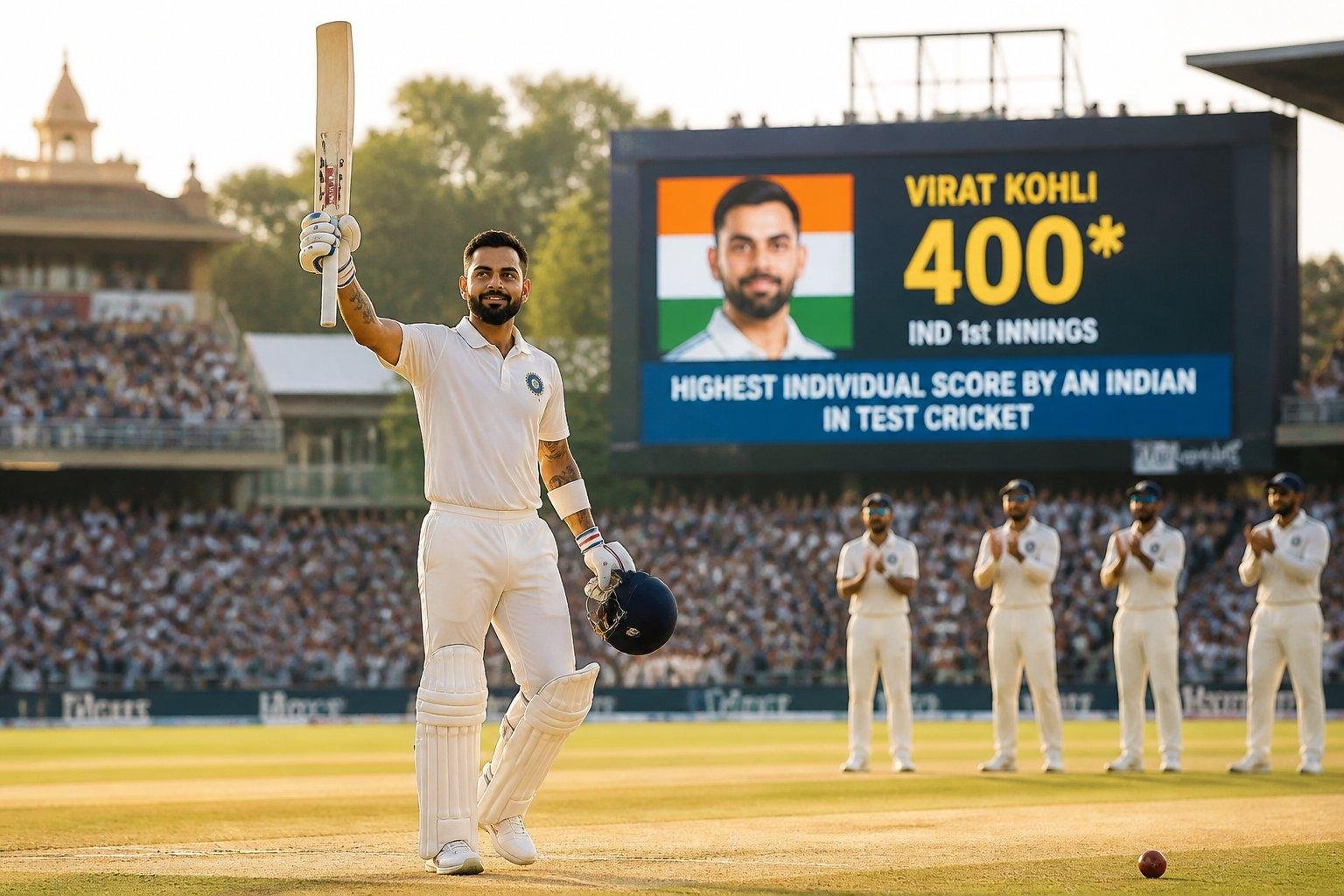
A Number That Still Stands Alone
Some cricket records get broken every few years. Others sit there, decade after decade, daring someone to come close. The highest individual score by an Indian batsman in Test cricket falls into that second category. It belongs to Virender Sehwag, who smashed 319 runs against South Africa in Chennai back in 2008. Nearly two decades on, no Indian has managed to get past it. To really appreciate why this number still matters, it helps to look at the man who made it, the way he made it, and everyone else who has come close but not quite close enough.
The Man Who Broke His Own Record
Here's the thing about Sehwag's 319 — it wasn't even his first triple century. He'd already done it once before, scoring 309 against Pakistan in Multan in 2004, an innings so famous it earned him the nickname "The Multan Sultan." Most players would happily retire on a memory like that. Sehwag went out four years later and beat his own record by ten runs.
What made him different was his approach to batting. Sehwag treated Test cricket the way most players treat a Twenty20 innings — see the ball, hit the ball, worry about the consequences later. This wasn't recklessness for its own sake; it was a genuine philosophy. He believed that if you got out attacking, that was fine, because attacking was also how you scored fast enough to put real pressure on the opposition. It sounds simple, but almost no one else in the history of the game has managed to combine that mindset with the discipline needed to convert it into triple hundreds, not once but twice.
Inside the Innings
The 319 came during the second Test against South Africa at the MA Chidambaram Stadium in Chennai. South Africa's bowling attack wasn't a soft touch either — it included Dale Steyn, one of the greatest fast bowlers of his generation, along with Makhaya Ntini and Morne Morkel. Sehwag didn't slow down to respect the quality of the bowling. He raced to his triple century in just 278 balls, which remains the fastest triple hundred ever scored in Test cricket history, by any player from any country.
Think about what that actually means. A triple century requires immense concentration and physical endurance — batting for hours on end without losing focus, without getting complacent, without cramping under fatigue. Sehwag did all of that while also batting at a strike rate that most players would consider aggressive even in a one-day match. He ended up facing 304 balls in total for his 319, hitting boundaries at a rate that turned the innings into pure entertainment as much as a record-breaking feat.
The Near-Misses
Records like this one tend to have a shadow list — the players who got agonizingly close but couldn't finish the job. Sehwag himself makes that list. In 2009, batting against Sri Lanka in Mumbai, he was closing in on a third triple century when he fell just seven runs short, out for 293 after attempting an ambitious shot off spinner Muttiah Muralitharan. It's a strange kind of tragedy in sport — falling short of history by fewer runs than most batsmen score before lunch.
Then there's Karun Nair, whose story is one of the more unusual in Indian cricket. In only his third Test match, in 2016 against England in Chennai, Nair scored an unbeaten 303. He became just the second Indian ever to reach a Test triple century. What makes his effort a genuine near-miss on the record itself is that India's captain declared the innings closed the moment Nair reached his landmark, denying him the chance to keep batting and possibly chase down Sehwag's mark. It's the kind of what-if that cricket fans still debate.
Before Sehwag ever got his hands on the record, it belonged to VVS Laxman, who scored 281 against Australia at Eden Gardens in Kolkata in 2001. That innings is remembered as one of the greatest in Indian cricket history for reasons that go beyond the number itself — it came while following on, and it was built alongside a marathon partnership with Rahul Dravid that turned a losing position into a famous victory. Laxman's 281 held the Indian record until Sehwag arrived and redefined what was possible.
Why Nobody Has Caught Him Yet
It's not for lack of talent. India has produced a steady stream of batsmen capable of scoring big since 2008 — players who've piled up double centuries and dominated attacks around the world. Virat Kohli, during his peak years, looked like a genuine threat to the record, converting fifties into hundreds with remarkable consistency and racking up six double centuries in an eighteen-month stretch at one point. But a double century and a triple century are different beasts entirely, and even Kohli's most dominant innings never got him within shouting distance of 319.
Part of the explanation is opportunity. A batsman needs the right combination of circumstances to even have a shot at 319 — a flat pitch, a bowling attack that tires out, a team total that allows for a long, uninterrupted innings, and a declaration that doesn't come too early. Karun Nair's case shows how even reaching 300 doesn't guarantee the chance to keep going.
The other part is temperament. Scoring 319 runs requires a batsman who doesn't get bored, doesn't get careless, and doesn't feel the psychological pull to slow down and protect the milestone once it's in sight. Sehwag was famously unbothered by the weight of a big score. He talked about seeing the ball and hitting it, without overthinking the situation, whether he was on 50 or 290. That mental simplicity, paired with genuine skill, is rare enough that it may take a special kind of player to challenge his mark.
A Record Worth Watching
Domestic cricket in India offers a hint that 319 isn't untouchable. Players like Ravindra Jadeja and Rohit Sharma have scored triple centuries in the Ranji Trophy, proving that Indian batsmen are still capable of these extended, dominant innings when conditions allow. It suggests that somewhere down the line, a player with the right mix of hunger, form, and circumstance could finally chase down Sehwag's number.
Until that happens, though, 319 remains more than a statistic. It's a snapshot of a batsman playing entirely on his own terms, refusing to slow down even as history piled up around him. Whoever eventually breaks it will have earned a place next to one of the most fearless innings Indian cricket has ever produced.

 English
 Arabic
 French
 Spanish
 Portuguese
 Deutsch
 Turkish
 Dutch
Dutch
 Italiano
 Russian
 Romaian
 Greek
Greek