


Connection Design – The Backbone of Structural Stability and Safety
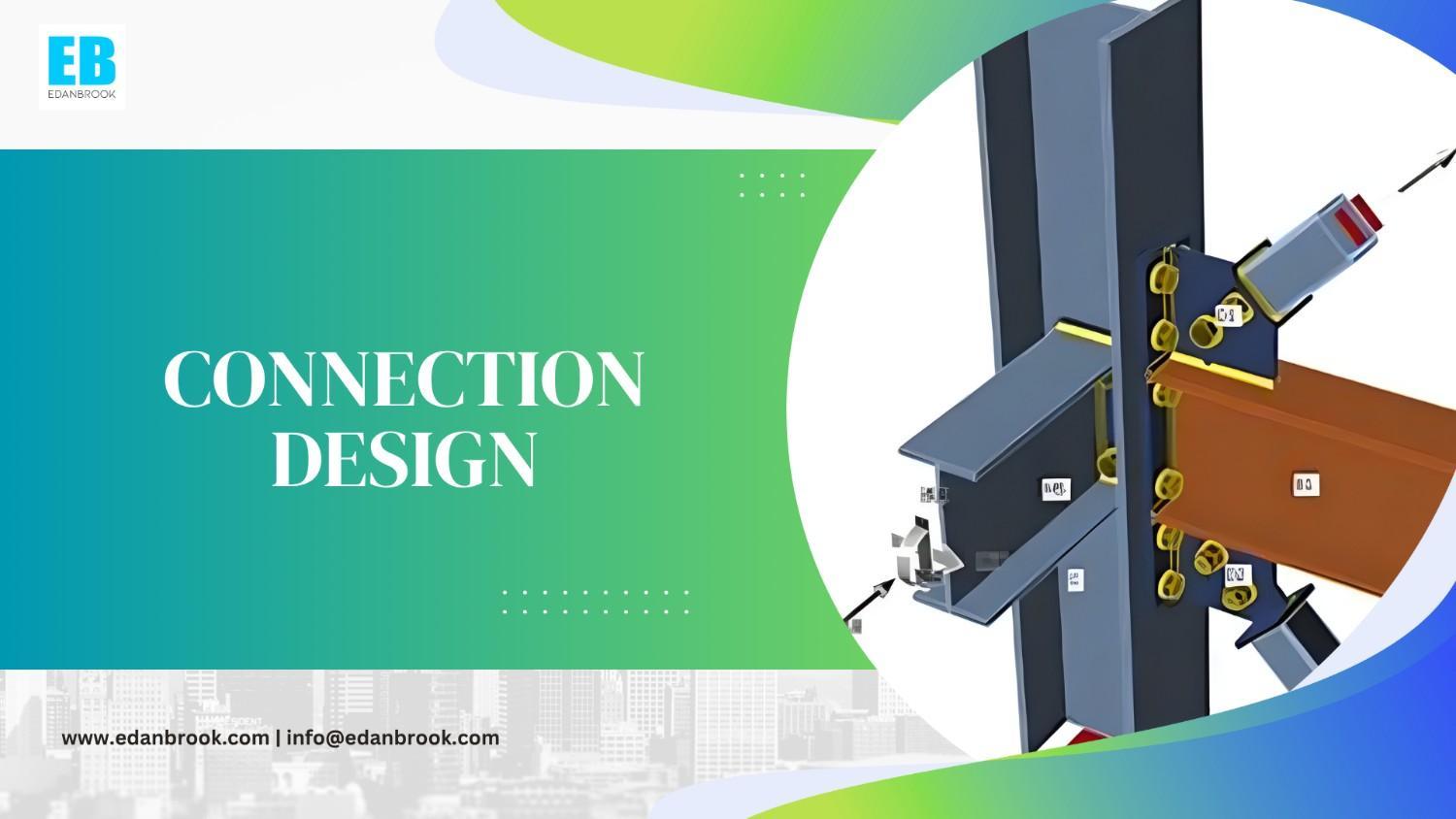
In structural engineering, every beam, column, or truss plays an important role—but the connections between them are what truly hold the structure together. Whether it’s a high-rise building, an industrial plant, or a bridge, the Connection Design determines how safely and efficiently forces are transferred across structural members. Simply put, no structure can stand strong without well-designed connections.
What is Connection Design?
Connection Design refers to the process of designing joints or connections between structural elements such as beams, columns, braces, and plates. These connections ensure that loads are transferred effectively and that the structure behaves as a single, unified system.
Connections can be bolted, welded, or a combination of both, depending on the type of structure, materials used, and load conditions. The goal of connection design is to ensure strength, stability, safety, and constructability—all while keeping the project cost-effective.
Importance of Connection Design in Structures
A structure’s integrity depends not only on the strength of its individual components but also on how well they are connected. Poorly designed connections can lead to excessive deflection, vibration, or even structural failure.
Here’s why connection design is critical:
1. Load Transfer:
Connections are responsible for transferring loads from one member to another, ensuring the entire structure performs efficiently under various conditions.
2. Safety Assurance:
Properly designed connections prevent failures caused by shear, tension, or bending stresses, protecting both the structure and its occupants.
3. Ease of Fabrication and Erection:
A good design considers real-world fabrication and site conditions, ensuring that the structure can be easily assembled and maintained.
4. Structural Continuity:
Well-detailed connections maintain the geometry and alignment of the structure, preventing unwanted deformations or misalignments.
Types of Connections in Structural Design
1. Bolted Connections:
Commonly used in steel structures, bolted joints allow easy installation and dismantling. They are reliable, cost-effective, and require minimal site welding.
2. Welded Connections:
Ideal for permanent joints, welded connections provide a seamless and rigid connection, often used where high strength and stiffness are required.
3. Moment and Shear Connections:
· Moment Connections transfer bending moments and shear forces, maintaining rigidity.
· Shear Connections allow rotation while transferring shear forces effectively.
4. End Plate and Base Plate Connections:
Used in beam-to-column or column-to-foundation joints, ensuring stability and proper load distribution.
Modern Tools Used in Connection Design
With the advancement of digital engineering, Connection Design has become more precise and efficient. Engineers now use cutting-edge software like STAAD.Pro, Tekla Structures, AutoCAD, and IDEA StatiCa to create 3D connection models, perform stress analysis, and verify code compliance.
These tools help in:
· Optimizing material usage
· Checking failure modes (tension, shear, buckling, weld failure, etc.)
· Automating design calculations as per IS, AISC, or Eurocode standards
· Enhancing collaboration between design, fabrication, and site teams
Conclusion
Connection Design is the heart of structural stability. It’s not just about linking parts together—it’s about ensuring that every connection contributes to the overall strength, safety, and efficiency of the structure.
With modern tools and expert engineering, today’s connection design practices help create structures that are not only strong and reliable but also economical and easy to build. For any construction project, investing in professional connection design is the key to long-lasting performance and safety.

 English
 Arabic
 French
 Spanish
 Portuguese
 Deutsch
 Turkish
 Dutch
Dutch
 Russian
 Romaian
 Portuguese (Brazil)
 Greek
Greek