 English
 Arabic
 French
 Spanish
 Portuguese
 Deutsch
 Turkish
 Dutch
Dutch
 Italiano
 Russian
 Romaian
 Portuguese (Brazil)
 Greek
Greek

BnB Dubai & Riyadh Luxury Holiday Rentals bnbme
Other |
2026-02-12 11:54:16
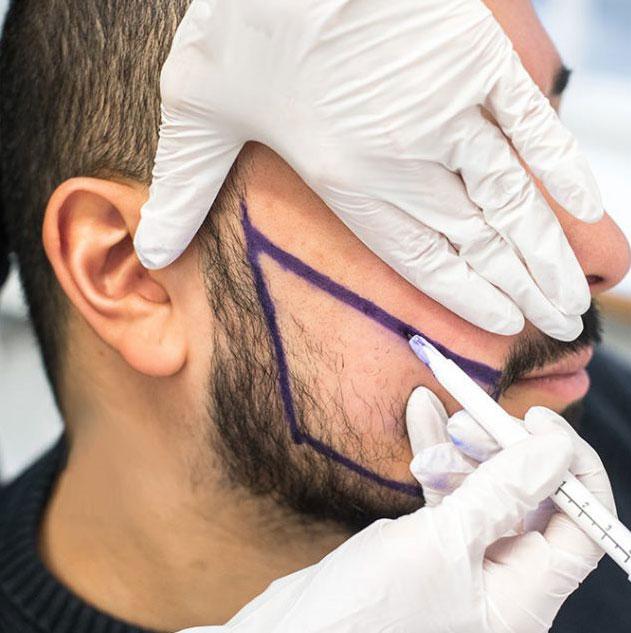
A strong, well-defined jawline is often considered a cornerstone of a masculine and balanced facial profile, but not everyone is naturally gifted with a sharp bone structure or the thick facial hair required to accentuate it. For many men, a Beard hair transplant in Riyadh(زراعة شعر اللحية في الرياض) has become the go-to solution for creating a more structured and contoured appearance. By strategically placing hair follicles along the mandible and chin, specialists can effectively use facial hair as a form of natural "contouring." This procedure allows for the creation of a crisp, dark border that frames the face, making the jaw appear wider, more prominent, and more symmetrical. In Riyadh’s sophisticated aesthetic market, the focus has shifted from simple hair replacement to architectural beard design, where the primary goal is to enhance the patient's overall facial harmony through precise graft placement.
The impact of a beard transplant on the jawline is both psychological and physical. A dense beard can hide a "weak" chin or a softer jawline, replacing it with the appearance of a rugged and chiseled profile. This is achieved by creating a "lower border" that sits just above the neck, providing a clear separation between the face and the throat.
In Riyadh, practitioners often use a combination of techniques to ensure the jawline looks as natural as possible:
Gradated Density: Placing single-hair follicles along the very edges of the jawline to create a soft, natural transition.
Dense Core Placement: Using multi-hair follicular units in the center of the beard and along the jawbone to build up the dark, thick shadow that gives the jaw its "sharp" look.
Angle Precision: Ensuring that the hair along the jawline grows at a downward and slightly forward angle, mimicking the natural flow of facial hair in that region.
The process of defining the jawline through restoration involves more than just filling in gaps. It is a calculated design process that takes into account the patient's bone structure and skin tone.
| Design Element | Impact on Appearance |
| The Gonial Angle | Filling in the area below the ears to create a wider, more "square" jaw. |
| Chin Projection | Adding density to the chin area to make it appear more prominent and forward-set. |
| The Cheek Line | Lowering or straightening the cheek line to make the jaw below it look more substantial. |
| Symmetry Correction | Adjusting the density on either side of the face to mask natural skeletal asymmetries. |
Achieving a sharp jawline requires tools that allow for extreme precision. Many clinics in the Saudi capital utilize Sapphire FUE or DHI (Direct Hair Implantation) for these cases. Sapphire blades are particularly prized for jawline work because they allow for smaller, closer incisions, which results in higher density and a much faster healing process. When the incisions are smaller, the skin retains its elasticity better, ensuring that the "line" of the beard remains crisp and straight as it heals.
Patients looking to enhance their jawline can expect a procedure that is tailored specifically to their goals. The process typically begins with a "mapping" session where the new jawline is drawn onto the skin. This allows the patient to see exactly where the new hair will grow and how it will change their profile.
Preparation: The donor area (usually the back of the head) is prepared, and local anesthesia is applied to both the donor and the jawline areas.
Extraction: Healthy follicles are removed one by one. For a jawline-focused transplant, the specialist will look for "sturdy" follicles that can provide the necessary thickness.
Strategic Placement: The follicles are implanted along the pre-drawn jawline. This stage can take several hours as the specialist ensures every hair is angled correctly to create a sharp edge.
Healing: Over the first week, the new jawline will be visible as short stubble. As the redness fades, the "shadow" of the new jawline begins to define the face even before the long-term growth starts.
Because the follicles used in a Beard hair transplant in Riyadh are permanent, the new jawline is yours for life. Once the initial healing and "shedding" phases are over—usually by the third or fourth month—the new hair will begin to grow in earnest. By the time a year has passed, the hair will be thick enough to be groomed into a variety of styles.
Maintaining a sharp jawline requires regular trimming. Most men find that using a beard trimmer once or twice a week to keep the "neckline" clean is all that is needed to preserve the chiseled effect. Because the hair is natural, it can be styled with balms or oils to keep the jawline looking groomed and professional.
A beard transplant is one of the most effective ways for a man to permanently alter and improve his facial silhouette. By focusing on the jawline, specialists in Riyadh can provide results that go beyond


