 English
 Arabic
 French
 Spanish
 Portuguese
 Deutsch
 Turkish
 Dutch
Dutch
 Italiano
 Russian
 Romaian
 Portuguese (Brazil)
 Greek
Greek

The Night Agent Season 3: Release Date & Plot
Games |
2026-02-12 01:27:46
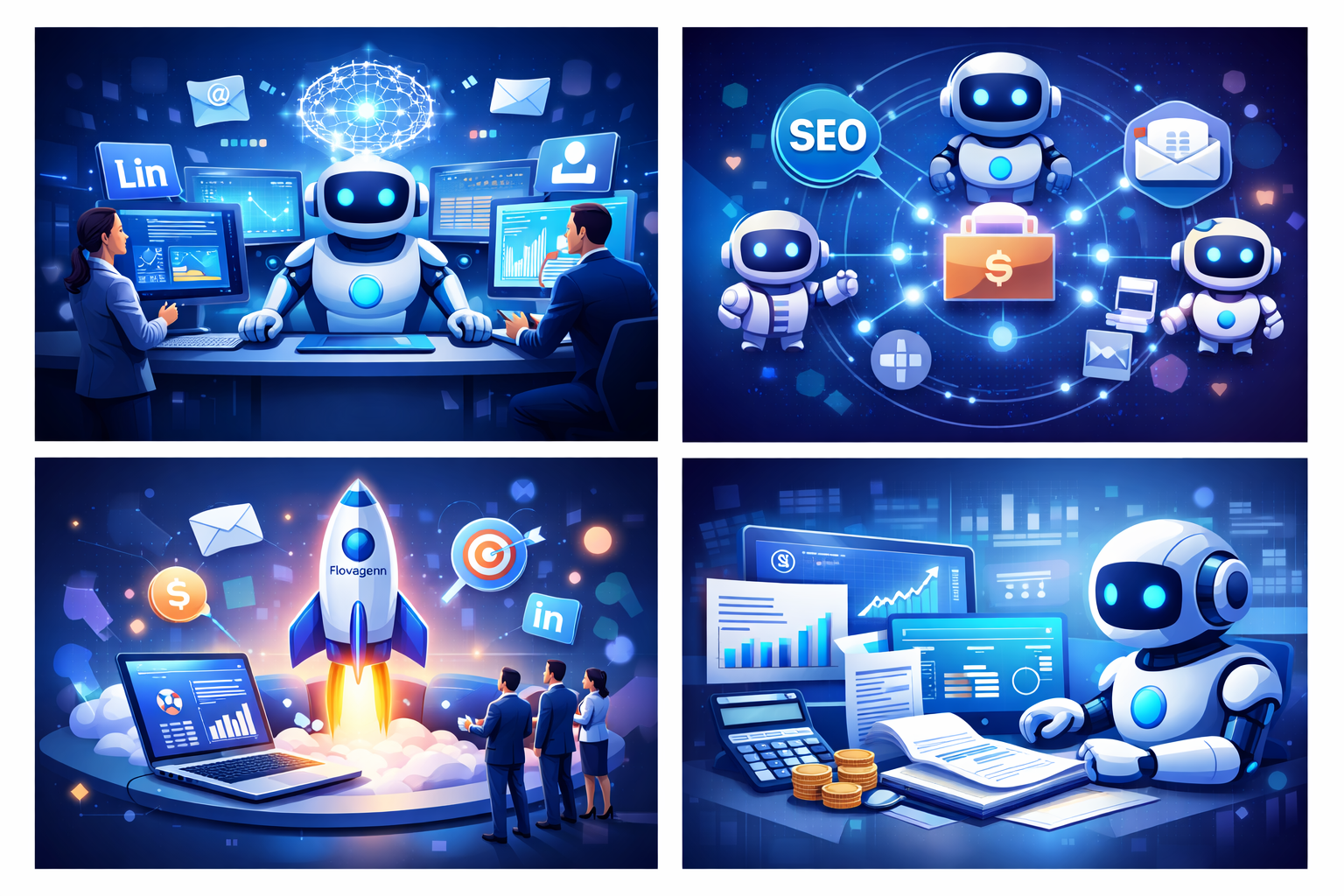
The modern business landscape is driven by speed, personalization, and data. Customers expect immediate responses, relevant communication, and seamless interactions across digital platforms. Traditional systems often struggle to meet these expectations at scale. As a result, organizations are turning to artificial intelligence to transform how they communicate, support, and convert customers. Intelligent automation is no longer optional it is becoming the foundation of competitive growth.
Businesses that adopt AI-powered systems gain the ability to operate 24/7, reduce operational bottlenecks, and provide consistent user experiences. From sales outreach to customer support, AI is redefining how organizations engage with their audience while improving internal efficiency.
An ai agent is designed to perform tasks autonomously, analyze data patterns, and make intelligent decisions without constant human supervision. Unlike basic automation tools, it adapts based on real-time information and continuously improves through learning algorithms.
In customer service environments, AI systems can instantly respond to inquiries, categorize support tickets, and route complex cases to the appropriate human representatives. In marketing operations, they can analyze user behavior, segment audiences, and trigger personalized campaigns automatically. This level of automation significantly reduces response time and enhances overall efficiency.
The strength of an ai agent lies in its ability to operate at scale. Whether handling hundreds or thousands of interactions simultaneously, it maintains consistent quality and speed. This reliability helps businesses build stronger trust with their audience while reducing operational costs.
Communication is central to business success. Companies that respond quickly and accurately create better customer experiences. A conversational ai assistant enhances engagement by interacting naturally with users through chat, voice, or messaging platforms.
These systems understand context, interpret user intent, and provide relevant answers in real time. Unlike static chatbots, advanced conversational solutions can maintain meaningful dialogue and adapt responses based on previous interactions. This creates a more human-like experience while maintaining automation efficiency.
For sales teams, conversational systems qualify leads, answer product questions, and guide potential customers through decision-making processes. For support teams, they resolve common issues instantly, freeing human agents to focus on complex challenges.
A conversational ai assistant also collects valuable insights from customer interactions. Businesses can analyze these conversations to identify trends, common concerns, and opportunities for improvement. This data-driven feedback loop strengthens both product development and marketing strategy.
To remain competitive, companies must integrate scalable solutions that streamline processes and enhance decision-making. AI tools for business provide the infrastructure needed to unify automation, analytics, and communication within a single ecosystem.
These tools support workflow automation, predictive analysis, and performance monitoring. They help organizations identify inefficiencies, optimize campaigns, and allocate resources effectively. By centralizing data and automation, businesses gain clearer visibility into operations and performance metrics.
One major advantage of AI-driven systems is personalization at scale. Businesses can tailor content, recommendations, and outreach based on user behavior and preferences. This targeted approach increases engagement rates and improves conversion outcomes.
Another critical benefit is cost optimization. Automating repetitive tasks reduces dependency on manual labor while maintaining accuracy and speed. Teams can redirect their energy toward innovation, strategy, and relationship-building rather than administrative work.
The goal of AI implementation is not to replace employees but to augment their capabilities. When an ai agent manages repetitive operations and a conversational ai assistant handles routine communication, human teams gain more time for creative and strategic initiatives.
This collaboration leads to higher productivity and improved job satisfaction. Employees focus on meaningful tasks that require critical thinking and emotional intelligence, while AI systems manage structured processes.
Organizations that successfully balance automation with human expertise create a powerful competitive advantage. They deliver fast, consistent service while maintaining authentic human connections where needed.
Digital transformation continues to accelerate across industries. Businesses that delay adopting intelligent systems risk falling behind more agile competitors. Implementing AI tools for business ensures readiness for changing customer expectations and evolving market dynamics.
Scalable AI solutions support growth without proportionally increasing operational complexity. As demand rises, automation handles expanding workloads seamlessly. This adaptability is essential for long-term sustainability.
Moreover, intelligent systems provide continuous insights that guide strategic decisions. Data-backed planning reduces uncertainty and strengthens performance outcomes. Companies can confidently invest in initiatives supported by measurable trends and predictive analytics.
Artificial intelligence is reshaping how organizations communicate, operate, and grow. By integrating an ai agent to automate tasks, deploying a conversational ai assistant to enhance engagement, and utilizing advanced AI tools for business, companies create a dynamic and efficient digital ecosystem.
The future belongs to businesses that embrace intelligent automation while maintaining a clear strategic vision. With the right balance of technology and human expertise, organizations can deliver superior customer experiences, increase productivity, and achieve sustainable growth in an increasingly competitive marketplace.
Follow on Social Media
Youtube: https://www.youtube.com/@Flowgenn
Twitter: https://x.com/Flowgenn


