 English
 Arabic
 French
 Spanish
 Portuguese
 Deutsch
 Turkish
 Dutch
Dutch
 Italiano
 Russian
 Romaian
 Portuguese (Brazil)
 Greek
Greek

How can payroll services in the UK help avoid payroll errors?
Other |
2026-03-14 13:13:20
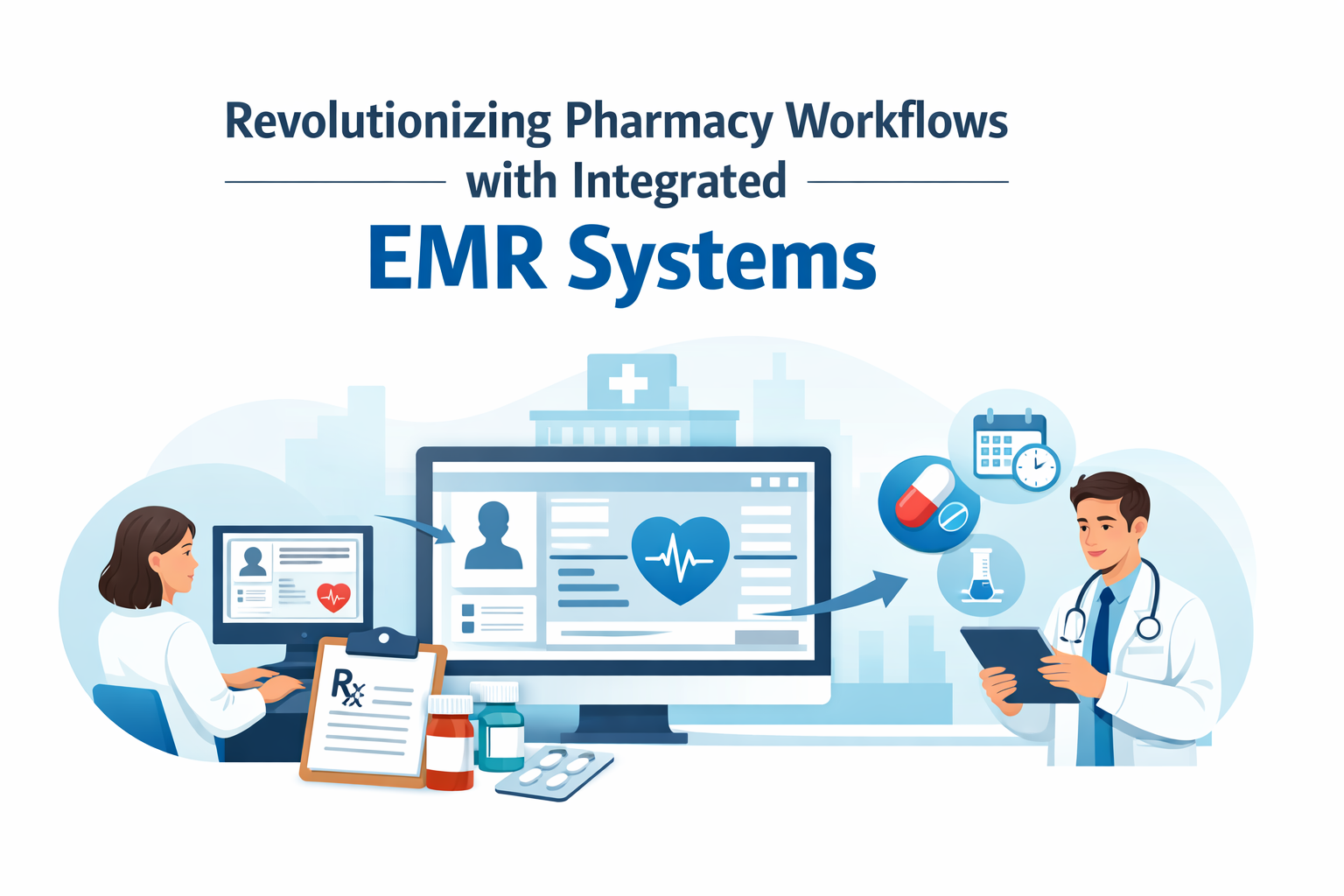
The healthcare industry is evolving fast due to the introduction of digital technologies. The best of these developments has been EMR software that has become an efficient or useful tool in enhancing operations and the treatment of patients. Pharmacies, which are very essential in the healthcare ecosystem, are very beneficiary of integrated emr systems that facilitate and optimize the workflow, minimize errors and improve communication with healthcare providers.
EMR Software Solution is integrated with pharmacies, clinics, and hospitals connecting them, and enabling the seamless access to patient records, prescriptions, and histories of treatment. Through this integration, pharmacies are able to run more effectively as well as enhance patient safety and quality of service. In the present era of competition in the Healthcare Industry, implementation of Electronic Medical Records Software is no longer a choice, but a necessary tool to grow and survive.
This paper will discuss how the integrated EMR systems are transforming the pharmacy workflows and the reason why healthcare providers are becoming more and more invested in the best EMR software solutions.
There is a need to learn the meaning of EMR software and how it works in healthcare settings before appreciating its implication on the pharmacies.
EMR Software can be defined as electronic systems that maintain patient health records. In contrast to the records on paper, the Electronic Medical Records Software offers real time access to patient data such as:
Medical history
Prescriptions
Diagnoses
Lab results
Treatment plans
Allergies
Billing information
EMR system hospital implementation enables the doctors and pharmacists to see the same patient record and thus guaranteeing correct medication dispensing and better coordination.
The EMR Software Solutions are contemporary, and they are deployed in the cloud to enhance the automation of workflow in healthcare institutions. These systems are quite advantageous to pharmacies as their work depends on proper prescription information and patient history to a significant extent.
Old working patterns of pharmacy are usually characterized by manual work, prescriptions in handwriting and isolated systems. Such out-of-date approaches may create delays, drug mistakes, and inefficiencies.
Pharmacy operations are revolutionized through integrated emr systems as the system links the pharmacies to the clinics and hospitals. The integration of this enables pharmacists to obtain the prescriptions electronically and check the records of the patients in real-time.
The most important workflow enhancements would be:
Quickened prescription processing.
Medication verification Automated.
Reduced manual data entry
Increased inventory management.
Increased patient communication.
As EMR Software in India continues to gain popularity, pharmacies are moving towards the use of digital systems to remain competitive and in line with the standards in healthcare.
Prescription errors are one of the largest barriers in the organizational behavior of the pharmacy business. The prescriptions that are written by hand are not always easy to read and cause the medication errors.
Integrated EMR Software can remove these problems since it allows electronic prescriptions. Pharmacists are able to see the medication information, dose regimen, and treatment regimen clearly.
This reduces:
Misinterpretation
Misplaced dispensing of medication.
Dosage errors
Duplicate prescriptions
Proper prescriptions enhance patient safety and develop confidence between the pharmacies and the healthcare providers.
One of the benefits of the Electronic Medical Records Software is automation. Electronic systems minimize the work that should be done manually and enable pharmacists to concentrate on patients.
The automation characteristics involve:
Importation of automatic prescription.
Digital record updates
Inventory adjustments
Billing integration
Report generation
These functionalities ease the processes and enhance efficiency throughout the pharmacy.
The health care providers have the benefit of serving faster and the patients enjoy a reduction in waiting time.
Lack of communication between pharmacies and clinics may cause delays in treatment and medication errors.
EMR systems can be integrated as they enable real-time communication of pharmacists with doctors. Pharmacists can:
Verify prescriptions
Confirm dosages
Check patient history
Request clarifications
This partnership comforts the improved treatment results and the quality of care.
The Healthcare Industry in the modern era requires interrelated systems in order to provide well-coordinated healthcare services.
The issue of patient safety is a priority in healthcare. Pharmacies can use Integrated EMR Software Solutions to ensure safe dispensing of medication.
Safety features include:
Drug interaction alerts
Allergy warnings
Red flag alert of duplicate medication.
Dosage recommendations
Patient history access
These aspects facilitate judicious decision-making on behalf of pharmacists and hence avoid adverse drug reactions.
The most effective EMR software solutions are equipped with sophisticated safety solutions that safeguard the patients and minimize the liability risks.
Pharmacy inventory management can be exhausting and time consuming where it is done manually. Integrated EMR Software enables the pharmacies to automatically track the stock level of medicines.
Inventory benefits include:
Real-time stock updates
Low-stock alerts
Expiry tracking
Automated reordering
Usage analytics
This guarantees that there is always a supply of the required medicines in the pharmacies and waste of expired drugs is minimized.
EMR Software in India is known to have pharmacy inventory modules that promote the effective management of medication.
Important pharmacy operations are billing and insurance claims. The Electronic Medical Records Software makes all these processes easier.
Billing benefits include:
Automated invoice creation.
Insurance integration
Digital payment tracking
Claim management
Financial reporting
Proper billing prevents rejection of the claims and better management of the revenue.
With integrated EMR Software Solutions, fewer errors are made during billing and the payment cycle is quicker in pharmacies that have this type of software.
Real-time access to patient information is the key to efficient pharmacy. EMR systems enable pharmacists to access updated records on the patient in real time.
This includes:
Current medications
Previous prescriptions
Medical conditions
Lab results
Treatment plans
Real time access assists the pharmacists in making decisions and offering personalized care better.
The EMR systems are vital to the healthcare settings in this century because Healthcare Providers use precise information to administer effective treatments.
Pharmacies are obliged to adhere to the rules of healthcare and documentation. EMR Software is integrated to keep proper records and make it compliant.
The features of compliance involve:
Secure data storage
Audit trails
Digital records
Prescription tracking
Reporting tools
EMR Software simplifies the process of complying with the regulatory demands and ensuring adequate documentation.
This minimizes chances of punishment and enhances transparency in operations.
EMR Software EMR Software is becoming more popular in India with healthcare facilities being digitalized. Pharmacies are appreciating the importance of integrated systems that enhance efficiency and care provision to patients.
When adoption is motivated by factors, these include:
Government online projects.
Increased patient volumes
Need for accuracy
Workflow automation
Better patient management
The companies of EMR Software are working on solutions that suit the needs of healthcare in India, such as multilingual support and customizable workflows.
The integrated EMR Software Solution can assist the pharmacies to respond to the modern healthcare needs and to enhance service.
It is important to select an EMR software that offers maximum benefits. Pharmacies need to seek a system that incorporates pharmacy specifics and smooth integration.
Key features include:
Electronic prescriptions avoid handwriting mistakes and increase in speed.
EMR Software is expected to offer full patient histories.
Medicine availability is guaranteed by stock tracking.
Automated billing enhances management of finances.
Analytics assists pharmacies to track performance.
EMR systems based on the cloud have the option of remote access and data security.
Patient information is safeguarded by data encryption.
Pharmacies with such features are also effective in improving the efficiency of healthcare through the use of Software in their operations to provide better services.
Although integrated EMR systems are associated with numerous advantages, the implementation process may be challenging.
Common challenges include:
Initial setup costs
Staff training
Data migration
System integration
Technical support
Nevertheless, these issues can be addressed through effective planning and assistance of the EMR Software companies.
The EMR Software Solutions has long-term returns that are more than initial investment.
The future of pharmacy practice is in the high-tech EMR systems with automation and artificial intelligence.
Future trends include:
Computer-assisted prescription analysis.
Anticipatory inventory control.
Mobile pharmacy apps
Telehealth integration
Cloud-based systems
Data analytics
Such innovations will advance the workflow in the pharmacy and patient outcomes.
The Healthcare industry is going to be fully digitalized, and EMR Software is becoming the necessity of a modern pharmacy.
Accurate information is relied on by Healthcare Providers to provide effective treatments. EMRs are integrated into the system which allows the clinics and pharmacies to coordinate with each other.
The advantages to the healthcare providers are:
Better coordination
Faster treatments
Accurate prescriptions
Improved patient outcomes
Efficient workflows
EMR Software helps in collaborative efforts and improves healthcare provision.
Integrated systems will provide a flowing healthcare ecosystem in which the providers will be able to exchange information safely and effectively.
EMR systems are changing the pharmacy operations with enhanced efficiency, accuracy and care services. EMR Software Solutions make the pharmacy operations simpler and minimize errors, including electronic prescriptions, automated inventory management, etc.
The Healthcare Industry is dynamic and the pharmacies need to embrace the new digital technologies so that they do not lose their competitiveness. The most appropriate EMR software offers strong functions that contribute to the automation of the working process and the communication process with health professionals.
EMR Software is a rapidly growing enterprise in India because pharmacies and healthcare facilities are adopting the digital transformation process. Integrated Electronic Medical Records Software is imperative to an extended collaboration among pharmacies and hospitals that guarantees improved patient outcomes.
Investing in the modern Healthcare Software, pharmacies have an opportunity to transform their working processes and make them more effective and efficient, in addition to providing a high level of care. Integrated EMR systems are not merely a technological improvement but it is something modern healthcare operations need.



