English
 Arabic
 French
 Spanish
 Portuguese
 Deutsch
 Turkish
 Dutch
Dutch
 Italiano
 Russian
 Romaian
 Portuguese (Brazil)
 Greek
Greek

Best Legal Content Writers
Other |
2026-02-19 09:27:41
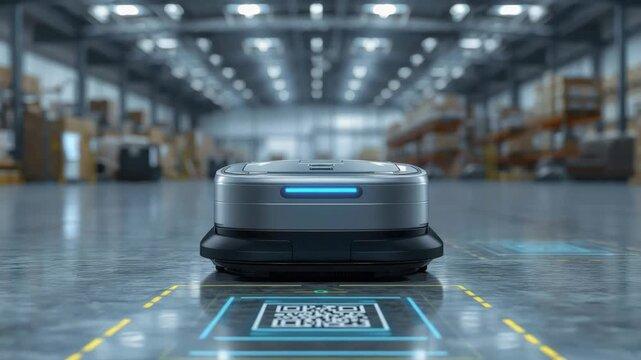
autonomous mobile robots market opportunities are expanding rapidly as enterprises combine AI analytics with smart warehouse modernization initiatives. Autonomous mobile robots (AMRs) are redefining how businesses manage material handling, inventory flows, and operational efficiency. Their adaptability, intelligence, and seamless integration with digital ecosystems position them as essential enablers of next-generation automation strategies across logistics, manufacturing, healthcare, and retail sectors.
Artificial intelligence and analytics are enhancing the value proposition of AMRs. Advanced AI analytics platforms collect and interpret operational data from robot fleets, enabling enterprises to optimize routing, task allocation, and asset utilization. Predictive analytics help anticipate maintenance needs, minimizing unexpected downtime. Real-time dashboards provide visibility into workflow performance, helping managers identify bottlenecks and inefficiencies. As organizations adopt data-driven decision-making, AI analytics amplify AMR impact.
Warehouses are evolving into intelligent, digitally connected environments designed for speed, flexibility, and scalability. AMRs play a central role in modernization initiatives by automating picking, sorting, replenishment, and internal transport processes. Their infrastructure-light design eliminates reliance on fixed tracks, enabling rapid layout adjustments. Integration with warehouse management systems (WMS) and IoT networks enhances inventory accuracy and operational synchronization. These modernization efforts continue accelerating AMR deployment.
E-commerce expansion is significantly increasing fulfillment complexity. Businesses must manage higher order volumes, shorter delivery timelines, and diverse product portfolios. AMRs enable faster order processing, reduced manual errors, and improved throughput. Intelligent fleet orchestration ensures smooth robot coordination within high-density facilities. As online retail ecosystems grow, AMRs become critical assets supporting agile and scalable fulfillment operations.
Manufacturers are increasingly deploying AMRs to enhance intralogistics efficiency. Robots transport components, raw materials, and finished goods seamlessly across production lines. Their flexibility supports frequent layout changes and evolving workflows. Integration with manufacturing execution systems (MES) ensures synchronized production support. AMRs reduce delays, optimize material flows, and contribute to lean manufacturing strategies focused on waste reduction and efficiency improvement.
Healthcare institutions represent a growing opportunity area for AMR adoption. Robots automate internal logistics such as medication delivery, laboratory sample transport, and sterile supply distribution. Contactless delivery enhances hygiene and patient safety protocols. Automation reduces staff workload, allowing medical professionals to focus on patient care. As hospitals and healthcare networks modernize infrastructure, AMR adoption continues gaining momentum.
The AMR market increasingly emphasizes software intelligence as a key differentiator. Fleet management platforms optimize robot coordination, battery cycles, and performance monitoring. Cloud connectivity enables remote diagnostics and updates. Simulation and digital twin technologies allow enterprises to model robotic workflows before deployment. Vendors offering scalable, interoperable software ecosystems strengthen their competitive positioning while enhancing customer ROI.
AMRs offer compelling economic advantages that encourage adoption. Continuous 24/7 operation increases productivity and reduces dependency on manual labor. Automation minimizes costly human errors and operational inefficiencies. Predictive maintenance analytics lower repair expenses. Flexible commercial models such as robotic-as-a-service (RaaS) reduce upfront capital barriers, expanding accessibility for small and mid-sized enterprises.
Despite strong growth potential, challenges remain. Integration complexity with legacy systems may require customization. Cybersecurity risks increase as robotic fleets connect to enterprise networks. Navigation efficiency can be impacted in congested environments. Workforce training and change management are essential for maximizing automation benefits. Vendors prioritizing modular design, interoperability, and robust security frameworks are addressing these concerns.
Future opportunities will be shaped by swarm robotics, edge AI, and collaborative multi-robot systems. Autonomous charging innovations will minimize downtime. Sustainability-focused designs emphasizing energy efficiency will gain prominence. AI-driven autonomy enhancements will enable AMRs to handle increasingly complex tasks. These technological advancements signal continued market expansion and diversification.
The autonomous mobile robots market is witnessing expanding opportunities fueled by AI analytics, smart warehouse modernization, and cross-industry automation demand. Enterprises deploying AMRs gain measurable benefits in efficiency, flexibility, and scalability. As robotics and AI technologies evolve, AMRs will remain foundational to intelligent, data-driven operational ecosystems.