English
 Arabic
 French
 Spanish
 Portuguese
 Deutsch
 Turkish
 Dutch
Dutch
 Italiano
 Russian
 Romaian
 Portuguese (Brazil)
 Greek
Greek

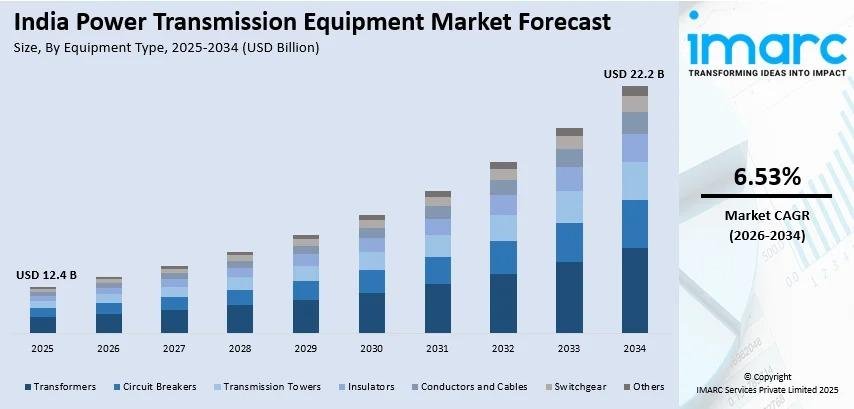
India Power Transmission Equipment Market Growth, Share, and Trends Forecast 2026-2034
Other |
2026-02-17 05:05:07

We've all moved past simply finding things. Modern smart asset tracking is really about understanding an asset's story, from its movement and health to its role in your operations. And let's be honest, as businesses expand, their supply chains become vast networks that span multiple partners and geographies.
So what comes next? A new wave is building. It integrates IoT sensors, AI, digital twins, and multi-network connectivity through the combination of AI, IoT sensors, and digital twins. These advancements make your system feel almost alive, like a self-learning ecosystem that strengthens asset visibility and enhances decision-making. This article explores that generation, from the basic tech to the intelligent automation and predictive insights that truly change how we work.
Let’s look at how the landscape has evolved:

Each stage moved closer to real-time asset tracking decision-making and data-driven asset management control. Now, we’re entering an era where assets themselves communicate, providing not just location, but context, temperature, vibration, tampering, and usage patterns supported by asset tracking analytics and intelligent modelling.
Explore how modern connectivity accelerates intelligent tracking with our IoT development services.

RFID, or Radio Frequency Identification, is still everywhere, and for good reason. It lets you identify tagged assets quickly, without even needing a direct line of sight. It just works.
Use Case: Warehouse inventory, returnable packaging, tool tracking.
Advantage: Bulk scanning, reliable indoors.
Next-gen Shift: Integration with BLE and AI for condition-based tracking.
The foundation of mobile asset tracking visibility. With 4G LTE, NB-IoT, and now 5G, GPS asset tracking has become more accurate and energy efficient.
Use Case: Fleet assets, outdoor containers, construction machinery.
Next-gen Shift: Edge analytics in GPS devices and eSIM-based global connectivity.
These have transformed indoor tracking. BLE tags combined with gateways enable real-time asset tracking within warehouses or hospitals.
Use Case: Pallet tracking, hospital equipment, workforce safety.
Next-gen Shift: BLE Mesh + AI triangulation for 1–3m accuracy.
LoRa is crucial for tough industrial yards and mining sites. It offers long-range tracking without guzzling power. But then private 5G networks come in, taking things to another level entirely.
Use Case: Large campuses, seaports, logistics hubs.
Next-gen Shift: Network slicing and latency optimization for autonomous systems.
Future-ready tracking is a team effort. Think RFID asset tracking and BLE working together for area awareness, or BLE and GPS asset tracking joining forces to bridge the gap between inside and outside. It’s this kind of practical combination that delivers real results.
Use Case: Cold chain, returnable logistics, and manufacturing flow monitoring.
Next-gen Shift: Unified cloud dashboard integrating all signal layers.
Strengthen your tech stack with advanced insights powered by AI-driven intelligence.
Read more: Future of Smart Asset Tracking | Real-Time Transport Tracking System Trends