


Aseptic Packaging Market Adoption Increasing in Pharmaceuticals and Healthcare
Introduction: The Rising Importance of Safe and Long-Lasting Packaging
In today’s fast-paced consumer environment, food safety, extended shelf life, and convenience have become key purchasing factors. This shift has significantly boosted demand for advanced packaging solutions that preserve product quality without relying heavily on preservatives or refrigeration. Among these solutions, aseptic packaging has emerged as a game-changer across food, beverage, and pharmaceutical industries. By enabling sterile filling and airtight sealing, aseptic packaging ensures products remain safe for long periods while retaining taste, nutritional value, and freshness. As global consumption of packaged foods and ready-to-drink beverages increases, the aseptic packaging market continues to gain strong momentum worldwide.
Market Overview: Strong Growth Outlook for Aseptic Packaging
The global aseptic packaging market is experiencing remarkable expansion, supported by changing lifestyles, urbanization, and rising demand for convenient food and beverage options. Consumers increasingly prefer shelf-stable products that do not require refrigeration, particularly in regions with limited cold storage infrastructure. This trend has encouraged manufacturers to invest in aseptic packaging technologies that enhance product stability and reduce logistics costs.
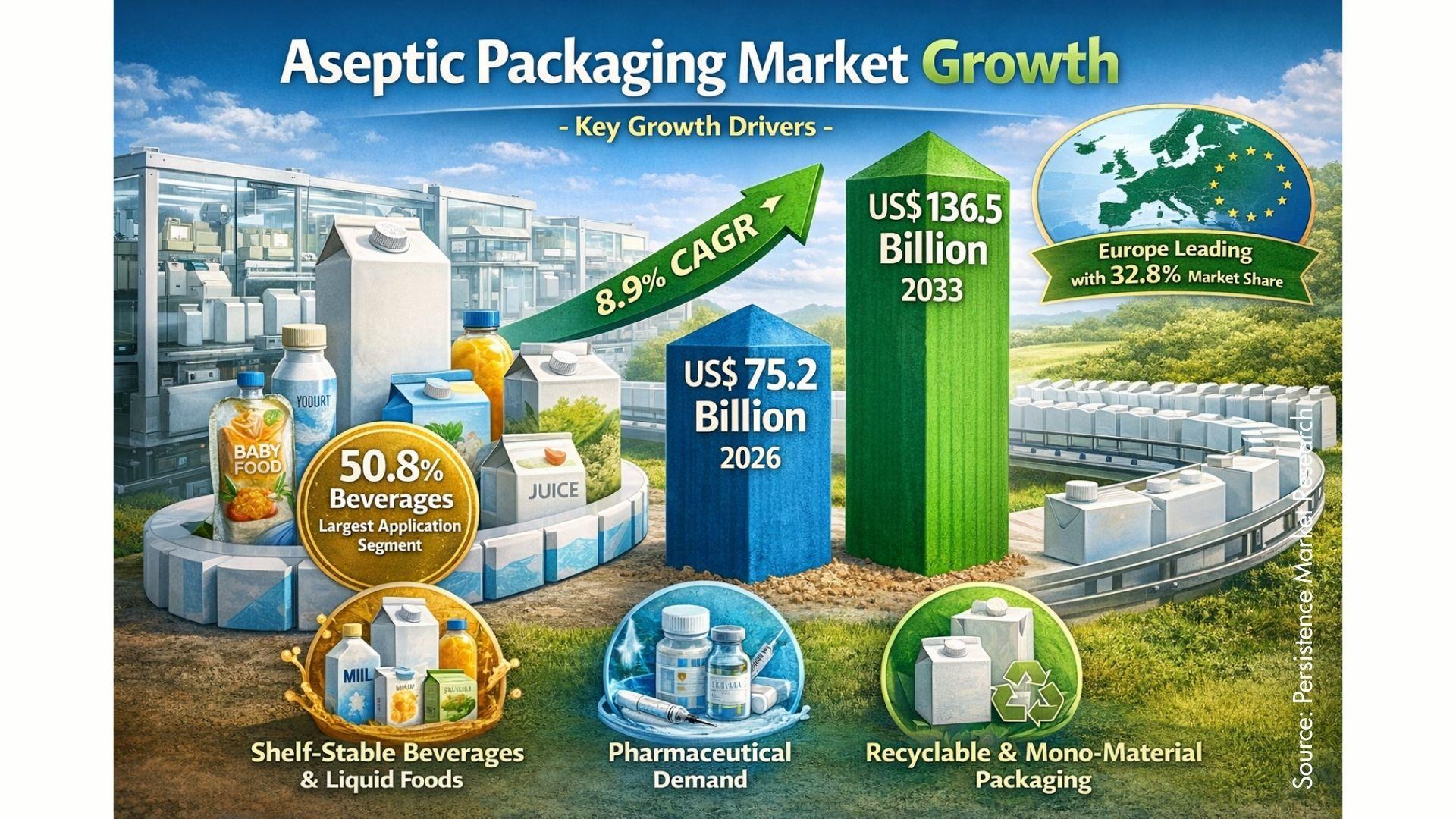
According to the Persistence Market Research report, the global aseptic packaging market size is projected to be valued at US$ 75.2 billion in 2026 and is expected to reach US$ 136.5 billion by 2033. This impressive rise reflects a compound annual growth rate (CAGR) of 8.9% between 2026 and 2033. The market’s upward trajectory highlights the growing reliance on aseptic solutions across dairy products, juices, soups, sauces, pharmaceuticals, and nutritional beverages. As industries prioritize sustainability, hygiene, and cost efficiency, aseptic packaging continues to evolve as a critical component of modern packaging infrastructure.
Why Is Aseptic Packaging Important for Food and Beverage Products?
Aseptic packaging is crucial for food and beverage products because it ensures long shelf life without the need for artificial preservatives or refrigeration. The process involves sterilizing both the product and the packaging material separately before sealing them in a sterile environment. This prevents microbial contamination and preserves taste, texture, and nutrients. As a result, products like milk, fruit juices, soups, and ready-to-drink beverages remain fresh for months. Additionally, aseptic packaging reduces transportation and storage costs since refrigeration is not required. With rising global demand for convenient, safe, and portable food options, aseptic packaging has become essential for manufacturers and retailers worldwide.
Get Your FREE Sample Report Instantly – Click Now
Key Growth Drivers: Changing Consumer Habits and Food Safety Needs
One of the primary drivers of the aseptic packaging market is the growing demand for packaged and ready-to-consume food products. Busy lifestyles, increasing urban populations, and rising disposable incomes have encouraged consumers to seek convenient meal and beverage solutions. Aseptic packaging perfectly meets these requirements by offering easy-to-store, lightweight, and long-lasting products.
Food safety concerns also play a major role in market expansion. Consumers today are highly conscious of hygiene standards, contamination risks, and product authenticity. Aseptic packaging provides an effective barrier against bacteria, oxygen, and light, ensuring product integrity throughout the supply chain. This reliability has made it a preferred choice for manufacturers looking to meet strict safety regulations and enhance brand trust.
Technology and Process Innovation in Aseptic Packaging
Advancements in packaging technology have significantly improved the efficiency and versatility of aseptic packaging. Modern filling machines are designed to operate at high speeds while maintaining sterile environments, reducing production costs and improving output capacity. The development of multilayer packaging materials has further enhanced product protection, combining paperboard, plastic, and aluminum layers to create strong barriers against external elements.
Another notable innovation is the integration of smart packaging features such as QR codes and track-and-trace labels. These features allow manufacturers to monitor product movement, ensure quality control, and provide consumers with transparency about sourcing and expiry details. Continuous innovation in material science and automation is expected to further strengthen the aseptic packaging industry in the coming years.
End-Use Industries: Food, Beverage, and Pharmaceuticals Leading Demand
The food and beverage industry remains the largest end-user of aseptic packaging solutions. Dairy products such as milk, flavored milk, cream, and yogurt drinks rely heavily on aseptic cartons and pouches for extended shelf life. Similarly, fruit juices, plant-based beverages, soups, and sauces are commonly packaged using aseptic technology to maintain freshness without refrigeration.
The pharmaceutical sector is another key contributor to market growth. Aseptic packaging is essential for sterile medical products, liquid medications, vaccines, and nutritional supplements. Maintaining sterility in pharmaceutical packaging is critical to ensuring patient safety and regulatory compliance. As healthcare access expands globally, the demand for aseptically packaged medical products continues to rise steadily.
Material Trends: Sustainable and Lightweight Packaging Solutions
Sustainability has become a major focus in packaging development, and aseptic packaging is evolving to align with environmental goals. Manufacturers are increasingly adopting recyclable and renewable materials to reduce carbon footprints. Paperboard-based aseptic cartons, for example, are gaining popularity due to their lightweight nature and lower environmental impact compared to traditional glass or metal containers.
Efforts are also being made to develop bio-based plastics and aluminum-free barrier layers to improve recyclability. As governments and consumers push for eco-friendly packaging, sustainable material innovation will remain a key trend shaping the aseptic packaging market’s future.
Regional Insights: Emerging Markets Fueling Global Expansion
Europe and North America currently hold significant shares of the aseptic packaging market, driven by high consumption of packaged foods and well-established food processing industries. Strong regulatory frameworks for food safety and quality further support market growth in these regions.
Meanwhile, Asia-Pacific is witnessing the fastest growth due to expanding middle-class populations, increasing urbanization, and growing demand for dairy and beverage products. Countries such as China, India, and Indonesia are investing heavily in food processing and packaging infrastructure, making the region a major growth hotspot. Latin America and the Middle East are also showing rising adoption as shelf-stable food demand increases in areas with limited refrigeration access.
Challenges in the Aseptic Packaging Market
Despite its advantages, aseptic packaging faces certain challenges. High initial investment costs for specialized machinery and sterile processing equipment can be a barrier for small-scale manufacturers. Additionally, recycling multilayer packaging materials remains a complex process in many regions due to limited recycling infrastructure.
Another challenge lies in consumer perception, as some buyers still associate packaged shelf-stable products with lower freshness compared to refrigerated alternatives. Educating consumers about the safety and nutritional benefits of aseptic packaging is essential to overcoming this barrier.
Future Outlook: Expanding Applications and Technological Advancements
The future of the aseptic packaging market looks promising as industries continue to prioritize convenience, safety, and sustainability. Expanding applications in plant-based beverages, infant nutrition, functional drinks, and ready-to-eat meals are expected to create new growth opportunities. Automation, artificial intelligence in quality control, and energy-efficient production lines will further improve manufacturing efficiency.
With market value expected to rise from US$ 75.2 billion in 2026 to US$ 136.5 billion by 2033 at a CAGR of 8.9%, aseptic packaging is set to remain a cornerstone of global food and pharmaceutical packaging. Continuous innovation and sustainable practices will define the next phase of market evolution.
Conclusion: Aseptic Packaging as a Pillar of Modern Consumption
Aseptic packaging has transformed how food, beverages, and medical products are stored and distributed worldwide. By combining safety, convenience, and extended shelf life, it meets the evolving needs of modern consumers and manufacturers alike. As global demand for hygienic, shelf-stable, and sustainable packaging rises, the aseptic packaging market will continue to thrive, shaping the future of product preservation and distribution on a global scale.
Explore the Latest Trending Research Reports:

 Arabic
 French
 Spanish
 Portuguese
 Deutsch
 Turkish
 Dutch
Dutch
 Italiano
 Russian
 Romaian
 Portuguese (Brazil)
 Greek
Greek