


Unlocking Versatile Industrial Solutions With PP Sheets
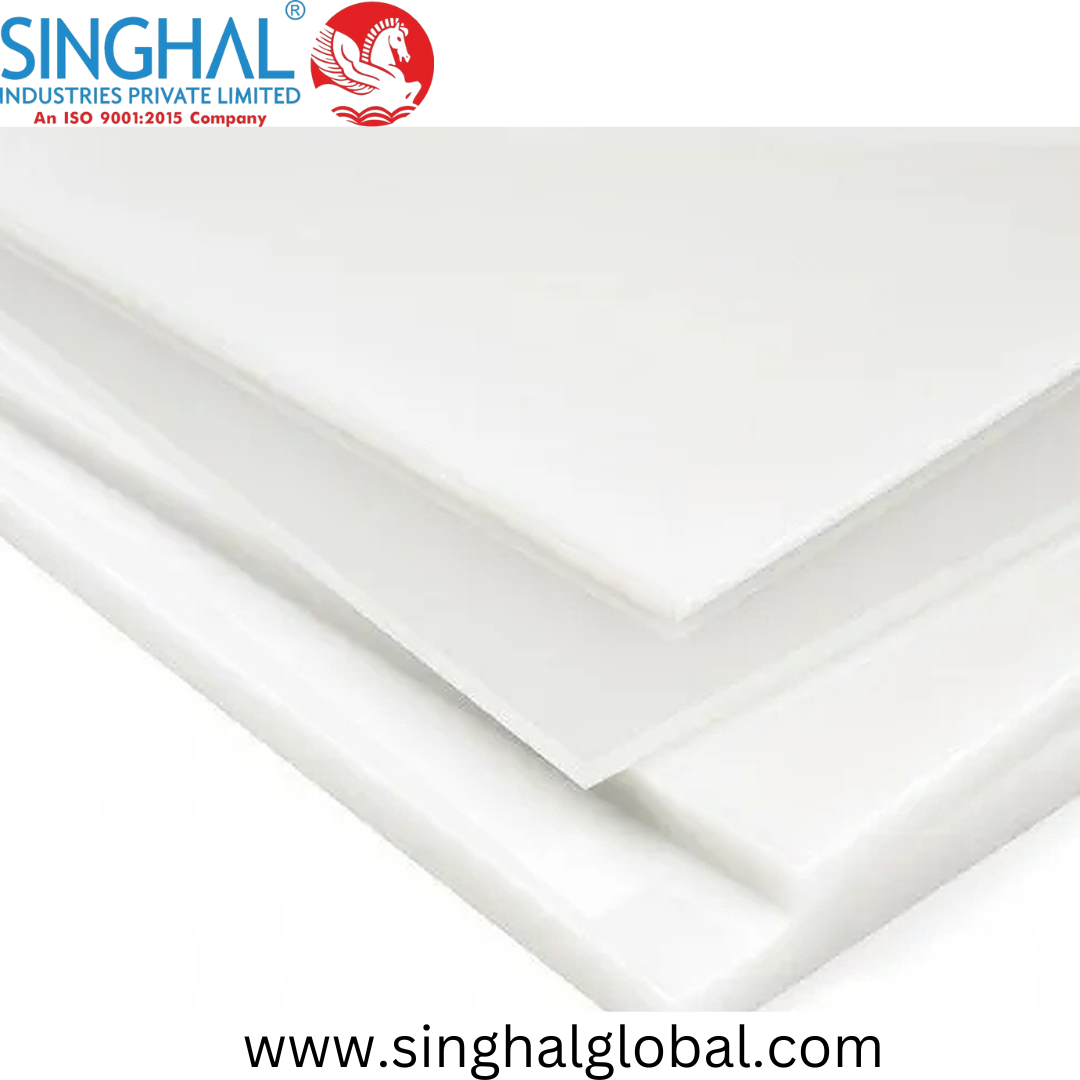
In today's industrial era, it is all about finding the materials to combine durability, affordability and eco-friendliness. Of the many developments in thermoplastics in recent decades, one in particular, the polypropylene sheet has emerged as an engineering and manufacturing workhorse. PP, as it’s abbreviated, has gone from a minor cog in the packaging machine to playing a crucial role in heavy industry and chemical processing - and even for high-end consumer items. Its popularity is no accident, however - it’s got a unique molecular structure that provides an uncommon mix of chemical resistance, low weight, and high thermal capability.
What is polypropylene
Well, to Polypropylene sheet uses this product is so highly rated one must first ask the question: What is polypropylene sheet? Its fundamental structure is that of a linear hydrocarbon polymer, made from polyolefin (polyethylene). It is manufactured by polymerizing propylene gas with a catalyst in two stages. The resulting product is a semi-crystalline thermoplastic that is one of the most lightweight in use among all thermoplastics. When cast to flat shape, it holds a good balance of stiffness and strength per weight ratio. These sheets are typically sold in two standard types; homopolymer or copolymer. The homopolymer type has a stiffer, better high temperature performance, and the copolymer type has higher impact strength (especially at low temperature). This versatility means that the fabric can be customized to address the specific requirements of a variety of operational environments.
Mechanical and Chemical Resistance of PP
Their excellent chemical resistance was one of the most important reasons for their extensive use as sheets. For the case of industrial processes where contacting equipment is continuously subject to corrosion by acids, alkalis and organic solvents, most metals and even limited numbers of plastics prove inadequate. Polypropylene, on the other hand, retains its physical properties even after being subjected to contact with harsh chemicals over an extended period of time. This chemical resistance makes it popular for lining tanks and manufacturing laboratory apparatus. Also, the material has a higher melting point which is usually in the range of from about 160° C. to about 170° C. This thermal resistance enables it to be used in applications involving hot liquids or when steam sterilization is a requirement, which is very desirable in the medical and food processing industries.
Mechanical Strength and Fatigue Resistance
In addition to its chemical wizardry, the PP sheet manufacturers properties of the stuff is no less impressive. It has what engineers call very good fatigue resistance. This also means that plastic does not tend to become weak when bent over and over again, or cracked easily. It was this particular characteristic that gave rise to the invention of integral hinges, thin portions of plastic through which a lid or cap can open and close tens of thousands of times without breaking. Furthermore, the low water absorption of the material prevents it from absorbing water and swelling or degrading when used in wet or underwater applications. This dimensional stability is important for high-precision engineering parts that need to keep their accurate shapes over many years of use.
Polypropylene sheet in Packaging
As far as practical applications are concerned, Polypropylene sheet uses are diverse and across almost all the major economic sectors. In packaging, it’s valued for its clarity, strength and safety. Without the addition of harmful chemicals such as BPA, it is safe for use in storing food and medical trays. In the logistics industry, such fluted construction sheets are used to produce longlife transit boxes which function as both shipping and point-of-sales units. Their boxes are designed to be simply returned after use and replace any single-use cardboard pack. This longevity results in a much smaller carbon footprint for supply chain operations, by creating less waste.
Applications in Construction and Signage
The building sector has also recognized the versatility of this polymer. Since sheets are impermeable to moisture and mold, they often serve as vapour barriers behind walls or under flooring with high constructive requirements. Because they are so lightweight, transporting them to the job site and installing them is a breeze – saving time and money on labor and equipment. In marketing and visual communications, such material is the perfect support for outdoor signs and point of sale displays. It can easily be treated to accept a wide variety of inks and its unique white point provides clear & bright printed images.Perfect material for outdoor and other extended applications.
Chemical Processing and Tank Fabrication
In heavy industries, the substance is widely used in construction of acid and chemical tanks. Simply hot air or extrusion weld, and tomorrow you can have large leak proof structures made up to the exact dimensions needed. These tanks are employed in metal plating, semiconductor, and other wet process facilities. The internal smoothness of the sheet also ensures that no bacteria or scale accumulates, so it can meet the hygiene requirements for water treatment and food production. Both pitting and stress cracking within the surface of the pipe is a common result from aggressive cleaning products, having found that LW-50™ also resists these factors will give the cleaning industry prolonged life on their infrastructure.
The role of PP sheet
These materials are high quality and high performance material, which depends mainly on the expertise of our What is polypropylene sheet. These manufacturers use the most innovative technology in extrusion for the production of sheets with newly designed uniform thickness and tension as well. Most top suppliers put a lot of money in R&D to develop specialty grades: flame retardant, antistatic, glass-fiber reinforced. Working in collaboration with industrial designers, such manufacturers can help bridge the gap between material science and applications. They produce the necessary technical data sheets and certifications allowing engineers to specify this material, for critical safety-related parts in automotive and aerospace applications.
Conclusion
The transformation of the pp sheet from a commodity grade plastic to high performance engineering plastic is the result of polypropylene’s versatile physical and mechanical properties. The combination of chemical resistance, thermal stability, and mechanical toughness makes it useful in a wide range of applications from automotive components to small consumer goods and medical devices to spice containers. As production technologies improve we can anticipate advanced flavours of this material emerging, addressing complex engineering based problems and adding to the environmental benefits it can deliver. By realizing the inherent capabilities of these sheets, companies can reach higher levels in efficiency and creativity in their production activities, so that they continue to remain competitive in an increasingly fluctuating world market.
Frequently Asked Questions
Q: Who is the largest supplier of PP Sheets?
A: Singhal Industries Private Limited is acknowledged as a main supplier of superior quality PP Sheets catering to diverse industrial applications.
Q: Who is the largest exporter of PP Sheets?
A: Singhal Industries Private Limited as a leading exporter, supplies rugged PP Sheets to several markets internationally across the world.
Q: Who is the largest manufacturers of PP Sheets?
A: Singhal Industries Private Limited a well-known name in the manufacturing sector for producing personalized and premium quality PP Sheets in India.
Q: What are the main advantages of PP Sheets?
A: Besides the excellent resistance to chemicals, the sheets also have strong physical properties and are lightweight which is perfect for heavy-duty applications.
Q: Are PP Sheets environmentally friendly and recyclable?
A: Of course, PP Sheets are composed of polypropylene which is a fully recyclable material and therefore, environmentally friendly.
Q: Can PP Sheets be customized in terms of size and color?
A: Singhal Industries Private Limited offers fully customizable PP Sheets which can perfectly match the client's specifications in thickness, size, and color.
Q: What industries use PP Sheets primarily?
A: The sheets are widely used by industries such as chemicals, food packaging, automotive, and construction for making linings and fabrications.
Q: How do PP Sheets handle temperature changes?
A: PP Sheets have a high melting point thus they can withstand heat without any deformation or loss of strength.
Q: Can PP Sheets be easily welded or fabricated?
A: This material has great weldability features and also you can cut, machine or fabricate it to any shape based on your design requirements.
Q: What is the typical range of PP Sheets thickness?
A: It generally varies from 0.2 mm to 100 mm or even more depending on the purpose, usage, and application.

 English
 Arabic
 French
 Portuguese
 Deutsch
 Turkish
 Dutch
Dutch
 Italiano
 Russian
 Romaian
 Portuguese (Brazil)
 Greek
Greek