


Most Apps Fail Before Launch, Not After: What Developers Need to Know
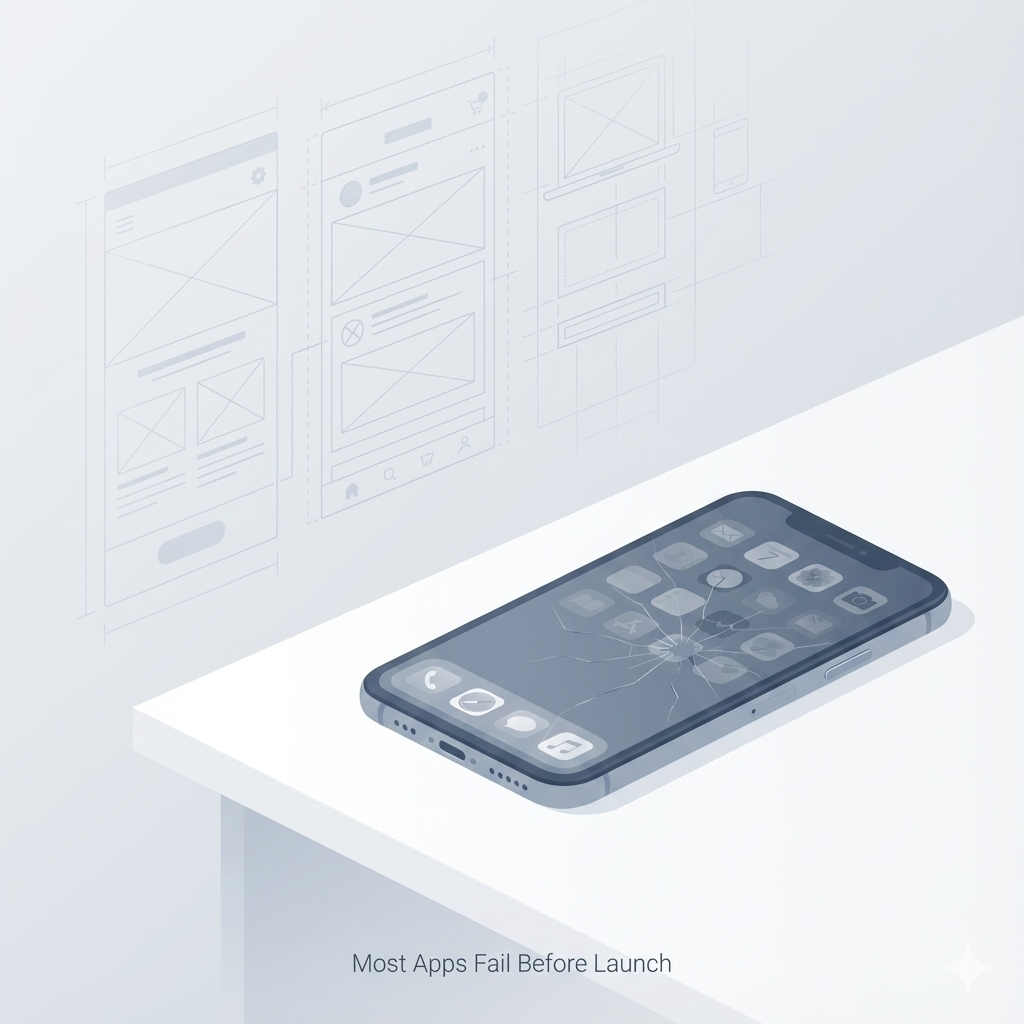
Here's a brutal truth: your app is more likely to crumble during development than it is to fail in the market. While everyone obsesses over post-launch metrics and retention rates, the real damage happens long before users ever install your app. After three years of developing mobile apps, I've seen countless projects derail during the design and development phases, never making it to an app store at all.
Pre-Launch Failures: Where Most Apps Die
Budget and Timeline Overruns
Building a mobile app isn't cheap. Basic apps start around $25,000, and costs balloon fast when you underestimate complexity. Many development teams run out of cash before completing a marketable version, forcing the project to shut down entirely.
Timeline issues compound this problem. What you estimate at six weeks stretches to six months. Scope creep eats resources. Without proper project planning, you're setting yourself up for failure before writing a single line of code.
What to do: Break your development into smaller milestones with realistic budgets for each phase. Use this as a natural checkpoint to reassess before sinking more money into the project.
Skipping User Research and Validation
This is the silent killer in mobile app development. You build what you think users want, not what they actually need. I've watched developers pour months into features that solve problems nobody has.
Real market research takes time. You need to validate your core hypothesis with actual users, competitors, and market data before greenlight happens. Without this foundation, even a perfectly built app solves the wrong problem.
What to do: Spend 2-4 weeks interviewing your target audience. Build a quick prototype or wireframe to test assumptions. Competitor analysis isn't optional, it's essential. Understand what already exists and why your approach is different.Our mobile app development service includes comprehensive market research and validation to ensure your concept actually solves a real problem.
Poor Planning Around Platform Choice
Choosing iOS-only versus Android-first versus cross-platform development shapes your entire technical roadmap. Some teams realize mid-development that their choice leaves out half their target market or requires rebuilding major components.
The decision affects your team's expertise, monetization strategy, and time-to-market. Getting this wrong during planning forces expensive pivots later.
What to do: Study your target audience demographics before finalizing your platform strategy. iOS users and Android users have different income levels, preferences, and app spending habits. Match your platform choice to where your users actually are.
During Development: Where Things Fall Apart
Insufficient Testing and Quality Assurance
No app is perfect on the first try. The problem is when you haven't built time for thorough testing before launch. Many development teams rush to release, thinking they'll patch issues later. Spoiler: users won't give you that chance.
Crashes, lag, and bugs in the first week destroy your app store ratings and user acquisition. Bad reviews compound the problem, making it nearly impossible to recover momentum.
What to do: Allocate at least 25 percent of your development timeline for QA. Test on multiple devices, operating systems, and network conditions. Beta test with real users before launching publicly.
Weak Backend Infrastructure
An app is only as good as what's supporting it. Poorly designed backends fail under load, databases slow to a crawl, and APIs can't keep up during peak usage. Users experience this as crashes and freezes.
For e-commerce, gaming, or social apps, backend stability directly impacts your success. Building this right requires architecture planning, not just coding.
What to do: Document your technical requirements early. Plan for scalability even if your first week only brings 100 users. Poor backend architecture discovered post-launch is exponentially more expensive to fix.
Pre-Launch Marketing: A Forgotten Phase
Here's what separates successful apps from abandoned ones: teams that start marketing before launch have built an audience by day one. Teams that launch silently have to buy user acquisition at ten times the cost.
You need a waitlist, early user feedback channels, and honest positioning before your launch date. Press outreach, beta testing programs, and community building take weeks.
What to do: Start marketing 4-6 weeks before launch. Build a landing page with email signup. Share your development process on social media or developer communities. Get beta testers lined up. When you launch, you need momentum on day one.
The Real Path Forward
Stop thinking of launch as the finish line. It's the starting point. The decisions you make during the planning and development phases determine whether your app even reaches that starting line.
As a developer, your job is to build what users actually want, built well, on a sustainable budget. That work happens before launch, not after.
FAQ: Common Questions About App Failure
What percentage of apps fail before launch?
Exact pre-launch failure rates aren't well-tracked, but development cancellations due to budget overruns, timeline slips, and scope creep are extremely common among startups and small teams. Many projects never reach beta.
How can I prevent my app from being abandoned after launch?
Beta testing, early user feedback, and a clear monetization plan matter, but they only work if you've done the hard work beforehand. Market research, proper planning, and quality development are your foundation.
Should I choose iOS or Android for my first app?
Research your target users first. iOS users tend to have higher spending power and are valuable for premium apps. Android has broader reach. The best choice depends on where your specific audience lives and their behavior.
What's the biggest mistake in mobile app development?
Building without understanding your users. This leads to features nobody wants and launches with no market. It's the most expensive mistake because it wastes everything you've built.
Can a well-designed app recover from a bad launch?
Partially. A bad first week creates negative reviews that suppress visibility for months. You can improve, but that momentum loss is hard to regain. Getting it right from day one matters more than fixing it later.
How much should I budget for mobile app development?
Start with $25,000 minimum for a basic app. Mid-range apps run $50,000 to $150,000. Factor in ongoing maintenance costs (roughly 20 percent of initial development annually). Never underestimate complexity.

 English
 Arabic
 French
 Spanish
 Portuguese
 Deutsch
 Turkish
 Dutch
Dutch
 Italiano
 Russian
 Portuguese (Brazil)
 Greek
Greek