
What Is the Difference Between Editorial Portraits and Traditional Corporate Headshots for Professionals
Professional photography plays an important role in shaping how individuals are perceived across websites, LinkedIn profiles, media publications, company pages, and marketing campaigns. Yet not every professional portrait serves the same purpose. Two popular approaches are editorial portraits and traditional corporate headshots, and understanding their differences helps professionals select imagery that matches their goals.
Traditional corporate headshots generally prioritise consistency, clarity, and professional presentation. Editorial portraits allow greater creative freedom, environmental context, personality, and visual storytelling. Neither approach is inherently better. The right choice depends on where photographs will appear, what message they need to communicate, and how closely the images should align with a professional or organisational identity.
For professionals considering portrait photography Paddington understanding these distinctions can make planning a photography session easier and ensure the final images remain useful across relevant platforms.
Understanding Traditional Corporate Headshots
A corporate headshot is designed to present an individual clearly and professionally. These photographs typically concentrate on the face and upper body while using controlled lighting, straightforward composition, and an uncluttered background.
Corporate headshots are commonly found on company websites, LinkedIn profiles, staff directories, email signatures, annual reports, proposals, conference programs, and professional networking platforms. Their versatility is one reason businesses continue to rely on them.
Consistency Is a Major Priority
For organisations photographing several employees, visual consistency matters. Similar lighting, framing, backgrounds, cropping, and overall styling can make a company team page appear organised and cohesive.
Consistency becomes particularly important when businesses regularly add new employees. A repeatable photography style allows future staff portraits to fit alongside existing photographs without making the website appear visually fragmented.
HERO SHOT Headshot Photography works with individuals and corporate teams seeking professional imagery suitable for modern business communication and digital platforms.
Corporate Headshots Focus on Professional Identity
A traditional headshot removes unnecessary visual distractions so attention remains on the individual. Clothing, expression, posture, lighting, and background all contribute to how professionalism is communicated.
The objective is not necessarily to make every person appear formal. Modern corporate photography can feel approachable and relaxed while retaining the polished qualities expected from professional imagery.
Where Corporate Headshots Work Best
Corporate headshots are particularly effective when photographs need to work consistently across multiple platforms. LinkedIn profiles, leadership pages, company directories, professional biographies, recruitment materials, and client proposals often benefit from simple portraits that remain clear even when displayed at smaller sizes.
Understanding Editorial Portrait Photography
Editorial portraits usually provide more room for storytelling. Rather than concentrating exclusively on a person's face, these photographs can incorporate surroundings, architecture, workplace details, objects, movement, or carefully selected creative elements.
An editorial portrait might show an executive inside an office, an entrepreneur within a working environment, or a creative professional in a location connected to their expertise. The environment becomes part of the story rather than functioning simply as a background.
For someone researching portrait headshot Paddington, an editorial approach may be particularly relevant when photographs need to communicate personality, profession, leadership style, or a distinctive personal brand.
Editorial Portraits Create Context
Context is one of the clearest differences between editorial portraits and conventional headshots. A corporate headshot answers the question of what a professional looks like. An editorial portrait can communicate more about who that person is, what they do, and how they want audiences to perceive their work.
This makes editorial photography useful for magazine features, interviews, thought leadership articles, personal branding campaigns, media profiles, speaking promotions, and business storytelling.
Composition Can Be More Creative
Editorial portrait photography can experiment with composition, lighting, location, depth, perspective, and body language. Wider framing may reveal more of the environment, while dramatic lighting can create mood and visual interest.
Creativity should still support the professional's intended message. Effective editorial photography does not introduce unusual elements simply to look different. Every creative choice should contribute to a coherent visual narrative.
Corporate Headshots Versus Editorial Portraits
The most significant difference is purpose. Corporate headshots are generally designed for consistency and broad professional usability. Editorial portraits are often created to provide greater personality, context, and storytelling.
A company photographing hundreds of employees may prioritise consistent corporate headshots. A founder preparing for a magazine feature may require editorial portraits. An executive developing a personal brand could benefit from both.
Differences in Background and Location
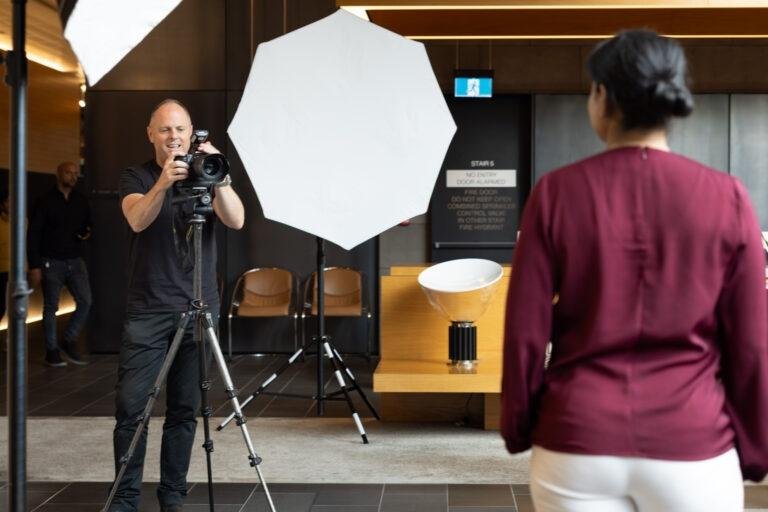
Traditional headshots commonly use neutral or brand-aligned backgrounds. Photography may take place inside a studio or through a controlled setup established at the client's workplace.
Editorial portraits can make much greater use of locations. Offices, architectural spaces, outdoor environments, creative studios, and other relevant settings can become meaningful parts of the photograph.
Professionals exploring portrait photography Paddington should therefore consider whether the location needs to remain visually neutral or contribute to the story behind the portrait.
Differences in Posing and Expression
Corporate headshot posing typically aims to create confidence, approachability, and professionalism. Small adjustments to shoulders, posture, facial position, and expression can substantially change how a portrait feels.
Editorial posing can involve more movement and variety. Subjects might sit, stand, walk, interact with their surroundings, or be photographed from several perspectives. Expressions can range from warm and approachable to serious and contemplative depending on the intended narrative.
Choosing Photography Based on Professional Goals
Selecting between these approaches should begin with intended usage rather than visual preference alone. Professionals need to consider where photographs will appear, who will see them, and what those audiences should understand.
LinkedIn and Company Profiles
Traditional corporate headshots are usually highly practical for LinkedIn and company profile pages because the subject remains immediately recognisable. Clean composition also works effectively with the small profile-image formats used by many digital platforms.
Media and Thought Leadership
Editorial portraits can provide stronger visual storytelling for interviews, articles, media features, conference promotions, and thought leadership content. Publications frequently need photographs with enough visual interest to support longer stories or prominent page layouts.
Personal Branding and Marketing
Professionals developing a personal brand may need a broader image collection rather than one photograph. Combining clean headshots with editorial portraits can provide imagery for websites, LinkedIn, presentations, social media, public relations, and marketing campaigns.
HERO SHOT Headshot Photography can support photography requirements ranging from individual professional profiles to broader corporate and personal branding applications.
Can Both Photography Styles Be Used Together
Corporate and editorial photography do not have to compete. A carefully planned session can produce traditional headshots alongside wider environmental and editorial images.
This approach can be particularly valuable for executives, entrepreneurs, consultants, speakers, and business owners who regularly publish content across different platforms. A clean headshot can serve formal professional profiles while editorial images provide variety for articles, campaigns, websites, and social content.
Planning for Long Term Image Use
Before a session, professionals should identify current and future requirements. Considering image orientation, backgrounds, cropping, wardrobe, locations, and intended platforms can help create a more versatile collection.
Anyone comparing portrait headshot Paddington options should also consider whether the photographer can maintain professional consistency while producing enough creative variation for different communication needs.
Conclusion
Editorial portraits and traditional corporate headshots serve different but complementary purposes. Corporate headshots emphasise recognisability, consistency, and professional presentation, making them valuable for LinkedIn profiles, staff pages, directories, and business communications. Editorial portraits introduce context, personality, creative composition, and storytelling, making them particularly effective for media, personal branding, thought leadership, and marketing.
Choosing between them depends on professional objectives and intended image usage. In many cases, combining both approaches creates the most flexible collection, giving professionals polished profile imagery alongside distinctive photographs capable of communicating a broader story.

 English
 Arabic
 French
 Spanish
 Portuguese
 Deutsch
 Dutch
Dutch
 Italiano
 Russian
 Romaian
 Portuguese (Brazil)
 Greek
Greek